

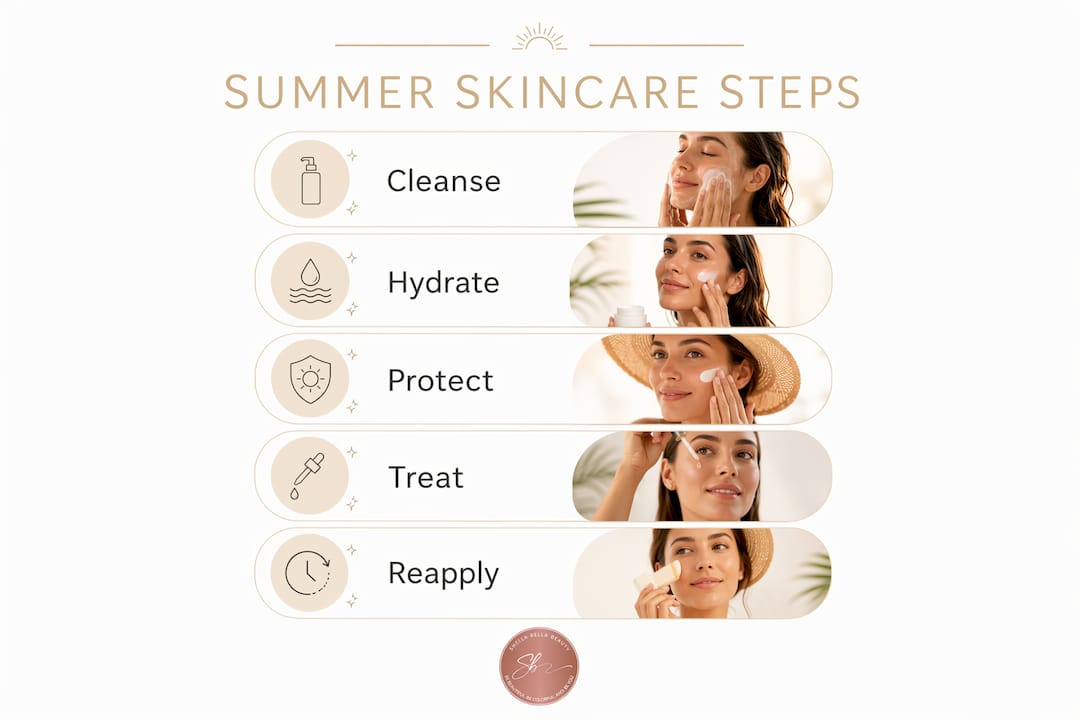
Your summer skincare routine, at its most effective, follows two clear paths each day. In the morning: a gentle low-pH gel cleanse (or a cool water splash if your skin is dry), a vitamin C antioxidant serum, a lightweight gel moisturizer with niacinamide or hyaluronic acid, and a broad-spectrum SPF 30+ applied generously to your face and neck. Reapply sunscreen regularly during outdoor activities, including after swimming or heavy sweating. In the evening: double-cleanse only if you wore heavy sunscreen or makeup (an oil or balm first, then a gentle gel), apply one targeted treatment such as a retinoid or BHA, and finish with a lightweight moisturizer. Keep heavy oils and thick creams out of your nighttime routine during warm months.
If you want the simplest possible version, a 3-step summer routine — cleanse, moisturize, and SPF — consistently outperforms a complex layered regimen in hot, humid conditions. For those who want a little more, a 5-step approach adds an antioxidant serum and a dedicated eye or lip SPF step between hydration and sun protection.
- 3-step (minimalist): Gentle cleanser → lightweight gel moisturizer → SPF 30+
- 5-step (balanced): Gentle cleanser → vitamin C serum → gel moisturizer → eye/lip SPF care → broad-spectrum SPF 30+
- PM essentials: Double-cleanse (if needed) → treatment (retinoid or BHA) → lightweight moisturizer
Table of Contents
- How should you cleanse your skin in summer?
- What sunscreen should you wear in summer, and how do you reapply it?
- Why does your skin need lighter hydration in summer?
- Which actives should you keep, reduce, or pause in summer?
- How often should you exfoliate in summer?
- Body, lips, and eyes: the spots most people miss in summer
- How do you layer summer skincare products in the right order?
- How do you fix common summer skin problems quickly?
- Why dermatologists focus on SPF and barrier support above all else
- How long does it take to see results, and what should you budget?
- How do you transition your routine from spring to summer, and then to fall?
- Key Takeaways
- Shellabellabeauty’s summer routine picks, ready to use
- FAQ
How should you cleanse your skin in summer?
The single most useful swap you can make when summer arrives is moving from a creamy or oil-rich cleanser to a low-pH gel or gentle foaming cleanser. Heat and humidity increase oil production and environmental debris on the skin’s surface, and a heavier cleanser can leave an occlusive residue that traps sweat, salt, and yeast — conditions that invite congestion and irritation.
In the morning, a brief cool-water rinse or a light gel cleanse is enough for most skin types. The real cleansing work happens at night. If you wore a mineral sunscreen, a tinted SPF, or any makeup during the day, a double-cleanse is worth the extra minute: start with an oil-based cleanser or balm to dissolve the SPF layer, then follow with a water-based gel to clear away any remaining residue. Pat dry gently rather than rubbing.
For oily or acne-prone skin, a cleanser containing salicylic acid can help manage congestion, though once or twice a week is usually sufficient — daily use tends to strip the barrier and trigger rebound oil production.
Pro Tip: After a workout or any activity that produces heavy sweating, rinse your face and body promptly with cool water. Salt residue left on the skin can irritate follicles and contribute to folliculitis, particularly along the hairline and back.
What sunscreen should you wear in summer, and how do you reapply it?
Sunscreen is the single most protective step in any summer skin regimen, and the guidance is clear: wear a broad-spectrum SPF 30+ every morning, without exception. UV damage is cumulative, and up to 80% of UV radiation can penetrate cloud cover, meaning overcast days carry real risk. UVA also passes through glass, so even indoor time near windows warrants some protection.
Mineral vs. chemical sunscreen: which fits your summer skin?
| Feature | Mineral (zinc oxide / titanium dioxide) | Chemical filters |
|---|---|---|
| Visible-light protection | Yes, with iron oxides | Limited |
| Texture in heat | Can feel heavier; newer formulas are lighter | Generally lighter, more fluid |
| Best for | Pigmentation-prone, sensitive, melasma | Active lifestyles, preference for invisible finish |
| Reef considerations | Preferred | Varies by filter |
| Tinted options | Widely available with iron oxides | Less common |
For anyone managing melasma or post-inflammatory hyperpigmentation, a tinted mineral sunscreen with iron oxides is worth prioritizing. Visible light contributes to pigmentation changes, and iron oxides in tinted formulas provide a layer of defense that untinted SPF does not. Tinted foundation alone rarely delivers the labeled SPF protection because most people do not apply enough product — a dedicated tinted sunscreen is the more reliable choice.
Reapplication checklist:
- Apply an adequate amount to cover face and neck as a baseline dose each morning
- Reapply every two hours when outdoors
- Reapply immediately after swimming or heavy sweating, even if the label says “water-resistant”
- Use SPF sticks or finely-milled mineral powder over makeup for midday touch-ups
- Reapply after towel drying, which removes a meaningful portion of the product
Why does your skin need lighter hydration in summer?
Switching to an oil-free, gel, or water-based moisturizer in summer is not about skipping hydration — it is about choosing textures that support your barrier without contributing to congestion. Dermatologists recommend gel- or water-based formulas with hyaluronic acid, ceramides, and niacinamide as the most effective combination for warm-weather barrier care.

Each ingredient earns its place. Hyaluronic acid draws moisture into the skin and works best when applied to slightly damp skin, so patting it on right after cleansing maximizes the benefit. Ceramides reinforce the lipid barrier, which heat and sun exposure can gradually deplete. Niacinamide calms visible redness, helps regulate sebum, and is well-tolerated even in humid conditions.
Dehydrated skin can paradoxically increase sebum output as the skin attempts to compensate for moisture loss — a lightweight moisturizer prevents that cycle. Reserve richer creams for dry patches at night only, and avoid layering heavy facial oils during the day. The Opuliss™ Infusion Toning Elixir fits naturally into this step, offering a light hydrating layer that preps the skin before moisturizer without adding weight.
For readers managing combination skin, a zone-based approach works well: a gel formula on the T-zone and a slightly richer lotion on drier cheek areas.
Which actives should you keep, reduce, or pause in summer?
The short answer: keep antioxidants in the morning and continue retinoids at night with adjusted frequency — strategic swaps in texture and scheduling serve you better than stopping actives altogether. A full overhaul is rarely necessary.
Vitamin C belongs in your morning routine, applied under moisturizer and sunscreen. As an antioxidant, it neutralizes free radicals generated by UV exposure and supports collagen synthesis — both particularly relevant in summer. For a deeper look at how these skincare active ingredients interact, Shellabellabeauty’s ingredient guide covers the science clearly.
Retinoids remain valuable in summer, but the approach matters. Two to three nights per week is a sensible frequency for sensitive skin, paired with diligent morning SPF. BHA (salicylic acid) works well one to two nights per week for congestion-prone skin. What to avoid: stacking multiple exfoliating acids in a single evening, or combining a strong AHA with a retinoid on the same night.

Pro Tip: If you spend extended time outdoors or in water and cannot reliably reapply sunscreen, consider switching to bakuchiol as a gentler retinol alternative on those days. Bakuchiol delivers similar smoothing benefits without the same photosensitivity risk, making it a practical warm-weather option when your SPF routine is less controlled.
When in doubt, prioritize SPF and barrier support over adding another active. A well-protected, calm skin barrier responds to treatments far more effectively than a stressed one.
How often should you exfoliate in summer?
Reduce exfoliation frequency as temperatures rise. Chemical exfoliants increase photosensitivity, and the combination of heightened UV exposure and a compromised surface barrier is a reliable path to irritation and hyperpigmentation.
| Exfoliant type | Oily skin | Dry skin | Sensitive skin |
|---|---|---|---|
| Physical scrub | Once per week | Pause or skip | Pause |
| AHA (glycolic, lactic) | 1–2x per week | Once per week | Once per week or less |
| BHA (salicylic acid) | 1–2x per week | Once per week | Once per week |
| Enzymatic exfoliant | 2x per week | 1–2x per week | Once per week |
Enzymatic exfoliants — papaya or pineapple enzyme-based formulas — offer a gentler alternative to acid-based options and are worth considering if your skin feels reactive in heat. Hydrating masks and light clay masks can address congestion without the photosensitivity risk. After any exfoliation session, apply sunscreen diligently the following morning.
Red flags that signal over-exfoliation: persistent stinging that does not resolve within a few minutes of application, redness lasting more than 24 hours, increased sensitivity to your usual products, or new dark spots appearing after exfoliation. If any of these appear, pause all exfoliants and focus on barrier repair for at least one to two weeks before reintroducing.
Body, lips, and eyes: the spots most people miss in summer
High-exposure areas deserve the same care as your face, and they are the most commonly skipped. The tops of the ears, the part line of the scalp, the tops of the feet, and the lips all receive significant UV exposure and are frequently left unprotected.
- Lips: Use a zinc oxide-containing SPF lip balm and reapply frequently, especially after eating, drinking, or towel drying. Treat any chapping promptly after sun exposure with a nourishing balm.
- Scalp and ears: SPF sticks or spray formulas work well here; a finely-milled mineral powder can also be applied along the part line without disrupting a style.
- Body: Apply body SPF generously — most adults use far less than the recommended amount. Reapply after swimming or heavy sweating, and consider an antifungal body wash if you are prone to tinea versicolor; dermatologists sometimes recommend using an antifungal shampoo as a body wash after beach or pool exposure.
- Eye area: Choose a lightweight eye gel or fluid cream rather than a heavy balm. Rich, occlusive eye products can migrate in heat and contribute to milia along the orbital bone.
- Antiperspirant: Apply it at night to dry skin. It needs several hours to form effective plugs in sweat glands; a daytime reapplication is fine for additional coverage.
When to consult a dermatologist: blistering sunburn, a spreading rash, large-area peeling, or any sign of infection after sweat-related irritation all warrant professional attention rather than home management.
How do you layer summer skincare products in the right order?
The foundational rule is lightest to heaviest, with sunscreen always last in the morning. Here is the precise sequence for each part of the day.
Morning routine (numbered):
- Gentle low-pH gel cleanser — rinse thoroughly, pat dry
- Vitamin C antioxidant serum — press in, wait 30–60 seconds for absorption
- Lightweight gel moisturizer — apply to slightly damp skin, wait 1–2 minutes
- Eye and lip SPF care — targeted application
- Broad-spectrum SPF 30+ — apply last, press rather than rub, allow 2–3 minutes before makeup
Evening routine (numbered):
- Oil or balm cleanser (if wearing SPF or makeup) — massage gently, rinse
- Gel or low-pH water-based cleanser — second pass, pat dry
- Treatment serum (retinoid or BHA) — apply to dry skin, wait 2–3 minutes before layering
- Lightweight moisturizer — seal in treatment without heaviness
Mixing warnings: Never combine a strong AHA and a retinoid in the same evening application. Avoid layering two drying actives back to back. If you use niacinamide and vitamin C together, apply the vitamin C first and allow it to absorb before layering niacinamide — most skin tolerates the combination well when sequenced this way.
For a traveler-ready version, a 3-step kit of cleanser, SPF moisturizer, and a vitamin C serum covers the core needs without excess weight.
How do you fix common summer skin problems quickly?
Summer skin tends to present a predictable set of concerns, and most respond well to targeted, measured adjustments rather than a full routine reset.
- Midday oiliness: Blotting papers followed by a light mineral powder SPF touch-up absorbs shine without disrupting your base or removing sun protection.
- Clogged pores and summer breakouts: Introduce a BHA (salicylic acid) serum one to two evenings per week. Avoid heavy, pore-blocking products during the day, and check that your sunscreen is labeled non-comedogenic. For oily skin management, Shellabellabeauty’s guide to oily skin products offers practical texture guidance.
- Heat rash: Cool compresses and a fragrance-free, lightweight lotion help calm the skin. Avoid occlusive products until the rash resolves.
- Tinea versicolor: An antifungal body wash used two to three times per week during peak humidity can prevent recurrence. Sweat and heat create the warm, moist conditions this fungal condition favors.
- Post-sun hyperpigmentation: Consistent SPF is the most effective long-term intervention. A vitamin C serum in the morning and a gentle AHA once or twice weekly at night can support gradual fading, though results take months of consistent use.
Pro Tip: Rinse off sweat within 30 minutes of finishing a workout. Salt and bacteria left on the skin’s surface are a primary driver of folliculitis and back acne in summer — a quick rinse, even without cleanser, makes a meaningful difference.
When to see a dermatologist: persistent cystic acne that does not respond to over-the-counter BHA, blistering sunburn, a rash that spreads or shows signs of infection, or any sudden unexplained pigmentation change.
Why dermatologists focus on SPF and barrier support above all else
The most consistent message from dermatologists is that consistency in sun protection and barrier strengthening delivers more long-term benefit than any seasonal product overhaul. Sun damage accumulates over years, and the effects of a single summer of inadequate SPF use can appear as pigmentation or texture changes years later.
Visible light, not just UV, contributes to melasma risk. This is why tinted mineral sunscreens with iron oxides are specifically recommended for pigmentation-prone skin rather than untinted SPF alone. Physical barriers — wide-brimmed hats, UPF-rated clothing, and deliberate shade-seeking between 10 AM and 4 PM — complement topical protection in ways that no single product can replicate.
The clinical reasoning behind “less is more” in high-UV months is straightforward: a stripped or irritated barrier absorbs UV damage more readily, and over-treating with actives during peak sun exposure increases the risk of photosensitivity reactions. Strategic swaps in texture and frequency, rather than adding products, are what dermatologists consistently recommend for maintaining healthy skin through summer.
How long does it take to see results, and what should you budget?
Many visible improvements — reduced oiliness, fewer breakouts, calmer texture — appear within 2–6 weeks of consistent routine changes. Pigmentation is slower to respond; meaningful fading with SPF and topical treatments typically takes three or more months of diligent daily use.
| Timeline | What to expect |
|---|---|
| 48 hours | Reduced congestion from sweat removal; skin feels cleaner and less reactive |
| 2–6 weeks | Improved oil balance, fewer breakouts, calmer barrier |
| 3+ months | Gradual pigmentation improvement with consistent SPF and vitamin C or AHA use |
Budget brackets:
| Level | Core products | Approximate focus |
|---|---|---|
| Minimalist | Drugstore gel cleanser + SPF 30+ + basic gel moisturizer | Cover the non-negotiables first |
| Mid-range | Better-texture SPF + antioxidant serum + niacinamide moisturizer | Improved feel and targeted support |
| Premium | Specialized actives (retinoid, professional AHA) + tinted mineral SPF | Long-term skin health investment |
Start with sunscreen and a lightweight moisturizer. Add an antioxidant serum once those feel comfortable. Introduce one new product per week so you can identify what your skin responds to — and what it does not.
How do you transition your routine from spring to summer, and then to fall?
Seasonal transitions are gradual, and your routine should follow the same measured pace. Moving from spring to summer, the primary signals are rising humidity, increased sweat, and longer daylight hours. The practical response: swap your moisturizer to a lighter gel texture, upgrade to a higher or more water-resistant SPF if you are spending more time outdoors, and reduce exfoliation frequency by one session per week. If your spring routine included a richer night cream, move it to a spot-treatment role or set it aside until fall.
The transition from summer to fall reverses the process with equal care. As temperatures drop and indoor heating begins to dry the air, the skin’s moisture needs increase. Reintroduce a slightly richer moisturizer in the evening, and consider adding a hydrating serum layer if your skin feels tight after cleansing. Exfoliation frequency can return to its pre-summer level gradually, and retinoid use can increase back to nightly if your skin tolerates it. For readers with dry or sensitive skin, the fall transition is also the right moment to reintroduce richer barrier-repair ingredients like shea butter or squalane.
One principle holds across both transitions: change one product at a time, spaced at least a week apart. Skin that is adjusting to seasonal shifts is more reactive, and introducing multiple new products simultaneously makes it difficult to identify the source of any irritation.
Key Takeaways
A consistent SPF-first summer routine with lightweight textures and strategic active scheduling is the most effective way to protect and balance your skin through warm months.
| Point | Details |
|---|---|
| SPF first, always | Apply broad-spectrum SPF 30+ every morning and reapply every two hours outdoors. |
| Swap to lighter textures | Replace heavy creams with gel or water-based moisturizers containing hyaluronic acid, ceramides, and niacinamide. |
| Keep actives, adjust frequency | Continue vitamin C in the AM and retinoids at night 2–3x per week; avoid stacking exfoliating acids in one session. |
| Rinse after sweat | Promptly rinsing after workouts reduces folliculitis and salt irritation on the skin’s surface. |
| Shellabellabeauty summer fit | The RadiantBlend™ Beachy BB Bliss Cream SPF 18, Urban Detox™ Cleanser, and Opuliss™ Infusion Toning Elixir map directly to the AM cleanse, hydrate, and protect steps. |
The case for a quieter summer routine
There is a tendency, when summer arrives, to reach for more — more products, more actives, more corrective steps — as though the season demands a more intensive response. My honest view is the opposite. Summer is the season to pare back with intention, to trust a shorter routine done consistently over a longer one done haphazardly.
What I find most compelling in the dermatologist guidance is the emphasis on physical sun protection alongside topical SPF. A wide-brimmed hat and deliberate shade between 10 AM and 4 PM do more for long-term pigmentation than any serum. The products matter, but the habits around them matter more.
The one swap that tends to make the most visible difference for most skin types is the moisturizer. Moving from a rich cream to a gel-based formula with niacinamide changes the feel of the skin within days — less congestion, less midday shine, and a surface that holds makeup and SPF more evenly. It is a small change that the skin notices immediately.
Shellabellabeauty’s approach to summer is built on exactly this philosophy: fewer, better-chosen products applied with care and consistency, rather than a seasonal overhaul that leaves the skin guessing. That restraint is, in itself, a form of respect for what your skin is already doing.
Shellabellabeauty’s summer routine picks, ready to use
Three products, three steps, one cohesive summer routine. Shellabellabeauty has made the seasonal transition straightforward with formulations that address the specific demands of warm-weather skin without adding weight or complexity.
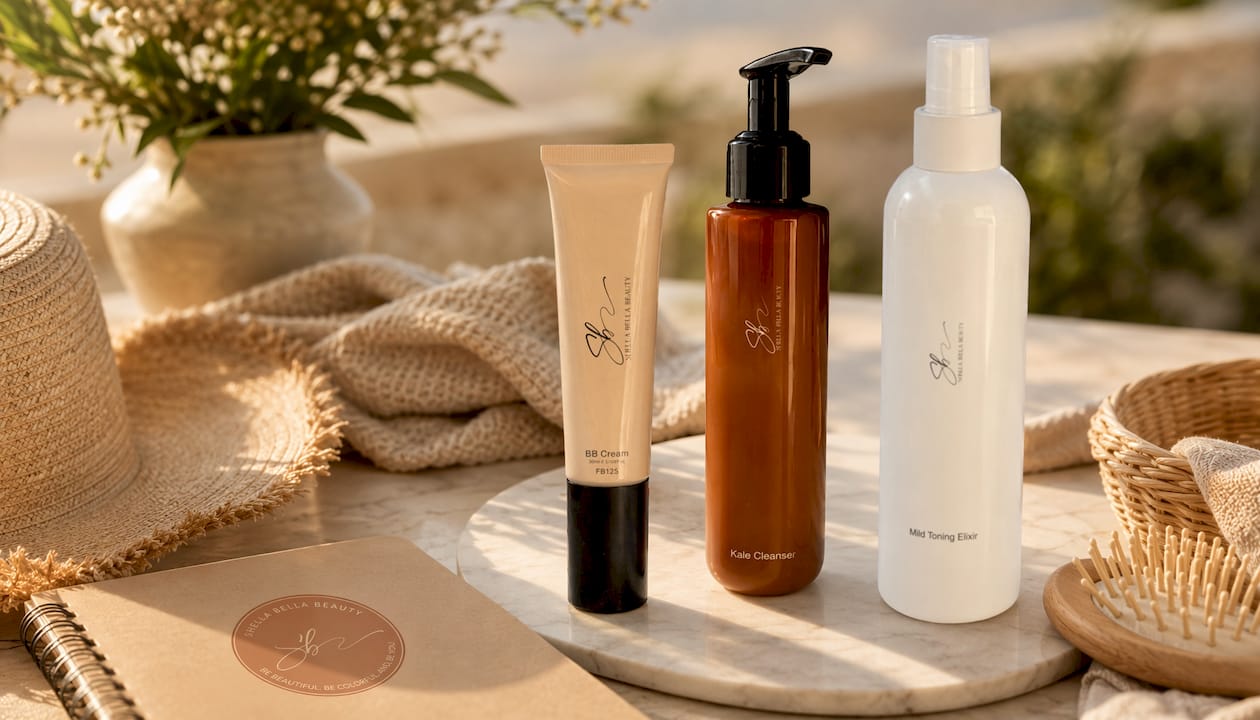
The Urban Detox™ Cleanser opens the routine with a low-pH gel cleanse designed to lift environmental debris, sweat, and excess oil without stripping the skin’s surface. It fits the morning step cleanly and handles the second pass of a double-cleanse in the evening with equal gentleness.
The Opuliss™ Infusion Toning Elixir follows as a light hydrating layer between cleansing and moisturizer, delivering a fine mist of humectants that prepares the skin to absorb what comes next. It replaces heavier toners and essence layers that can feel suffocating in humidity.
For the final morning step, the RadiantBlend™ Beachy BB Bliss Cream SPF 18 offers a tinted, lightweight finish that evens tone while providing a base layer of sun protection — ideal for low-exposure days or as a complement to a dedicated SPF underneath. Patch-test any new product on a small area for 48 hours before full application, particularly if your skin is transitioning from a different seasonal routine. Explore the full summer skincare collection at Shellabellabeauty to find the textures and formulations that suit your skin’s needs this season.
Useful sources and further reading
- How summer skin care has changed — and what dermatologists want you to know — University of Utah Health: dermatologist perspectives on cumulative sun damage, visible light, and tinted mineral SPF.
- The Complete Summer Skincare Routine Guide (Every Skin Type) — HadaBuddy — Detailed routine guidance covering cleansing swaps, exfoliation frequency, and skin-type adjustments.
- Dermatologist-Recommended Summer Skincare — Dr. Michele Green M.D. — Clinical guidance on lightweight hydration, non-comedogenic ingredients, and reapplication schedules.
- Summer Skincare Swaps for Every Skin Type — Cosmopolitan — Dermatologist-backed advice on strategic swaps and maintaining actives through summer.
- 13 Summer Skin-Care Tips Dermatologists Swear By — Time — Practical tips on antiperspirant timing, tinted SPF, antifungal prevention, and body care.
- Should I Change My Skincare Routine for Summer? — Health.com — Evidence-based case for simplifying rather than expanding your summer routine.
- How often to reapply sunscreen — Cleveland Clinic — Clear guidance on reapplication intervals, water resistance, and SPF dosing.
- Treating sensitive skin step by step — Sereskin — A step-by-step guide to barrier support strategies for sensitive and reactive skin types.
- Shellabellabeauty’s Glow Chronicles blog offers practical AM routine checklists, ingredient education, and product guidance that complement the steps covered here.
FAQ
What is the best skincare routine for summer?
A morning routine of gentle cleanser, vitamin C serum, lightweight gel moisturizer, and broad-spectrum SPF 30+ covers the core needs for most skin types. In the evening, double-cleanse if you wore sunscreen or makeup, apply one targeted treatment (retinoid or BHA), and finish with a lightweight moisturizer.
What skincare products work best for summer skin?
Dermatologists consistently recommend a broad-spectrum SPF 30+, a low-pH gel cleanser, and a gel or water-based moisturizer with hyaluronic acid, ceramides, or niacinamide as the foundation of any summer skin regimen. An antioxidant serum such as vitamin C adds meaningful protection against UV-generated free radicals.
How often should you exfoliate in summer?
Reduce exfoliation to once or twice per week for most skin types, as chemical exfoliants increase photosensitivity during high-UV months. Always follow any exfoliation session with diligent SPF application the next morning.
What is the Korean 7-skin method, and does it work in summer?
The layering method involves applying a lightweight toner or essence multiple times to build deep hydration. In summer, the approach can work for dry skin types using a water-based, non-occlusive formula, but most oily or combination skin types will find a few light layers sufficient without the risk of congestion in humid conditions.
Recommended
- Glowing Skin That Lasts Starts With the Right Makeup Routine – Shella Bella Beauty™
- Morning Skincare Routine Checklist for Glowing Skin – Shella Bella Beauty™
- How to Build a Morning Glow Ritual That Lasts – Shella Bella Beauty™
- Join Glow Chronicles™ — Continue the Glow™ with editor’s picks, seasonal beauty rituals, exclusive skincare insights, and new editions delivered to your inbox.