
For most hair types, a lightweight serum or spray rated to at least 400°F is the most reliable way to prevent heat damage during daily styling. Shellabellabeauty’s PureLuxe Thermisilk™ Hair Serum is the primary pick for fine, color-treated, or heat-damaged hair: it combines bond-supporting ingredients with a satin finish and protects through high-heat styling without weighing strands down. As Allure notes, heat damage is cumulative, which makes consistent use of a well-formulated protectant one of the most meaningful things you can do for your hair’s long-term resilience.
Quick shortlist for different needs:
- PureLuxe Thermisilk™ Hair Serum (serum / fine to medium, color-treated hair): silky, bond-supporting formula with a satin finish rated for high-heat styling up to 450°F.
- Lightweight spray (editorial pick / fine or oily hair): weightless mist for even, non-greasy coverage on damp or dry hair.
- Smoothing cream or serum (hydration pick / thick, coarse, or curly hair): higher occlusive content seals moisture and reduces frizz under heat up to 400–450°F.
- Dry-use mist (touch-up pick / second-day styling): formulated for dry hair so you can re-style without wetting strands.
- Multi-benefit leave-in (repair pick / chemically treated or damage-prone hair): proteins and humectants that protect and gradually strengthen with each use.
Key Takeaways
The most effective heat protection for your hair comes from matching the product’s format and temperature rating to your specific hair texture and tool settings, then applying it correctly every time.
| Point | Details |
|---|---|
| Match format to texture | Fine hair needs a lightweight spray or serum; thick or curly hair benefits from a cream or richer serum. |
| Verify the temperature rating | Choose a formula rated to at least 400°F if you use a flat iron or curling wand at medium-to-high settings. |
| Apply to mid-lengths and ends | Roots rarely need protectant; concentrating product on ends reduces breakage where hair is most fragile. |
| Prioritize multi-benefit formulas | Proteins and humectants protect immediately and improve elasticity over time with consistent use. |
| Shellabellabeauty’s top pick | PureLuxe Thermisilk™ Hair Serum suits fine, color-treated, or heat-damaged hair seeking protection and a satin finish. |
Table of Contents
- Which heat protectant format is right for your hair?
- How to choose the right heat protectant for your hair
- How to apply heat protectant for the best results
- A note on formulation and intentional care
- PureLuxe Thermisilk™ Hair Serum: Shellabellabeauty’s recommended pick
- Sources
- FAQ
Which heat protectant format is right for your hair?
Choosing the right thermal hair protectant starts with understanding what each format actually does, then matching it to your hair’s texture, your tool temperature, and how often you style. Ulta Beauty’s editorial guide groups protectants by format precisely because the format shapes the experience as much as the ingredients do.
Why these picks? Selections were prioritized by protection temperature rating, ingredient profile (proteins, humectants, silicones), format match to hair type, and editorial testing feedback. Secondary benefits like detangling, UV protection, and shine were weighted alongside core heat defense, because Byrdie’s tested roundup consistently finds that the best-performing formulas deliver both.
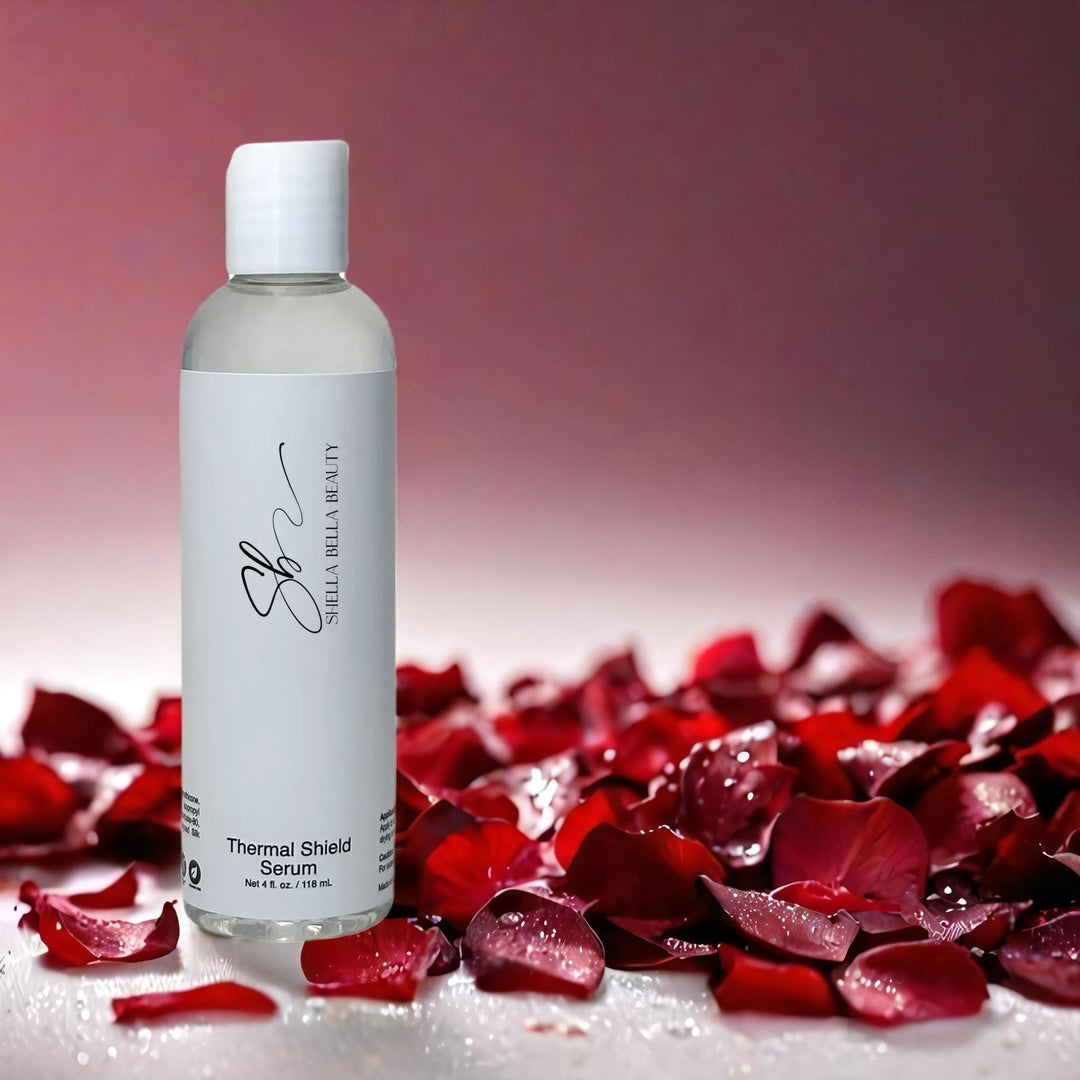
PureLuxe Thermisilk™ Hair Serum earns the top position for its bond-supporting formulation and satin finish. Fine and color-treated hair tends to lose protein bonds faster under repeated heat exposure, and a serum that addresses both protection and structural integrity is a more considered choice than a basic film-former. The glossing treatment benefits that a well-formulated serum can deliver, including shine and smoothing, make it a genuinely multi-purpose step in a styling routine.
The smoothing cream or serum category suits thick or curly hair because higher occlusive content creates a denser barrier that locks moisture in under high heat. A lightweight spray on coarse hair often evaporates before it can distribute evenly. Conversely, a dense cream on fine hair flattens it within an hour.
The multi-benefit leave-in is the most repair-forward option. Proteins like keratin and silk rebuild the cuticle surface over time, while humectants like glycerin and panthenol restore flexibility. Today’s expert guide notes that stylists recommend these formulas specifically for hair that has already experienced cumulative breakage.
Pro Tip: For fine hair, avoid applying any protectant directly to the roots. Spray into your palms and rake through mid-lengths and ends only, which keeps roots from going flat while still protecting the most vulnerable sections.
How to choose the right heat protectant for your hair
Work through this short decision flow before buying:
- Assess your hair texture. Fine or oily hair needs a weightless spray or lightweight serum. Thick, coarse, or curly hair benefits from a cream or richer serum. Chemically treated or damaged hair calls for a protein-and-humectant leave-in.
- Check your tool temperature. Match the product’s rated protection to the temperature you actually use. A formula rated to 450°F covers the full range of flat irons and curling wands; one rated to 350°F is adequate for a blow-dryer on medium heat.
- Consider your styling frequency. Daily styling means cumulative stress. A formula with proteins and humectants does double duty: it protects today and gradually improves elasticity over time.
- Decide on your desired finish. Serums and creams add sheen; sprays tend to dry invisibly. If you want a glossy result, a serum is the natural choice.
Ingredients to look for and what to use sparingly
Elle’s hairstylist guidance is clear on this: film-forming protectants and lightweight silicones work for fine hair, while dense oils and butters are better reserved for thick or highly textured strands.
Why the temperature rating matters
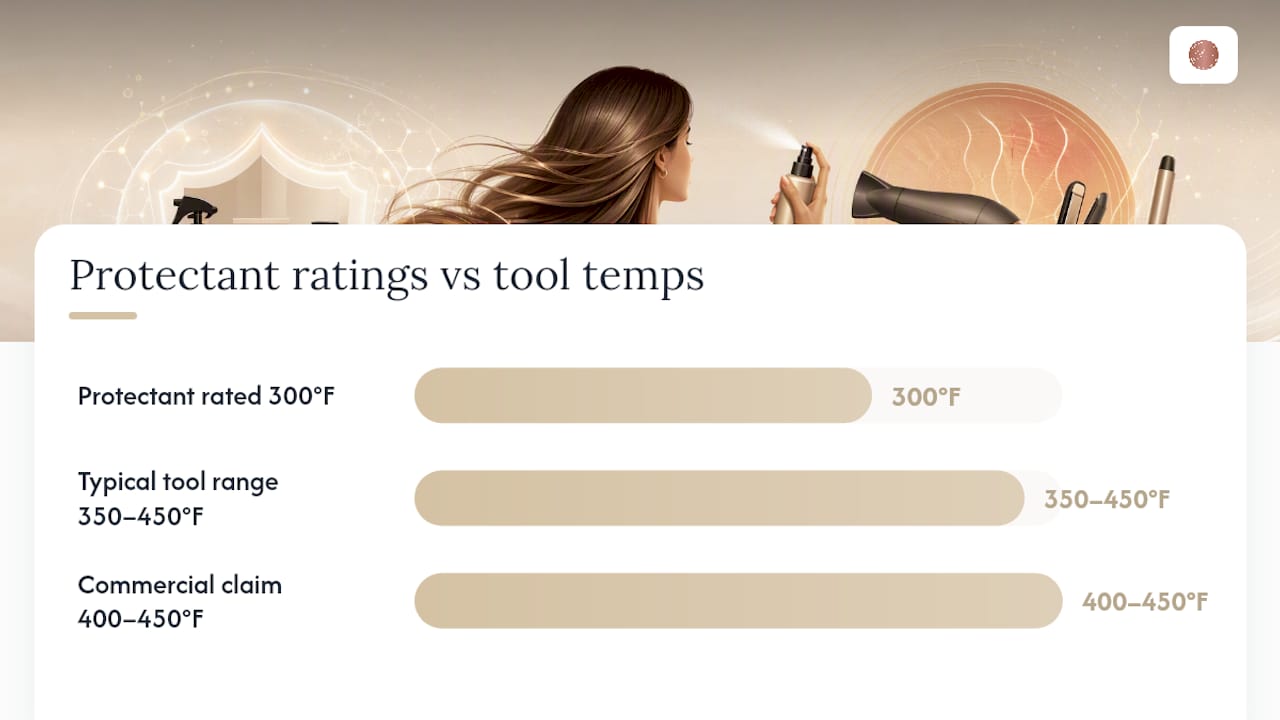
Most flat irons and curling wands reach 350–450°F. A protectant rated only to 300°F leaves hair exposed at the temperatures many people actually use. Matching the rated protection to your tool setting is not a marketing detail; it is the functional core of what the product does. Byrdie’s editorial testing reports that commercial formulas commonly claim protection up to 400–450°F, and those claims are worth verifying on the label before you buy.
How to apply heat protectant for the best results
Getting the application right matters as much as choosing the right formula. A well-chosen product applied incorrectly still leaves hair exposed.
For damp hair (pre-blow-dry):
- Towel-dry hair gently until it is damp but not dripping.
- Section hair into two or four sections depending on thickness.
- Apply protectant to each section, working from mid-lengths to ends. For fine hair, spray into your palms first and rake through rather than misting directly at the scalp.
- Comb through with a wide-tooth comb to distribute evenly.
- Allow the product to absorb for 30–60 seconds before turning on the blow-dryer. Applying heat before the formula has set reduces its effectiveness.
For dry hair (tool touch-ups):
- Use a dry-use mist or a small amount of serum on the sections you plan to re-style.
- Apply to mid-lengths and ends only; roots rarely need re-styling and adding product there adds unnecessary weight.
- Wait 15–20 seconds for the formula to settle before passing the iron through.
Temperature guidance by hair type:
- Fine or thin hair: start at 300°F and go no higher than 350°F.
- Medium-texture hair: 350–400°F is the practical range.
- Thick or coarse hair: up to 400–450°F when using a protectant rated for it.
Stylists advise starting at the lower end of your range and increasing only if needed, because heat damage accumulates with every pass of a hot tool, even when a protectant is in place.
Common mistakes to avoid:
- Applying protectant only at the roots and missing the ends, where breakage is most likely.
- Using too much product, which flattens fine hair and can cause uneven heat distribution.
- Passing a hot iron over hair that is still wet or has not fully absorbed the protectant.
- Setting tools to the highest temperature by default rather than matching the setting to your hair’s actual tolerance.
Pro Tip: If your hair feels crunchy or stiff after applying a protectant, you have used too much. A pea-sized amount of serum or two to three light mists of spray is sufficient for most hair lengths.
A note on formulation and intentional care
At Shellabellabeauty, the approach to heat-protectant formulation begins with the belief that protection and refinement are not separate goals. A formula that merely coats the hair shaft addresses only half the problem; one that also supports the hair’s structural integrity, delivers detangling slip, and leaves a luminous finish honors the full ritual of styling. The premium haircare routine Shellabellabeauty advocates treats heat protection not as an afterthought but as a foundational step, applied with the same care and consistency as a serum applied to skin.
The brand’s editorial perspective is that most people underestimate how much the quality of their protectant matters relative to how often they use it. Consistent use of a thoughtfully formulated product, one that pairs heat defense with proteins and humectants, does more for hair health over six months than occasional use of even the most advanced formula.
PureLuxe Thermisilk™ Hair Serum: Shellabellabeauty’s recommended pick
The PureLuxe Thermisilk™ Hair Serum is Shellabellabeauty’s answer to the question of what a heat protectant can be when it is formulated with genuine care. Designed for fine to medium, color-treated, or heat-damaged hair, it combines bond-supporting actives with silicones and detangling agents to protect through high-heat styling while leaving a satin, non-greasy finish.
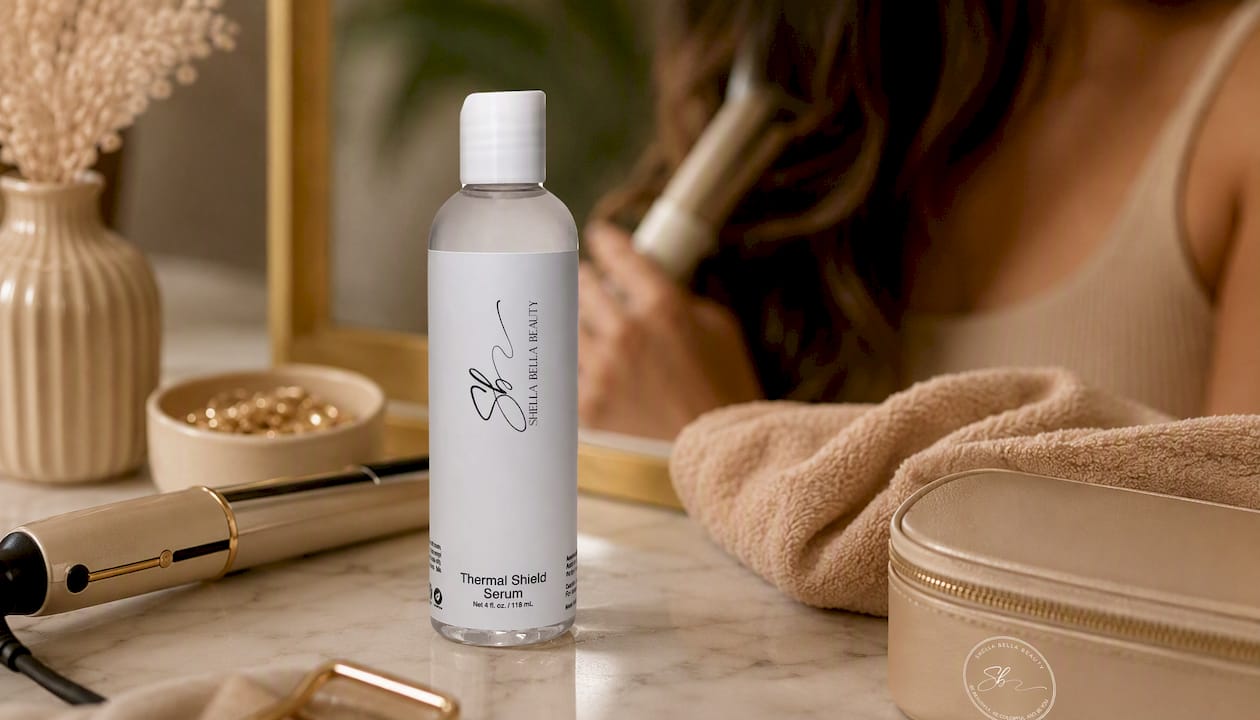
Where a spray suits a quick, even mist before blow-drying and a cream suits thick hair that needs moisture sealed in, a serum occupies a precise middle ground: concentrated enough to deliver real structural benefits, light enough not to flatten fine strands. For anyone styling with a flat iron or curling wand at 400°F or above, a serum’s film-forming and bond-supporting properties offer a more considered layer of defense than a basic spray. You can read more about when a serum outperforms other formats in Shellabellabeauty’s ingredient education library.
The PureLuxe Thermisilk™ Hair Serum is available directly through Shellabellabeauty, with shipping across the United States. Visit the product page to review sizing options, current pricing, and availability.
Sources
- The 11 Best Heat-Protectant Sprays to Tone Down Damage
- 2025’s Best Heat Protectants for Fine Hair: Expert Tested & Reviewed
- The 12 Best Heat Protectants of 2026, Tested and Approved
- Best Heat Protectants 2026: Sprays, Creams | Ulta Beauty
- The 5 best heat protectants for fine hair 2025, per experts
FAQ
What is the most effective heat protectant for hair?
A formula that pairs a heat-barrier ingredient (silicones or film-forming polymers) with proteins or humectants offers the most complete protection, defending against immediate heat stress while gradually improving hair resilience. For fine or color-treated hair, Shellabellabeauty’s PureLuxe Thermisilk™ Hair Serum is formulated with exactly this combination.
Do hair heat protectants really work?
Yes. Heat protectants form a thin barrier over the hair shaft that reduces direct heat exposure and evens heat distribution, which limits the protein damage that causes brittleness and breakage over time. Consistent use matters most, because heat damage accumulates with every styling session.
Which type of heat protectant is best for fine hair?
Lightweight sprays and serums are the best heat protectants for fine hair because they distribute evenly without adding weight. Hairstylists recommend spraying into the palms and raking through mid-lengths and ends rather than misting directly at the roots to avoid flatness.
What temperature rating should I look for in a heat protectant?
Match the product’s rated protection to your tool setting. Most flat irons and curling wands operate between 350°F and 450°F, so a formula rated to at least 400°F is appropriate for medium-to-high heat styling. Starting at 300°F for fine or thin hair and increasing only as needed reduces cumulative damage.
Recommended
- The Art of Restoring Hair Shine That Lasts – Shella Bella Beauty™
- Scalp Care for Healthy Hair That Lasts – Shella Bella Beauty™
- What Is a Glossing Treatment? Benefits for Shine, Smoothness & Repair – Shella Bella Beauty™
- Hair Mask vs Conditioner: What to Use – Shella Bella Beauty™
- Join Glow Chronicles™ — Continue the Glow™ with editor’s picks, seasonal beauty rituals, exclusive skincare insights, and new editions delivered to your inbox.