
Your premium skincare packaging checklist should cover eight core categories before a single unit ships: primary packaging components, secondary and tertiary packaging, material compatibility, finishing techniques, sustainability certifications, regulatory and labeling compliance, supplier qualifications, and quality assurance with filled samples. Think of packaging not as the final step in a launch, but as the first conversation your product has with the person who will care for their skin with it. Every texture, weight, and closure communicates something about what is inside, and that communication happens before the formula is ever touched.
A well-executed checklist addresses the full system, not individual components in isolation. Inspecting packaging as a complete system, including jar integrity, cap fit, seals, decoration durability, and formula compatibility, with final approval based on filled samples rather than empty dry ones, is the standard that separates brands that scale from those that face costly reprints and recalls. The items below build that system with intention.
Quick-reference checklist:
- Primary packaging: container format, closure type, dispensing mechanism, material compatibility
- Secondary packaging: carton or rigid box, inserts, closures, brand messaging
- Tertiary packaging: shipping carton, void fill, transit protection
- Finishing: lamination, foil stamping, embossing or debossing, spot UV
- Sustainability: FSC or SFI certification, mono-material construction, refillable options
- Regulatory: FDA MoCRA compliance, INCI labeling, California Prop 65 review
- Supplier: certifications (ISO, SQF, ISTA), MOQ alignment, proofing capability
- QA: compatibility testing with filled samples, label durability, closure integrity
Table of Contents
- Why packaging shapes the fate of your skincare product
- 1. Primary, secondary, and tertiary packaging types
- 2. Customization options that create a genuinely premium feel
- 3. Sustainability certifications and eco-conscious materials
- 4. Material compatibility and technical testing protocols
- 5. How to choose a packaging supplier that serves your brand
- 6. Regulatory compliance and labeling requirements for US skincare
- 7. Quality control and testing protocols before production approval
- Shellabellabeauty’s approach to premium skincare packaging
- Key Takeaways
- FAQ
Why packaging shapes the fate of your skincare product
Packaging is the first physical interaction a customer has with your brand, and that interaction forms a perception of value before a single ingredient is read. The weight of a box, the resistance of a magnetic closure, the velvet feel of a soft-touch laminated surface: these sensory details tell the customer what the product is worth before they have opened it. For brands positioning at a premium price point, that first impression carries enormous commercial weight.
Beyond perception, packaging performs a protective function that directly affects formula integrity. Active ingredients like retinol and vitamin C oxidize rapidly when exposed to air, making container choice a preservation decision as much as an aesthetic one. Packaging also determines dosage accuracy, ease of use, and product freshness across the full shelf life of a formulation.
Regulatory compliance adds a third layer of consequence. Under FDA MoCRA guidelines, US skincare labeling must include a legible INCI ingredient list, net contents in both metric and US customary units, and a manufacturer street address. Getting one element wrong on a first production run typically costs $200–$600 and 2–4 weeks on a reprint. Packaging, in this sense, is never just a container.
1. Primary, secondary, and tertiary packaging types
Primary packaging
Primary packaging is in direct contact with the formula, so material compatibility is the first decision, not the last. The most common formats for skincare include:
- Airless pump bottles (15–150ml): best for actives-rich formulations like vitamin C serums and retinol creams, where oxygen barrier protection prevents oxidation and degradation
- Lotion pumps: versatile for creams and lightweight lotions; output ranges 0.5cc–3cc per stroke
- Wide-mouth jars: suited for thick creams, masks, and balms; standard neck finishes are 58mm, 70mm, and 89mm
- Fine-mist sprayers: for water-based formulations under 100 cP, such as toners and facial mists
- Dropper bottles: glass preferred for serums with light-sensitive actives; amber or cobalt glass filters UV rays
Secondary packaging
Secondary packaging protects the primary container, carries brand messaging, and shapes the unboxing experience. Folding cartons at a mid to high weight SBS are the retail-shelf default, supporting foil and spot UV finishing at accessible minimum order quantities suitable for indie brands. Rigid setup boxes, costing more per unit, are appropriate for premium SKUs or gift collections where the unboxing moment is part of the product’s value. Custom-engineered inserts and magnetic closures contribute meaningfully to perceived value and prevent damage during shipping.

Tertiary packaging
Tertiary packaging covers shipping cartons and bulk protection for transit and storage. For premium brands, this layer also matters: a beautifully finished secondary box that arrives dented or crushed undermines everything the design communicates. Specify adequate void fill and crush-resistant outer cartons, particularly for glass primary containers.
2. Customization options that create a genuinely premium feel
Luxury in packaging is defined by contrast and sensory reward. Layering finishes like soft-touch matte lamination paired with spot UV or metallic foil stamping creates the tactile and visual cues that signal quality before a single word is read. These are not decorative afterthoughts; they are primary commercial levers that justify premium pricing.
The most effective finishing techniques for premium skincare packaging include:
- Soft-touch lamination: the single most effective tactile finish, creating a velvety matte surface that signals quality immediately upon handling
- Hot foil stamping: bonds metallic foil under heat and pressure; gold, silver, and rose gold remain the most recognized luxury signals
- Spot UV coating: applies high-gloss UV-cured coating to specific areas only, creating a striking contrast against a matte base
- Embossing and debossing: raise or press design elements into the surface for dimensional, tactile brand recognition
- Textured varnish: adds artisanal, tactile storytelling to botanical or heritage-positioned brands
The most widely used combination in premium skincare is soft-touch lamination with spot UV on the logo. Layering two or three finishes creates desirable contrast without visual oversaturation. Stacking more than three reads as effortful rather than confident.
Structural customizations matter as much as surface finishes. Rigid setup boards with magnetic closures, drawer-style reveals, and custom die-cut inserts create a layered unboxing experience that encourages customers to share and return. For brands thinking about professional branding and client loyalty, the tactile and visual contrast built into packaging design is one of the most durable investments a beauty brand can make.
Pro Tip: Validate print production feasibility with your manufacturer before finalizing design. Overly complex print effects can cause delays or inconsistent results at scale. Allocate both a design budget and a print production budget from the start, not sequentially.
3. Sustainability certifications and eco-conscious materials
Sustainability claims carry weight only when they are verifiable. For US skincare brands, the credible certifications to look for are FSC (Forest Stewardship Council) for paper-based packaging, SFI (Sustainable Forestry Initiative) for responsible sourcing, and GRS (Global Recycled Standard) for post-consumer recycled content. Refillable systems and transparent material sourcing resonate more deeply with premium, eco-conscious consumers than vague “eco-friendly” language on the box.
Mono-material constructions improve recyclability by allowing consumers to recycle the entire unit without disassembly. A folding carton with no plastic windows, no foil liners, and water-based inks is fully recyclable in most US municipal streams. Fiber-based inserts offer an eco-friendly alternative to molded plastic trays without sacrificing the structured presentation that premium positioning requires.
Balancing sustainability with durability is a genuine engineering challenge. Some high-gloss or laminated finishes limit recyclability, and rigid setup boxes are less recyclable than mono-material folding cartons. The most credible approach is to build sustainability into the initial brief rather than retrofitting it after design decisions are locked. Communicate material choices clearly on-pack, because transparency is what separates genuine sustainability from greenwashing.
4. Material compatibility and technical testing protocols
Packaging selection is fundamentally an engineering decision layered with aesthetics. The formulation must dictate the packaging choice before any finish is considered. A mismatch between material and formula can cause instability, leakage, or chemical leaching that compromises both safety and efficacy.
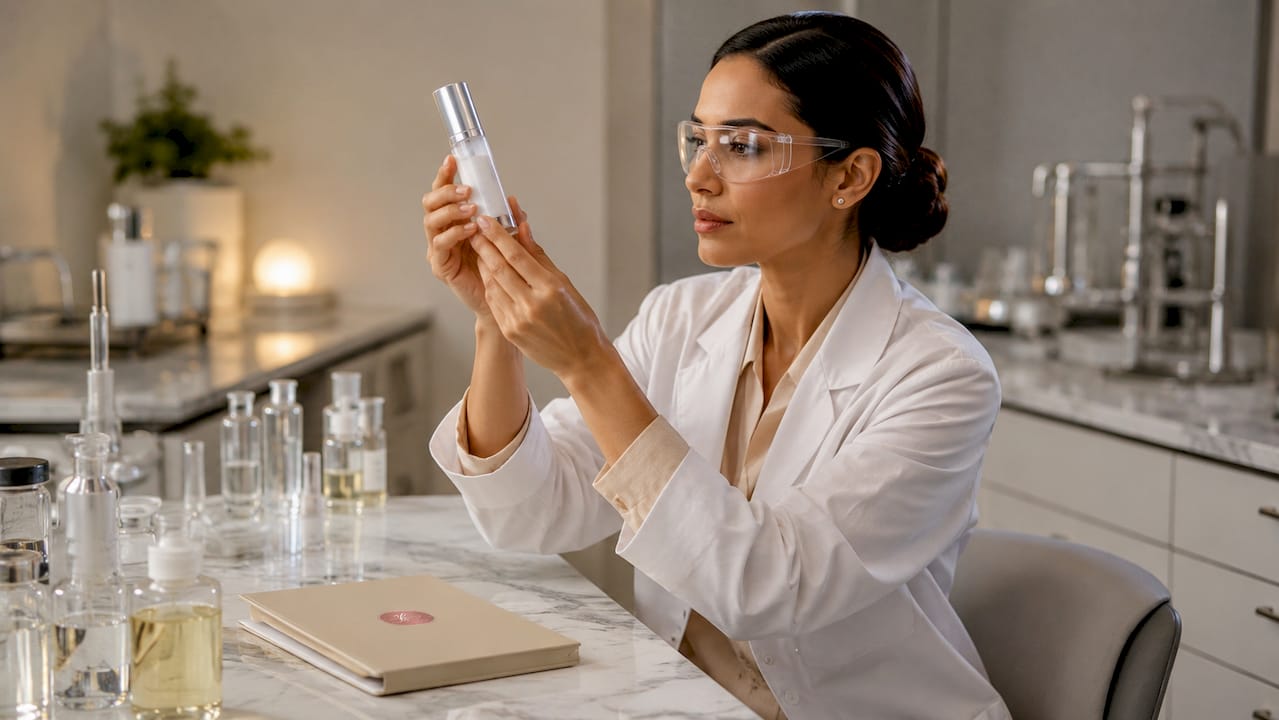
The standard compatibility protocol is to fill a sample unit with the actual formulation, seal it, hold it at 40°C for four weeks, then test for weight loss (evaporation through the cap seal), visual changes such as haze or discoloration, and product contamination from extractables. PP and PET are the safest starting materials for most formulations. Glass is chemically inert and the preferred choice for high-end serums with sensitive actives.
Key material considerations by formulation type:
- Vitamin C and retinol serums: airless packaging strongly recommended to prevent oxidation; dark glass or opaque PP for UV protection
- High-alcohol formulations (above 70%): avoid ABS and acrylic; use PET, HDPE, or PP
- Thick creams and balms: wide-mouth jars in PP or acrylic with PP inner bowl; airless pump if viscosity allows
- Water-based toners: PET bottles with fine-mist sprayers; confirm particle size 80–150 microns for consistent coverage
Label durability deserves its own checkpoint. Scuff resistance, adhesive compatibility with the container material, and legibility of the INCI list under real-use conditions (moisture, handling, light) all affect both consumer experience and regulatory compliance. Reviewing skincare ingredient labels as part of your packaging sign-off process protects both the brand and the customer.
5. How to choose a packaging supplier that serves your brand
The right supplier functions as a collaborative partner, not just a vendor. Assessing supplier capabilities before committing to tooling investment protects your timeline, your budget, and the integrity of your finished product.
Evaluate suppliers against these criteria:
- In-house capabilities: design, proofing, quality control, and finishing under one roof reduce handoffs and improve consistency
- Certifications: ISO and SQF for quality and safety; ISTA certification for package testing; G7 Targeted Qualification for print color accuracy
- Sustainability credentials: SFI or FSC certification for sourcing; demonstrated experience with PCR materials and mono-material constructions
- Regulatory knowledge: familiarity with FDA MoCRA requirements, California Prop 65 thresholds for decorative coatings, and INCI labeling standards
- MOQ and scale flexibility: supplier capabilities must align with your current volume and your growth trajectory; custom mold tooling typically runs $8,000–$25,000 per mold at 3,000–10,000 unit thresholds
- Launch calendar alignment: the ability to accommodate seasonal collections and limited editions without compromising lead times
Budgeting for both design and print production phases from the outset prevents the common outcome of a beautifully designed package that is printed on inadequate stock because the print quote arrived after the design budget was spent. Brands that allocate for luxe paper, foils, and unboxing experience create lasting consumer loyalty. Request material samples, finish mockups, and color proofs before approving production.
6. Regulatory compliance and labeling requirements for US skincare
US skincare packaging must comply with FDA regulations under MoCRA (Modernization of Cosmetics Regulation Act, 2022). The three labeling rules that most often block first production runs are:
- Product identity and net quantity (21 CFR 701.3): product identity in 1/16-inch type on the principal display panel, with net contents in both metric (mL) and US customary (fl oz)
- Manufacturer identification: name and street address of the manufacturer, packer, or distributor; PO boxes do not satisfy this requirement under MoCRA 2022
- INCI ingredient list: every ingredient in descending order by weight, using INCI nomenclature, not marketing names (“ascorbic acid,” not “vitamin C”)
California Prop 65 adds an additional layer for brands using decorative coatings. Packaging with coatings containing lead or cadmium above threshold levels requires Prop 65 warnings, which affects electroplated components and certain pigmented ABS. For brands shipping to multiple markets, treating EU and California requirements as the baseline specification is the most efficient path to broad compliance.
Period-after-opening (PAO) symbols and batch or lot codes are also required on packaging, and their placement must be legible without magnification. Confirm regulatory copy is locked for all target markets before approving dielines for production.
7. Quality control and testing protocols before production approval
Quality assurance for premium skincare packaging means evaluating the full system, not individual components. A cap that fits perfectly on an empty jar may leak when filled with a cream that expands slightly at room temperature. A label that looks pristine on a dry bottle may lift at the edges after a week in a humid bathroom. These are the details that protect both the product and the brand’s reputation.
A thorough QA protocol includes:
- Filled-sample testing: run compatibility and stability tests with the actual formula in representative packaging under accelerated aging conditions before approving bulk production
- Closure integrity: test cap fit, seal compression, and liner performance under real-use conditions, including drop testing for glass containers
- Label durability: assess scuff resistance, adhesive bond, and INCI legibility after exposure to moisture and handling
- Decoration longevity: verify that foil stamping, embossing, and lamination finishes hold up through shipping and retail display
- Transit testing: ISTA-certified testing protocols confirm that secondary and tertiary packaging protect the product through the full distribution chain
Proper storage conditions also extend the life of both packaging and formula. Guidance on storing luxury skincare products correctly reinforces the protective work that well-designed packaging begins.
Shellabellabeauty’s approach to premium skincare packaging
Shellabellabeauty was built on the conviction that the vessel holding a formula should honor what is inside it. Every product in the Shellabellabeauty collection reflects the same care that goes into the formulations themselves: considered material choices, finishes that reward the hand as much as the eye, and packaging that protects active ingredients from the moment it leaves production to the moment it reaches your skin.
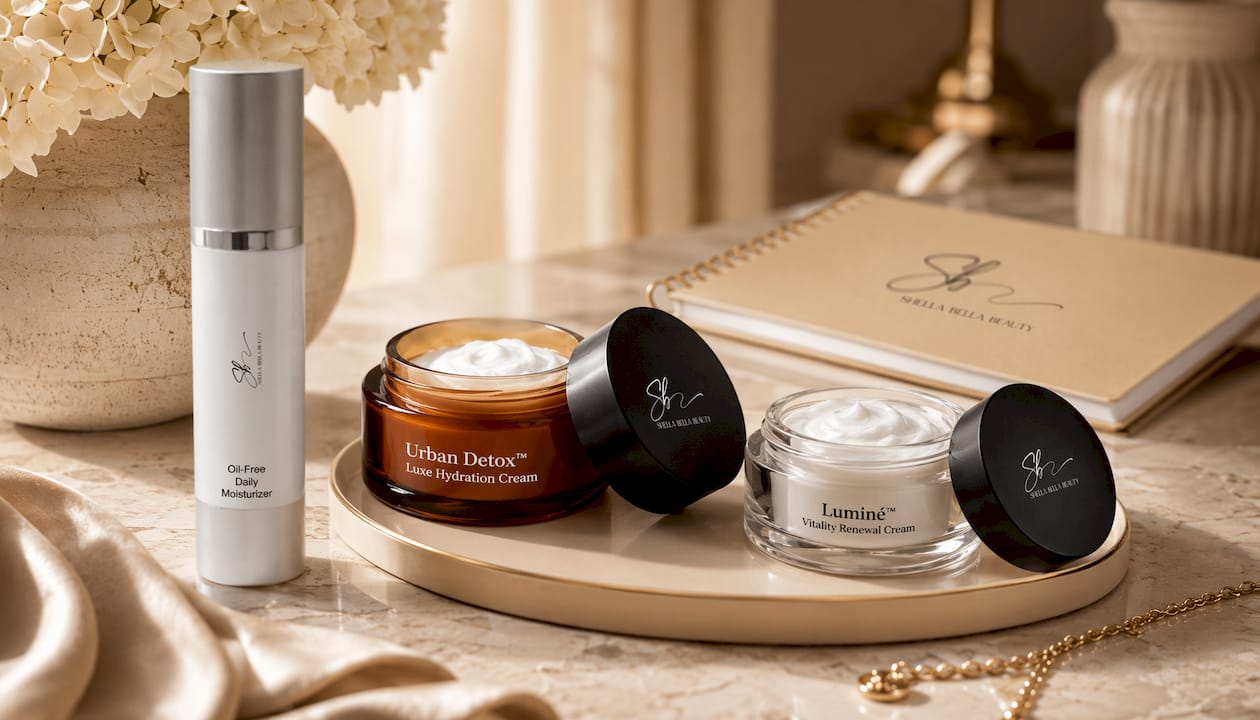
The Opuliss™ Daily Perfection Moisturizer, the Urban Detox™ Luxe Hydration Cream, and the Luminé™ Vitality Renewal Cream each embody the principles in this checklist: material compatibility with sensitive actives, finishes that communicate refinement, and packaging designed to preserve radiance from first use to last. For brand professionals and product developers who want to see these principles in practice, exploring the Shellabellabeauty collection offers a grounded reference point for what premium packaging looks and feels like when every decision is made with intention.
Key Takeaways
Premium skincare packaging requires formulation-first material selection, verifiable sustainability certifications, and full-system quality assurance with filled samples before any production run is approved.
| Point | Details |
|---|---|
| Formulation drives packaging | Material and format selection must begin with the formula’s chemistry, viscosity, and active ingredient sensitivities. |
| Filled-sample QA is non-negotiable | Final packaging approval must be based on filled samples tested under accelerated conditions, not empty dry components. |
| Layered finishes signal luxury | Combining two or three finishes, such as soft-touch lamination with spot UV, creates tactile and visual contrast that justifies premium pricing. |
| Certifications validate sustainability | FSC, SFI, and GRS certifications make eco-friendly claims credible; mono-material constructions improve recyclability without sacrificing structure. |
| Shellabellabeauty as a reference | Products like the Opuliss™ Daily Perfection Moisturizer and Luminé™ Vitality Renewal Cream demonstrate how packaging principles translate into finished luxury skincare. |
FAQ
What should every premium skincare packaging checklist include?
A complete checklist covers primary and secondary packaging formats, material compatibility with the formula, finishing techniques, sustainability certifications, FDA MoCRA labeling compliance, supplier qualifications, and quality assurance testing with filled samples.
How do you test skincare packaging compatibility?
Fill a sample unit with the actual formulation, seal it, hold it at 40°C for four weeks, then check for weight loss, visual changes, and product contamination. PP and PET are the safest starting materials for most formulations.
Which sustainability certifications matter most for US skincare packaging?
FSC (Forest Stewardship Council), SFI (Sustainable Forestry Initiative), and GRS (Global Recycled Standard) are the most credible certifications for paper-based and recycled-content packaging in the US market.
What FDA labeling rules most often delay first production runs?
The three most common issues are missing net contents in both mL and fl oz on the principal display panel, using a PO box instead of a street address, and listing ingredients by marketing name rather than INCI nomenclature.
When does a rigid setup box make sense over a folding carton?
Rigid setup boxes are appropriate for SKUs priced above $100 retail, holiday gift sets, and hero products where the unboxing experience is part of the product’s perceived value. For everyday retail-shelf skincare, folding cartons at a mid to high weight SBS offer better cost efficiency and comparable finishing options.
Recommended
- How to Store Luxury Skincare Products the Right Way – Shella Bella Beauty™
- Skincare Ingredient Pairing Checklist: 10 Best Combos – Shella Bella Beauty™
- How to Read Skincare Ingredient Labels in 2026 – Shella Bella Beauty™ LLC
- Types of Skincare Active Ingredients: Your 2026 Guide – Shella Bella Beauty™