

Topical adaptogens are plant- and fungus-derived bioactives that help skin maintain balance and resilience against stress, and the clinical evidence supports their ability to reduce redness, strengthen the barrier, and calm reactivity when used consistently over several weeks. They are not instant correctors. They are long-term allies for skin that needs steadiness rather than stimulation.
- Adaptogens work through multi-targeted, homeostatic mechanisms rather than a single pathway.
- Clinical trials document cumulative improvements in redness, texture, and barrier function over 8–12 weeks of consistent use.
- The most studied topical adaptogens include Reishi, Chaga, Centella asiatica, Ashwagandha, Rhodiola, and Ginseng.
- They are best suited to sensitive, reactive, or stress-exposed skin seeking gentler alternatives to aggressive actives.
- Look for standardized extracts and formulations that cite clinical data, not vague “adaptogen complex” labels.
Table of Contents
- What is adaptogens skincare, and how does it differ from ordinary botanicals?
- How do topical adaptogens actually work on skin?
- What does the clinical literature actually show?
- Common topical adaptogens and what each one does for skin
- Topical vs. oral adaptogens: which one does what?
- Who benefits most, and who should be cautious?
- How to use adaptogen products in your skincare routine
- How to choose an effective adaptogen skincare product
- Safety, side effects, and how to patch-test properly
- Key Takeaways
- The case for patience in an industry that rarely asks for it
- Shellabellabeauty’s adaptogen-forward skincare collection
- Useful sources and further reading
- FAQ
What is adaptogens skincare, and how does it differ from ordinary botanicals?
The term “adaptogen” was originally coined in pharmacology to describe substances that help an organism resist stress without disrupting normal function. In skincare, the concept has been translated into a specific classification for topical ingredients. A systematic review published in JCAD identified 29 topical adaptogens and proposed a formal categorization system based on three core criteria drawn from dermatology literature.
Those three criteria are:
- Nontoxicity: The ingredient must be safe for skin with chronic, long-term exposure, showing no irritation or sensitization even with repeated use.
- Nonspecific, homeostatic action: Rather than pushing skin in one direction, the ingredient modulates multiple pathways to restore equilibrium, whether skin is under-reactive or over-reactive.
- Enhanced resistance to stressors: The ingredient measurably improves skin’s ability to withstand environmental, chemical, or intrinsic stressors over time.
What separates a topical adaptogen from an ordinary botanical is that distinction between normalizing and single-targeting. A vitamin C serum, for example, is a potent antioxidant, but it acts primarily on one pathway: oxidative stress neutralization. An adaptogen like Reishi works across antioxidant, anti-inflammatory, and barrier-fortifying pathways simultaneously, calibrating the skin’s response rather than overriding it. Dermatologists describe this as a return of traditional botanical knowledge into evidence-based cosmeceuticals, where the value lies in regulation rather than force.
How do topical adaptogens actually work on skin?
The mechanisms behind adaptogen skincare are more layered than most ingredient categories, which is precisely what makes them so well-suited to complex skin concerns. Rather than delivering one targeted action, they operate across several biological levels at once.
The primary mechanisms identified in published reviews include:
- Homeostatic modulation: Adaptogens help skin self-regulate, calming overactive inflammatory responses while supporting under-functioning barrier systems.
- Mild stress mimetic action: At low doses, adaptogens activate the skin’s own adaptive pathways, essentially training the skin to respond more efficiently to future stressors. This is why daily, low-dose application tends to outperform sporadic high-concentration use.
- Antioxidant activity: Many adaptogens neutralize free radicals generated by UV exposure, pollution, and metabolic processes, protecting cellular integrity over time.
- Anti-inflammatory and immunomodulatory effects: They modulate cytokine signaling and reduce the inflammatory cascades that contribute to redness, sensitivity, and premature aging.
- Barrier fortification: Several adaptogens support ceramide production and lipid organization, reinforcing the skin’s outermost protective layer.
- Local HPA-axis modulation: The skin has its own stress-response system, mirroring the body’s hypothalamic-pituitary-adrenal axis. Adaptogens can influence this local axis, reducing the cortisol-like signals that trigger sensitivity and barrier breakdown.
Adaptogens act as mild stress mimetics at low doses, training the skin’s adaptive responses. This explains why daily, consistent application often produces more meaningful results than occasional, high-concentration use — the skin learns to regulate itself more gracefully over time.
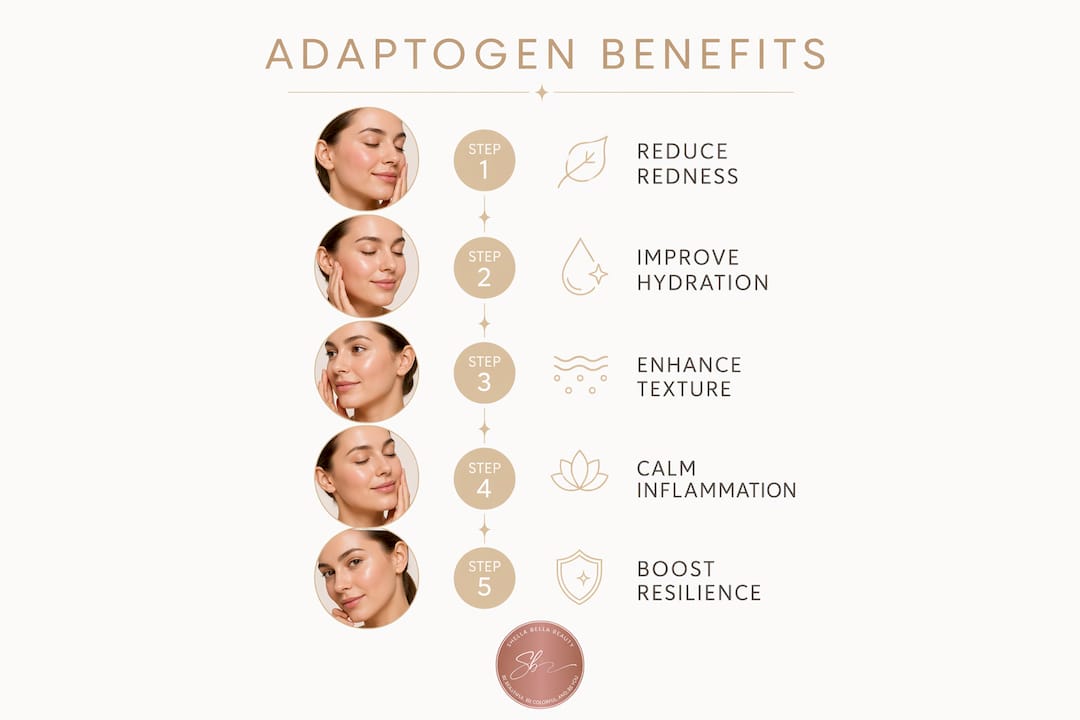
The practical outcomes of these mechanisms are visible: reduced redness and reactivity, improved texture and hydration, and greater resilience to environmental aggressors like pollution and UV radiation. Understanding the role of antioxidants in skincare helps place adaptogen antioxidant activity in context alongside other protective actives.

What does the clinical literature actually show?
The evidence base for topical adaptogens is real, though it comes with important caveats about study quality and scale. The JCAD systematic review, which selected 12 studies and identified 29 topical adaptogens for cutaneous benefits, represents the most rigorous classification effort to date. It proposed a mechanism-based system that groups adaptogens by their primary mode of action: barrier-fortifiers, local HPA-axis modulators, and cellular energy optimizers.
| Study type | Typical endpoints | Reported timeline | Limitations |
|---|---|---|---|
| Systematic review (JCAD) | MOA classification, safety criteria | N/A (classification) | Heterogeneous study designs |
| Clinical trials (PubMed) | Redness, barrier function, hydration, texture | 8–12 weeks | Small sample sizes, varied formulations |
| Ingredient dossiers (e.g., Ganocalm™) | Stinging, redness (in vivo/in vitro) | Immediate to short-term | Industry-funded, limited independence |
Clinical trials consistently document cumulative improvements after consistent use over a 12-week period, particularly in measures of redness, skin texture, and barrier function. These are not dramatic overnight changes. They reflect the gradual recalibration of skin’s stress-response systems.
The limitations are worth naming plainly. Most trials involve small participant groups, and formulations vary widely in extract concentration and standardization. The global adaptogens market reached $10.34 billion in 2023, which means commercial interest has outpaced the pace of independent clinical research. Longer trials with standardized extracts and larger cohorts are still needed. For now, the evidence is promising and mechanistically sound, but readers should favor products that cite specific clinical data over those making broad, unsubstantiated claims.
Common topical adaptogens and what each one does for skin
These six adaptogens appear most frequently in dermatology literature and consumer formulations. Their evidence levels vary, so understanding each one individually helps you make more informed choices when reading an INCI list.
-
Reishi (Ganoderma lucidum): Rich in beta-glucans and triterpenoids, Reishi is one of the most studied mushroom adaptogens for skin. Its polysaccharide-rich extracts support barrier function and reduce inflammatory signaling. Seppic’s Ganocalm™ ingredient dossier reports up to 45% decrease in stinging sensations in vivo, making it particularly relevant for sensitive and reactive skin types. Evidence level: clinical and preclinical.
-
Chaga (Inonotus obliquus): A birch-tree fungus with exceptionally high antioxidant capacity, Chaga is used in formulations targeting oxidative stress and environmental aging. Its melanin-rich composition helps neutralize free radicals generated by UV and pollution exposure. Evidence level: primarily preclinical, with growing interest in clinical application.
-
Centella asiatica: Perhaps the most clinically validated adaptogen in topical skincare, Centella’s active fractions, including asiaticoside, madecassoside, and asiatic acid, are well-documented for wound healing, collagen synthesis, and anti-inflammatory action. Standardized fractions such as TECA® (Titrated Extract of Centella Asiatica) appear in peer-reviewed trials and are the gold standard for formulation transparency. Evidence level: strong clinical.
-
Ashwagandha (Withania somnifera): Topically, Ashwagandha’s withanolides offer antioxidant and anti-inflammatory benefits, supporting skin that shows signs of stress-related aging. It is worth noting that oral Ashwagandha has been associated with hormonal shifts in some clinical discussions, including changes in testosterone and DHEA-S, which can influence oil production in susceptible individuals. Topical use at cosmetic concentrations carries a different and generally lower risk profile, but the distinction matters. Evidence level: preclinical and traditional, with caution for oral use.
-
Rhodiola (Rhodiola rosea): Rhodiola’s rosavins and salidroside are studied for their ability to reduce cellular fatigue and support skin’s energy metabolism. It is particularly relevant for skin that appears dull or fatigued, as it supports mitochondrial function at the cellular level. Evidence level: preclinical, with some clinical data on anti-fatigue effects.
-
Ginseng (Panax ginseng): Ginsenosides, the active compounds in Ginseng, have been studied for their ability to stimulate collagen production, improve microcirculation, and reduce the appearance of fine lines. Ginseng extracts appear in both traditional formulations and modern cosmeceuticals, often standardized to a specific ginsenoside percentage. Evidence level: clinical and preclinical.
For a broader understanding of how these ingredients fit among skincare active ingredient classes, Shellabellabeauty’s Glow Chronicles offers a helpful primer.

Topical vs. oral adaptogens: which one does what?
The delivery pathway changes everything about how an adaptogen behaves, and conflating topical and oral use is one of the most common sources of confusion in this category.
Topical adaptogens act locally. They interact with skin cells, barrier lipids, and surface immune receptors directly, without entering systemic circulation in meaningful amounts. This makes them the efficient choice for visible, localized concerns: redness, barrier compromise, reactive texture, and environmental sensitivity. Their safety profile is well-characterized for cosmetic use, and the risk of systemic side effects is low when formulations meet cutaneous nontoxicity standards.
Oral adaptogen supplements act systemically. They influence cortisol regulation, immune function, sleep quality, and hormonal balance from within, which can have downstream effects on skin. For someone dealing with chronic stress, disrupted sleep, or endocrine imbalances, oral supplementation may complement a topical routine by addressing the internal drivers of skin reactivity. The role of sleep in skin health is one such systemic factor that topical products alone cannot fully address.
The caution with stacking both forms lies in formulation transparency and dosing. Oral adaptogens, particularly Ashwagandha, can influence hormone levels, and anyone on hormone-altering medications or with hormonally driven acne should consult a clinician before adding oral supplements. Topical and oral use can be complementary, but they are not interchangeable, and the evidence base for each is distinct.
Who benefits most, and who should be cautious?
Adaptogen skincare is genuinely well-suited to a specific set of skin concerns, and understanding where it fits prevents both under-use and misplaced expectations.
Profiles most likely to benefit:
- Sensitive or reactive skin that flares with environmental changes, stress, or new products
- Complexions showing early signs of environmental aging: dullness, uneven texture, and loss of resilience
- Skin exposed to urban pollution, blue light, or frequent temperature fluctuations
- Those seeking gentler alternatives to aggressive actives like high-strength retinoids or AHAs
Profiles that warrant caution:
- Pregnancy and lactation: Many botanical adaptogens lack safety data for use during pregnancy. Centella asiatica is generally considered low-risk topically, but oral adaptogens and less-studied mushroom extracts should be avoided without clinician guidance.
- Known plant or fungal allergies: Mushroom-derived adaptogens (Reishi, Chaga) and Asteraceae-family plants can trigger allergic contact dermatitis in sensitive individuals. Patch testing is non-negotiable.
- Hormonal acne or hormone-sensitive conditions: As noted, oral Ashwagandha has been associated with hormonal shifts in some clinical discussions. Topical use is generally lower risk, but those with hormonally driven breakouts should introduce any new adaptogen product slowly.
- People on immunosuppressants or hormone-altering medications: The immunomodulatory properties of some adaptogens may interact with these medications. A clinician’s input is appropriate here.
Pro Tip: Before committing to a new adaptogen product, take a clear photograph of your skin in natural light. Repeat this every two weeks over your 8–12 week trial period. Cumulative changes in redness, texture, and tone are often subtle week to week but striking when compared across a longer span.
How to use adaptogen products in your skincare routine
Placement, pairing, and patience are the three principles that determine whether adaptogen skincare delivers on its promise.
-
Choose your format and place it correctly. Lightweight adaptogen serums belong after cleansing and toning, before heavier moisturizers. Adaptogen-enriched emulsions and creams work well as the final moisturizing step in both AM and PM routines. In the morning, layer them under SPF. At night, they pair naturally with barrier-repair ingredients.
-
Pair thoughtfully with other actives. Adaptogens are generally compatible with vitamin C, niacinamide, and peptides, and can actually complement these actives by supporting the skin’s tolerance to them. With retinoids and AHAs or BHAs, introduce adaptogens first and allow your skin to stabilize before adding the stronger active. The skincare ingredient pairing checklist at Shellabellabeauty offers clear guidance on safe combinations.
-
Use daily, without skipping. The mild stress mimetic mechanism requires consistent, low-dose exposure to build the skin’s adaptive capacity. Sporadic use interrupts this process. Morning and evening application is ideal; once daily is the minimum for meaningful results.
-
Set a realistic timeline. Clinical trials document improvements over a 12-week period of consistent use. Mark your calendar for week eight as a first checkpoint, and week twelve as a fuller assessment. Expecting visible change before four weeks is likely to lead to premature abandonment of an ingredient that needs time to work.
-
Build a multi-step ritual that supports consistency. Adaptogens reward routine. Embedding them in a structured AM and PM ritual, rather than using them ad hoc, is the most reliable path to visible results.
How to choose an effective adaptogen skincare product
The market is generous with the word “adaptogen,” and not all products that carry it deserve it. A few clear criteria separate formulations worth your investment from those riding a trend.
What to look for:
- Standardized extract percentages or named fractions. A product listing “Centella asiatica extract” tells you little. One citing TECA® or a specific percentage of madecassoside tells you the formulator has worked with a characterized ingredient. The same applies to polysaccharide-standardized mushroom extracts.
- Clinical data or ingredient dossiers cited. Reputable brands reference the studies or supplier dossiers behind their key ingredients. This is not common, but it is the clearest signal of evidence-first formulation.
- A complete INCI list. Transparency about every ingredient, not just the hero actives, reflects formulation integrity.
- Packaging that protects bioactivity. Airless pumps and opaque containers matter for oxidation-sensitive extracts. A beautiful glass jar with a wide opening is a red flag for antioxidant-rich adaptogens.
Red flags to avoid:
- Vague “adaptogen complex” with no disclosure of which adaptogens or at what concentration
- Claims of immediate or miraculous transformation, which contradict the cumulative, homeostatic nature of how these ingredients work
- Extremely high concentration claims without accompanying safety data
Price is not a reliable proxy for clinical validity. Some of the best-evidenced adaptogen ingredients, including Centella asiatica fractions, appear in mid-range formulations. Favor evidence over packaging prestige.
Safety, side effects, and how to patch-test properly
True topical adaptogens, by their classification criteria, must demonstrate cutaneous nontoxicity with chronic exposure. This differentiates them from strong actives like retinoids, which require deliberate tolerance-building. That said, individual reactions are always possible, and a few specific concerns are worth knowing.
Common safety considerations:
- Allergic contact dermatitis: Plant-sensitive individuals, particularly those with known reactions to Asteraceae-family plants (chamomile, echinacea, calendula), may react to certain adaptogen botanicals. Fungal adaptogens like Reishi and Chaga carry their own allergen potential for those sensitive to molds or mushrooms.
- Increased sebum or acne risk: Primarily a concern with oral Ashwagandha due to its influence on androgen levels. Topical use at cosmetic concentrations is generally lower risk, but those with hormonally driven acne should monitor closely.
- Photosensitivity: Not a primary concern for most adaptogens, but some botanical extracts can increase UV sensitivity. Always apply SPF in the morning when using any new active ingredient.
- Irritation: Rare with true adaptogens, but possible with high-concentration formulations or in individuals with severely compromised barriers.
Patch-test procedure:
Apply a small amount of the product to the inner forearm or behind the ear. Leave it undisturbed for 48–72 hours without washing the area. Watch for redness, itching, swelling, or any change in skin texture. If no reaction appears after 72 hours, the product is likely safe to introduce to your face.
One clinical note: for systemic adaptogen supplements during pregnancy or breastfeeding, consult a clinician before use. Topical cosmetic products with well-characterized ingredients are generally lower risk, but professional guidance is appropriate for this group.
This article is general educational information, not medical or dermatological advice. For personal skincare concerns, consult a qualified dermatologist or healthcare provider.
Key Takeaways
Topical adaptogens build skin resilience through multi-targeted, homeostatic mechanisms, and clinical trials consistently show their most meaningful benefits emerge after 8–12 weeks of daily, consistent use.
| Point | Details |
|---|---|
| Adaptogens need consistency | Clinical trials show cumulative improvements in redness, texture, and barrier function over 8–12 weeks, not days. |
| Look for standardized extracts | Named fractions (e.g., TECA® for Centella) and polysaccharide-standardized mushroom extracts signal evidence-backed formulation. |
| Caution with hormonal concerns | Oral Ashwagandha has been associated with hormonal shifts; topical use carries lower risk, but monitor closely if acne-prone. |
| Patch-test before committing | Apply to the inner forearm for 48–72 hours before introducing any new adaptogen product to your face. |
| Shellabellabeauty’s approach | Shellabellabeauty formulates with transparent INCI lists and documented extract standards, designed for gentle, daily ritual use. |
The case for patience in an industry that rarely asks for it
There is something quietly countercultural about adaptogens, and it is not the ingredient list. It is the timeline. In a market built on before-and-after photographs taken 72 hours apart, adaptogens ask you to wait 12 weeks. They ask you to trust a process that is invisible for most of it.
What I find genuinely compelling about the clinical picture is not the individual ingredient studies, impressive as some of them are. It is the underlying logic: that skin, like any adaptive system, responds better to consistent, low-level support than to repeated shocks and corrections. The mild stress mimetic mechanism is essentially an argument for patience as a skincare strategy. You are not fixing your skin. You are training it.
The dermatology community’s framing of adaptogens as “normalizing” rather than “pushing” is the most useful lens I have encountered for understanding what this category actually offers. It reframes the goal from correction to calibration. And calibration, by definition, takes time.
Where I think the category still needs scrutiny is in formulation transparency. The JCAD systematic review identified 29 topical adaptogens, but the commercial market has expanded far beyond what the clinical literature has characterized. “Adaptogen complex” on a label is not evidence. It is marketing. The brands doing this well are the ones willing to name their extracts, cite their suppliers, and reference the studies behind their claims. That level of transparency is rarer than it should be, and it is the clearest signal that a formulation was built with intention rather than trend-chasing.
Adaptogens fit naturally within a holistic beauty approach that honors the skin’s own intelligence rather than overriding it. That is the philosophy worth holding onto.
Shellabellabeauty’s adaptogen-forward skincare collection
Radiant skin is not built in a single application. It is cultivated through formulations that respect the skin’s own rhythm, and that is precisely the principle behind Shellabellabeauty’s approach to adaptogen-forward skincare. The brand’s products are developed with transparent INCI lists, documented extract standards, and a commitment to gentle, daily efficacy rather than dramatic short-term claims.

Whether you are drawn to calming serums, cushioned moisturizing creams, or balms designed for reactive skin, Shellabellabeauty’s formulations are built for the kind of consistent, intentional ritual that adaptogens genuinely reward. Each product is designed to complement professional care as well; if you are exploring how topical adaptogens might support your skin alongside in-clinic treatments, the brand’s gentle formulations are well-suited to pre- and post-procedure routines.
Visit Shellabellabeauty to explore the full collection and find the formulations that align with your skin’s needs and your daily ritual.
Useful sources and further reading
The following sources informed the evidence synthesis and practical guidance in this article. Primary research and peer-reviewed reviews were prioritized for clinical claims; industry and press sources were used for context and consumer-facing perspective.
- JCAD Systematic Review: What Are Topical Adaptogens? — Core classification study; identifies 29 topical adaptogens and proposes a MOA-based categorization system. Used for definition, evidence review, and safety criteria.
- PubMed: Clinical trial on topical adaptogens — Documents cumulative improvements in redness, texture, and barrier function over a 12-week period. Used for timeline guidance and evidence review.
- MDPI Cosmetics: Topical adaptogen mechanisms — Explains homeostatic and mild stress mimetic mechanisms. Used for the mechanism section.
- Seppic: What are adaptogens in skin care? — Industry ingredient notes including Ganocalm™ dossier data and market sizing. Used for ingredient-specific claims and market context.
- Nolla Health: Can Ashwagandha cause acne? — Clinical discussion of oral Ashwagandha’s hormonal effects. Used for safety and who-should-use sections.
- Shellabellabeauty — Brand landing page for product exploration and further reading on ingredient education.
FAQ
Are adaptogens good for your skin?
Yes, particularly for sensitive, reactive, or stress-exposed skin. Clinical trials show cumulative improvements in redness, barrier function, and texture over 8–12 weeks of consistent use, and the JCAD systematic review supports their classification as safe, multi-targeted actives.
Who should not use adaptogens?
People who are pregnant or breastfeeding should avoid oral adaptogen supplements without clinician guidance, and those with known plant or fungal allergies should patch-test carefully. Anyone on hormone-altering medications or immunosuppressants should consult a dermatologist before adding adaptogen products.
What is the difference between botanicals and adaptogens?
All adaptogens are botanicals, but not all botanicals are adaptogens. An adaptogen must meet three specific criteria: cutaneous nontoxicity, nonspecific homeostatic action across multiple pathways, and a measurable ability to enhance skin’s resistance to stressors. Most botanicals act on a single target; adaptogens normalize and calibrate.
Can adaptogens cause breakouts?
Topical adaptogen products at cosmetic concentrations rarely cause breakouts. The more relevant concern is oral Ashwagandha, which has been associated with hormonal shifts in some clinical discussions, potentially increasing oil production in susceptible individuals. If you are acne-prone, introduce any new adaptogen product slowly and monitor your skin’s response over several weeks.
Recommended
- Products for Skin Renewal That Respect Your Glow – Shella Bella Beauty™
- The Role of Antioxidants in Skincare Explained – Shella Bella Beauty™
- Types of Skincare Active Ingredients: Your 2026 Guide – Shella Bella Beauty™
- When Your Skin Barrier Needs Repair, Not More Products – Shella Bella Beauty™
- Join Glow Chronicles™ — Continue the Glow™ with editor’s picks, seasonal beauty rituals, exclusive skincare insights, and new editions delivered to your inbox.