
Facial gua sha is a gentle, tool-guided facial massage rooted in Traditional Chinese Medicine that can temporarily reduce puffiness, support circulation, and invite a quiet sense of calm into your skincare ritual. For most people with healthy skin, it is safe to practice at home when performed with light pressure, proper lubrication, and a smooth-edged tool. The benefits are real, and they are mostly temporary: think of each session as a reset for your skin rather than a permanent transformation.
Quick takeaways before you begin:
-
Who benefits most: Those dealing with morning puffiness, facial tension, or dull skin who want a mindful, low-cost addition to their routine.
-
Primary limit: Effects such as de-puffing and a brightened appearance are short-term, driven by fluid movement and increased blood flow rather than structural change.
-
Key safety note: Avoid gua sha over active acne, broken skin, recent facial injectables, or if you take blood-thinning medications.
Table of Contents
What Is Facial Gua Sha and Where Does It Come From?
Facial gua sha is a therapeutic practice rooted in Traditional Chinese Medicine, a healing system with roughly 2,000 years of continuous use across East and Southeast Asia. The name itself tells the story: gua (刮) means “to scrape,” and sha (痧) refers to the redness or marks that appear on skin after treatment. In its original body-focused form, practitioners used firm pressure to move what TCM describes as stagnant qi and blood, restoring flow and vitality to the body’s deeper tissues.
Facial application is a distinctly gentler interpretation of that tradition. Where body gua sha deliberately produces petechiae, those characteristic red marks that signal deep tissue stimulation, facial gua sha uses light, upward and outward strokes that should never leave bruising. The goal shifts from deep therapeutic scraping to superficial lymphatic encouragement and microcirculation support. Pressure that would be entirely appropriate on the back or thighs would be far too aggressive for the delicate skin of the cheeks or under-eye area.
The practice moved from clinical TCM settings into Western wellness culture gradually, gaining particular momentum as consumers began seeking holistic beauty approaches that honored both skin health and mental well-being. Today it sits comfortably at the intersection of ancient wisdom and contemporary self-care.
What Are the Benefits of Facial Gua Sha?
The benefits people most consistently report fall into a few clear categories, each with a plausible physiological explanation. Understanding the mechanism helps you set realistic expectations.
-
De-puffing and lymphatic drainage. Light strokes along the lymphatic pathways of the face encourage fluid that has pooled overnight to move toward the lymph nodes at the neck and collarbone. Small studies and clinical experts report that regular practice can reduce morning puffiness through this mechanism.
-
Improved circulation and a temporary glow. Gentle friction increases blood flow to the skin’s surface, bringing oxygen and nutrients that create a visible brightening effect. This is the “glow” most practitioners notice immediately after a session.
-
Muscle tension relief. The face holds a surprising amount of tension, particularly along the jaw, brow, and temples. Slow, intentional strokes can soften that holding pattern, which may indirectly smooth the appearance of expression lines over time.
-
Better product absorption. Massaging a facial oil or serum into the skin with a gua sha tool can support deeper penetration compared to fingertip application alone, making your existing products work a little harder.
-
Stress reduction through ritual. A mindful 5–15 minute practice lowers cortisol in the same way any deliberate, focused self-care ritual does, and reduced stress itself tends to improve skin’s overall appearance and resilience.
The honest caveat is that these effects are largely temporary. Gua sha moves fluid and stimulates circulation; it does not restructure tissue or produce lasting anatomical change. Think of it as a daily act of care rather than a corrective treatment.
What Do Dermatologists and Researchers Actually Say?
The clinical evidence base for facial gua sha is limited. High-quality, large-scale randomized controlled trials are sparse; most support comes from small studies, expert opinion, and physiological reasoning about how lymphatic flow and microcirculation work. That does not mean the practice is without merit, but it does mean the claims deserve proportionate framing.
Dermatologists generally present facial gua sha as supportive self-care, not a clinical treatment. Clinicians note that it can help move lymphatic fluid and provide temporary de-puffing and relaxation, while being clear that it should not replace professional care for skin conditions such as rosacea, cystic acne, or persistent edema.
“Gua sha can help get lymphatic fluid moving and provide temporary de-puffing and relaxation, but it should not replace professional care for skin conditions.” — Cleveland Clinic Health Essentials
Integrative medicine practitioners tend to frame the practice within a broader wellness context, valuing the ritual’s stress-reduction component alongside its physical effects. The mental dimension is not a footnote: a mindful 5–15 minute session can lower perceived stress, which itself supports skin health over time.
Pro Tip: If you notice persistent swelling, unusual skin changes, or a suspicious lesion that does not resolve, consult a board-certified dermatologist rather than attributing it to fluid retention. Gua sha is a complement to professional care, not a substitute for it.
Is Facial Gua Sha Safe? Risks and Contraindications
For most people with healthy, intact skin, facial gua sha is safe when performed correctly. The risks arise almost entirely from improper technique: too much pressure, insufficient lubrication, or using the tool over compromised skin.
“Facial gua sha should not cause pain. If it hurts, you are pressing too hard or working over skin that needs rest.” — Acibadem International Health Library
Avoid facial gua sha if you have any of the following:
-
Active acne, open lesions, or skin infections in the treatment area
-
Severe sunburn or a compromised skin barrier
-
Recent facial injectables (Botox, fillers) or cosmetic procedures — follow your provider’s guidance on timing
-
A diagnosed bleeding disorder or current use of blood-thinning medications
-
Inflammatory skin conditions such as active rosacea flares or eczema in the treatment zone
Improper technique, excessive pressure, or use on compromised skin can lead to irritation, broken capillaries, or barrier damage. These outcomes are avoidable with the right preparation and a genuinely light touch. When in doubt, test a small area first and observe your skin’s response over 24 hours before proceeding with a full routine.
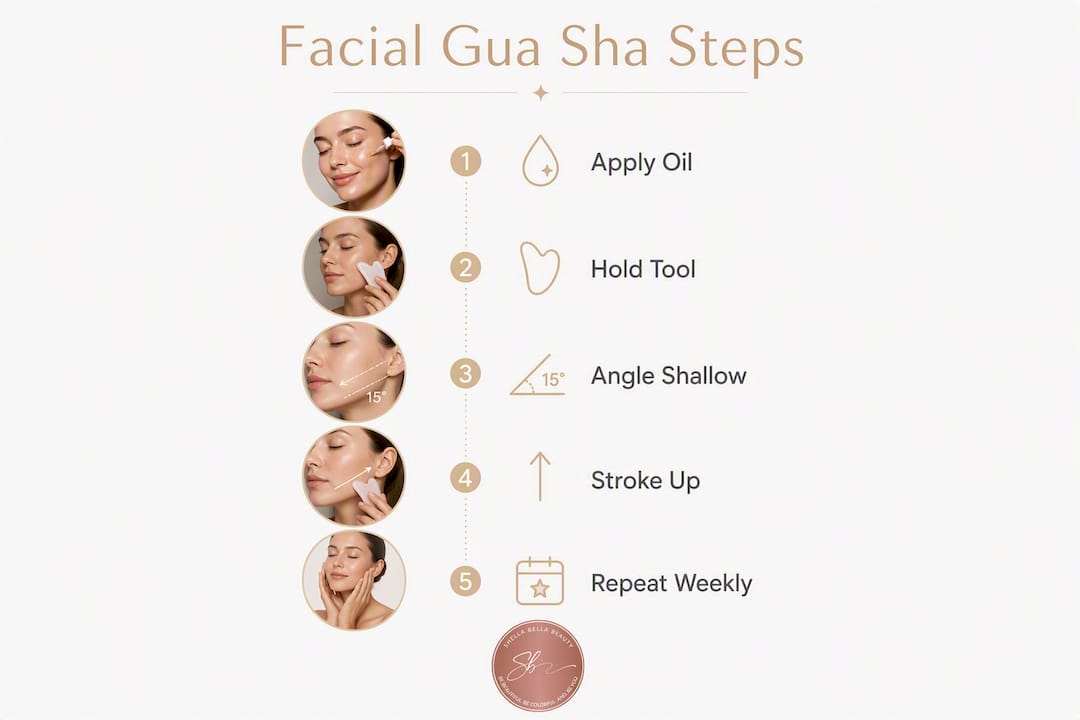
How to Use Gua Sha Step by Step: A Beginner Routine
This routine takes 5–15 minutes and is designed to be gentle enough for first-time practice. Read through the full sequence before you begin.
Preparation
-
Cleanse your face thoroughly to remove makeup, sunscreen, and surface debris.
-
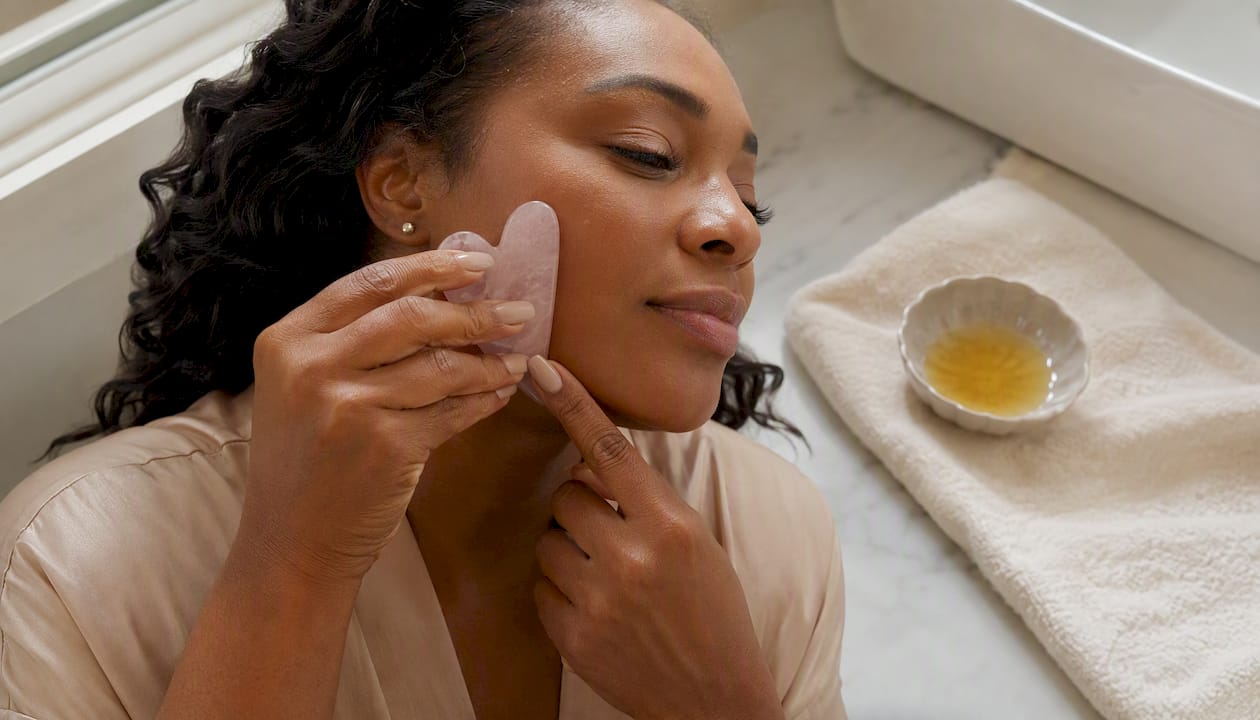
Apply a generous layer of facial oil or hydrating serum. Lubrication is non-negotiable: without sufficient lubrication, a gua sha tool creates damaging friction that can compromise your skin barrier.
-
Sit comfortably in front of a mirror with good lighting so you can observe your strokes and pressure.
The stroke sequence
Work from the base of the neck upward, always moving fluid toward the lymph nodes.
-
Neck: Begin with a few downward strokes along the sides of the neck, from jaw to collarbone, to open the lymphatic pathway before you work on the face.
-
Jawline: Using the curved notch of your tool, glide from the chin outward toward the ear with gentle, upward-angled strokes. Repeat several times per side.
-
Cheeks: Sweep from the nose outward toward the hairline, following the cheekbone. Keep the movement fluid and unhurried.
-
Under-eye area: Use the smallest, most curved edge of your tool here. Strokes move from the inner corner outward toward the temple. Use the lightest possible pressure.
-
Brow and forehead: Glide from the center of the brow outward to the temple, then sweep upward from the brow to the hairline in short, even passes.
Angle, pressure, and frequency
Hold your tool at a shallow angle that helps the tool glide without dragging the skin against the skin. This shallow hold allows the edge to glide rather than drag, which is what makes lymphatic drainage effective and keeps the experience comfortable. Pressure should feel like a gentle, intentional touch — never a scrape.
Many estheticians recommend starting 2–3 times per week and monitoring how your skin responds before increasing frequency. Consistent, gentle practice yields better results than aggressive or daily sessions, particularly for sensitive skin.
Pro Tip: Pair each stroke with a slow, deliberate exhale. Conscious breathing deepens the relaxation response and makes the ritual feel genuinely restorative rather than mechanical. You can find more guidance on building this kind of mindful beauty ritual into your daily life.
Quick do-this / not-that reminders:
-
Do use enough oil that the tool glides without any pulling sensation.
-
Do not work over active breakouts, irritated patches, or recently injected areas.
-
Do keep strokes upward and outward to support lymphatic direction.
-
Do not press hard enough to cause redness that lingers beyond 10 minutes.
Choosing Your Tool and Keeping It Clean
Common materials and what to expect
Polished stone tools made from jade or rose quartz are the most widely used for facial gua sha, valued for their naturally cool surface and smooth edges. Stainless steel tools offer durability and an even more pronounced cooling effect, while resin options tend to be lighter and more affordable. None of these materials has a proven clinical advantage over another; the best tool is the one that feels comfortable in your hand and suits your budget.
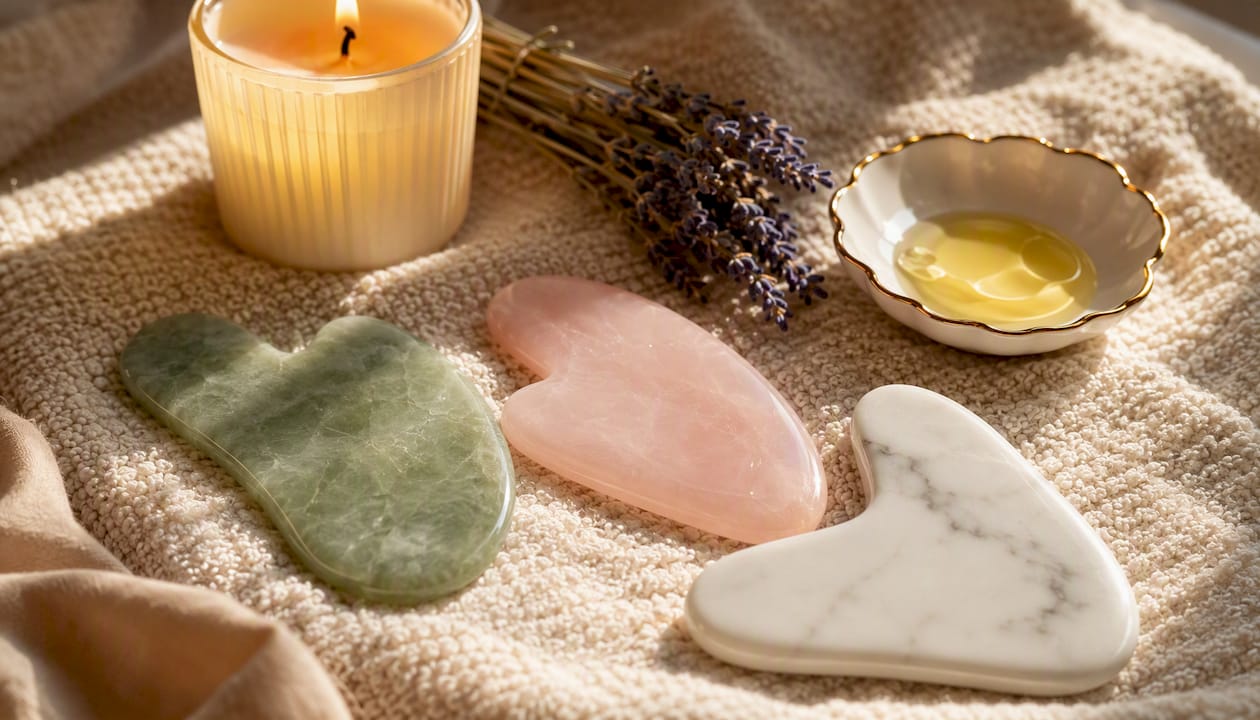
Shape matters more than material for technique. A straight or gently curved edge works well along the jaw and cheeks, while a notched or deeply curved edge is designed for the contours of the under-eye area and brow bone. Many tools combine both edges on a single piece, making them versatile for a full-face routine.
Care and hygiene
Clean your tool after every use with mild soap and warm water, then pat it dry and store it away from direct sunlight. Stone tools can crack if dropped or exposed to extreme temperature changes, so handle them with care. Never share your tool with another person, and retire any tool that develops chips or rough edges that could scratch delicate skin.
| Tool type | Typical feel | Ease of cleaning | Best for |
|---|---|---|---|
| Stone blade (jade/quartz) | Cool, smooth | Easy — soap and water | Full-face routine, lymphatic strokes |
| Stainless steel blade | Very cool, firm | Very easy — wipe clean | De-puffing, precise contouring |
| Roller (stone or steel) | Rolling pressure | Easy — detach and rinse | Beginners, quick morning refresh |
| Silicone tool | Soft, flexible | Very easy — dishwasher safe | Sensitive skin, travel |
Common Mistakes Beginners Make (and How to Fix Them)
Most gua sha frustrations trace back to a small number of correctable errors. Recognizing them early protects your skin and keeps the practice enjoyable.
-
Too much pressure. The most common mistake, and the one most likely to cause broken capillaries or prolonged redness. Lighten your touch until the strokes feel like a gentle suggestion rather than a firm push.
-
Wrong tool angle. Holding the tool too upright (close to 90 degrees) causes it to drag rather than glide. Return to the 15–30 degree shallow hold and notice the difference immediately.
-
Inadequate lubrication. If you feel any pulling or friction, add more oil before continuing. Dry strokes are the fastest route to barrier damage.
-
Rushing the routine. Short, hurried passes miss the lymphatic benefit entirely. Slow, deliberate strokes of 3–5 passes per area are more effective than a rapid sweep across the whole face.
-
Using the tool over active acne or lesions. This spreads bacteria and can worsen breakouts. Skip any area that is not fully healed.
Pairing gua sha with a thoughtfully layered evening skincare ritual gives your skin the recovery support it needs between sessions and helps you notice how it responds over time.
Key Takeaways
Facial gua sha is a gentle, tool-assisted facial massage that offers temporary de-puffing, improved circulation, and relaxation when practiced correctly 2–3 times per week with light pressure and proper lubrication.
| Point | Details |
|---|---|
| Definition and origin | A TCM-rooted facial massage using a smooth tool to encourage lymphatic flow and circulation. |
| Benefits are temporary | De-puffing, glow, and tension relief are short-term effects driven by fluid movement, not structural change. |
| Safe technique essentials | Use a 15–30 degree tool angle, generous lubrication, and gentle pressure with a few passes per area. |
| Frequency guidance | Start at 2–3 sessions per week and monitor skin response before increasing. |
| Shellabellabeauty | Offers curated facial oils, educational content, and luxury ritual guidance to support safe gua sha practice at home. |
The Ritual Is the Point
There is a tendency in modern skincare to evaluate every practice purely by its measurable outcomes, and by that standard alone, facial gua sha will always look modest. The evidence is limited, the effects are temporary, and no stone tool will replace a good SPF or a well-formulated serum.
What that framing misses is the value of the ritual itself. A 10-minute practice that asks you to slow down, breathe deliberately, and attend to your skin with genuine care does something that no ingredient can fully replicate: it builds a relationship between you and your skin that is patient, consistent, and kind. That relationship, sustained over months and years, tends to produce better outcomes than any single product or technique applied in isolation.
The practitioners who seem to get the most from gua sha are not the ones chasing dramatic contouring results. They are the ones who have folded it into a broader luxury self-care ritual that honors their skin’s natural rhythm. The tool is a prompt for presence. The strokes are a form of attention. And attention, offered consistently, is one of the most nourishing things you can give your skin.
Shellabellabeauty Supports Your Gua Sha Practice
Practicing facial gua sha well depends on two things most beginners underestimate: the quality of the oil beneath the tool and the guidance behind the technique. A lightweight facial oil that glides without clogging, paired with clear instruction on pressure and sequence, makes the difference between a ritual that feels luxurious and one that leaves your skin irritated.

Shellabellabeauty brings both together. The brand’s curated selection of facial oils and serums is formulated to provide the smooth, nourishing slip that gua sha demands, while the Glow Chronicles editorial library offers the kind of expert-led, ingredient-informed guidance that helps you practice with confidence. Whether you are building your first routine or refining one you already love, Shellabellabeauty gives you the products and knowledge to do it with intention. Visit Shellabellabeauty to find the facial oils and ritual resources suited to your skin.
Useful Sources and Further Reading
The following sources informed this guide and offer reliable further reading on gua sha’s history, technique, and clinical context.
-
Gua Sha: Benefits and How To Do It — Cleveland Clinic Health Essentials
-
How to Use Gua Sha for Tension, Puffiness, and Lymphatic Drainage — Healthline
FAQ
Is gua sha actually good for your face?
Yes, for most people with healthy skin. Facial gua sha can temporarily reduce puffiness and improve radiance by encouraging lymphatic fluid movement and increasing microcirculation, though effects are short-term rather than permanent.
What are the downsides of facial gua sha?
The main risks are skin irritation, broken capillaries, and barrier damage, all of which result from incorrect technique such as too much pressure, inadequate lubrication, or use over compromised skin. Performed correctly, side effects are minimal.
How often should you use gua sha on your face?
Many estheticians recommend starting at 2–3 sessions per week, monitoring your skin’s response, and adjusting from there. Daily use is not necessary and can over-stimulate sensitive skin.
What do dermatologists think of facial gua sha?
Dermatologists generally view it as a safe, supportive self-care practice for healthy skin, not a clinical treatment. Clinicians note that benefits such as de-puffing and relaxation are real but temporary, and they advise against using it as a substitute for professional care when a skin condition is present.
How is facial gua sha different from jade rolling?
Both tools encourage circulation and lymphatic flow, but a gua sha stone’s flat edge covers more surface area and allows varied stroke angles, while a jade roller applies consistent rolling pressure along a fixed axis. Gua sha tends to offer more control over technique and pressure, making it more versatile for targeting specific areas such as the jawline or brow bone.
Recommended
-
A Guide to Luxury Facial Oils: Elevating Your Skincare Ritual – Shella Bella Beauty™
-
Join Glow Chronicles™ — Continue the Glow™ with editor’s picks, seasonal beauty rituals, exclusive skincare insights, and new editions delivered to your inbox.