

Slugging skincare is defined as the practice of applying a petrolatum-based occlusive as the final step in your nighttime routine to lock in moisture and support skin barrier repair while you sleep. The technique takes its name from the glistening, almost slug-like sheen that petrolatum leaves on the skin. The #slugging hashtag has surpassed 500 million views on TikTok, which signals that this is far more than a passing trend. Dermatologists have largely endorsed it for dry and compromised skin types, though the method requires careful layering and an understanding of your own skin’s needs before you begin.
What is slugging skincare and how does it work?
Slugging works by dramatically reducing transepidermal water loss, which is the process by which moisture evaporates from your skin into the surrounding air. When your skin barrier is compromised or simply dry, this loss accelerates, leaving your complexion tight, flaky, and dull. Petrolatum forms a hydrophobic barrier on the skin’s surface that reduces water loss by upwards of 98%, outperforming plant oils and most traditional emollients by a significant margin. That number reflects a meaningful difference in how much moisture your skin retains overnight.
The occlusive layer does something else that rarely gets discussed: it creates a warm, humid microclimate directly against your skin. That environment supports the activity of repair enzymes and promotes lipid synthesis within the skin barrier itself. Petrolatum also supports barrier differentiation proteins and antimicrobial peptides, which means it actively encourages your skin to rebuild its own defenses rather than simply sealing the surface.
One clarification that matters deeply here: slugging does not add hydration to your skin. It preserves the moisture that is already present. This distinction shapes the entire method. If you apply petrolatum over dry, unhydrated skin, you are simply sealing in dryness. The occlusive acts as a lid, not a source of water.
- Reduces TEWL: Petrolatum cuts transepidermal water loss by over 98%, far exceeding plant-based oils.
- Creates a repair environment: The humid microclimate under the occlusive layer activates skin repair enzymes.
- Supports barrier proteins: Petrolatum promotes the proteins and peptides your skin uses to rebuild its barrier.
- Preserves, not adds, moisture: Slugging locks in existing hydration rather than delivering new water to the skin.
Who benefits most from slugging, and who should avoid it?
Slugging is a targeted technique, not a universal fix. Dry, flaky, or compromised skin responds best to it, particularly when the barrier has been weakened by environmental stress, over-exfoliation, or conditions like eczema. Reactive skin types that struggle with redness and sensitivity also tend to benefit, since the occlusive layer shields the skin from irritants while repair takes place overnight.
Oily and acne-prone skin types, however, should approach this method with real caution. Slugging may exacerbate acne or fungal acne by trapping sebum and creating conditions where yeast thrives. The occlusion that benefits dry skin becomes a liability when excess oil is already present. People living in humid climates may also find that their skin does not need this level of barrier reinforcement and that the added occlusion leads to congestion.
Experts recommend starting with once or twice weekly application at night, adjusting based on how your skin responds over time. For oily skin types seeking alternatives, a guide to oily skin products can help identify lighter barrier-support options that do not carry the same congestion risk.
Pro Tip: If you are unsure whether your skin is too oily for slugging, try applying petrolatum only to the driest zones of your face, such as the cheeks or around the nose, and leave the T-zone untreated. This targeted approach lets you test the method without risking breakouts.
What is the correct layering order for slugging?
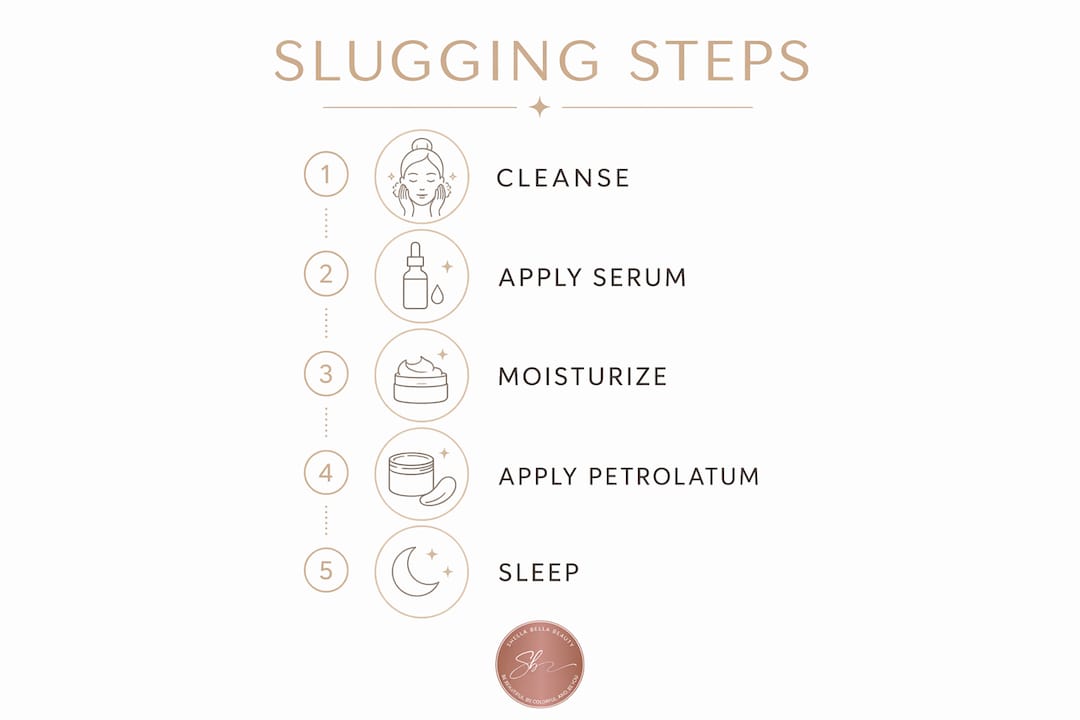
The layering order is the single most important factor in whether slugging benefits or harms your skin. Proper layering requires that humectants and emollients go on before the occlusive, so that the petrolatum seals in hydration rather than blocking it out. Applying petrolatum directly to bare skin skips the hydration step entirely and delivers far less benefit.
A reliable nighttime slugging routine follows this order:
- Cleanse your skin gently to remove makeup, sunscreen, and the day’s buildup. A mild, non-stripping cleanser preserves the moisture your skin already holds.
- Apply a toner or hydrating mist while your skin is still slightly damp. This gives the humectant layer something to work with.
- Layer a water-based serum or humectant, such as one containing hyaluronic acid or glycerin, to draw water into the skin.
- Apply your moisturizer, choosing a cream or lotion with emollient ingredients that soften and smooth the skin’s surface.
- Finish with petrolatum as the final step. Use only a pea-sized amount to cover the entire face. More product does not improve results and only leads to greasy residue on your pillow.
Slugging works best when applied over damp skin after cleansing, since the occlusive traps whatever moisture is present at that moment. Timing your application before the skin fully dries from cleansing or toning gives the method its best chance to perform.
Pro Tip: Avoid slugging on nights when you use retinoids, AHAs, BHAs, vitamin C, or benzoyl peroxide. Occlusion significantly increases the penetration of active ingredients, which can push them far beyond their intended concentration and cause irritation or barrier damage.
Common misconceptions and pitfalls of slugging
The most persistent myth about slugging is that petrolatum suffocates the skin or clogs pores. This is not accurate. Petrolatum is non-comedogenic and its molecules are too large to penetrate hair follicles. It sits on the surface of the skin and does not interfere with the skin’s natural respiration or cellular processes.
The real risks come from how people apply it, not from the ingredient itself. Several common mistakes reduce the method’s benefits or actively cause harm:
- Sealing in active ingredients: Occluding retinoids, AHAs, or benzoyl peroxide amplifies their penetration and risks irritation, peeling, and barrier damage.
- Over-applying product: A thick layer of petrolatum transfers to pillowcases, stains fabric, and offers no additional benefit over a minimal amount.
- Skipping the hydration step: Applying petrolatum without a moisturizer or serum underneath means you are locking in dryness rather than moisture.
- Slugging in humid climates: In already-humid environments, the occlusive layer can trap excess oil and sweat, leading to congestion.
- Using it daily without monitoring: Daily use on skin that does not need intensive barrier support can lead to dependency or breakouts.
“Slugging does not hydrate your skin. It preserves the moisture that is already there. If you skip the moisturizing step and go straight to petrolatum, you are sealing in a dry canvas, not a hydrated one. The occlusive is only as effective as the layers beneath it.”
How to integrate slugging into your skincare routine
Slugging belongs in your nighttime ritual, never your morning routine. Petrolatum’s greasy texture makes it incompatible with daytime wear, and applying it before sunscreen or makeup would compromise both. The morning versus night distinction matters here because your skin’s repair processes are most active during sleep, which is precisely when slugging delivers its greatest benefit.
Frequency and seasonal timing shape how well slugging fits into your overall practice:
- Start with once or twice a week and observe how your skin responds before increasing frequency.
- Increase to three or four nights per week during dry winter months, when central heating and cold air heighten water loss and your barrier needs extra reinforcement.
- Pause slugging on active ingredient nights to avoid the amplification risk described above.
- Complement slugging with a gentle cleanser the following morning to remove any residue without stripping the skin you worked to restore.
- Monitor your skin’s texture and clarity over two to four weeks. If you notice congestion or breakouts, reduce frequency or discontinue.
For those building a broader nighttime practice, understanding how to build a skincare routine that fits your skin type helps you place slugging within a thoughtful, layered approach rather than treating it as a standalone fix.
Key Takeaways
Slugging is most effective when petrolatum is applied as the final nighttime step over well-hydrated skin, using a minimal amount, and only on nights free of active ingredients.
| Point | Details |
|---|---|
| Slugging preserves, not adds, moisture | Apply humectants and a moisturizer before petrolatum to give the occlusive something to seal in. |
| Petrolatum reduces water loss by over 98% | This far exceeds plant oils, making it the most effective occlusive for overnight barrier repair. |
| Not suitable for all skin types | Oily, acne-prone, and fungal acne skin types risk congestion and breakouts from occlusion. |
| Active ingredients and slugging do not mix | Retinoids, AHAs, and benzoyl peroxide become over-concentrated under an occlusive layer. |
| Start slow and adjust | Begin with once or twice weekly and increase frequency only during dry seasons or as your skin responds. |
Slugging works, but only when you respect your skin’s signals
I have watched slugging go from a niche dermatology recommendation to a viral ritual, and the gap between how it is portrayed online and how it actually performs in practice is significant. The social media version shows thick, generous application as a nightly indulgence. The reality is that a pea-sized amount, used selectively, on properly hydrated skin, is what actually delivers results.
What I find most telling is how quickly people abandon slugging after a breakout, when the real issue was almost always the layering order or the presence of an active ingredient underneath. Slugging itself rarely fails. The routine around it does. Dry and reactive skin types that commit to the correct sequence, with a good humectant serum and a nourishing moisturizer beneath the petrolatum, consistently see softer, calmer skin within a week or two.
My honest recommendation is to treat slugging as a seasonal tool rather than a daily ritual. Winter months and periods of barrier stress are when it earns its place. In warmer, more humid conditions, your skin may simply not need it, and forcing the practice can create the very congestion you were trying to avoid. Listen to your skin, adjust your frequency, and let the method serve you rather than the other way around.
— Marshella
Shellabellabeauty’s rituals for barrier-restoring nights

A slugging routine is only as good as the products layered beneath the occlusive, and that is where the quality of your moisturizer and serum truly matters. Shellabellabeauty’s renewal and smoothing skincare rituals collection is curated specifically for nighttime barrier repair, featuring gentle emollients and hydrating formulas designed to work beautifully as the foundation beneath your slugging step. Each product in the collection reflects Shellabellabeauty’s commitment to high-performance formulations that honor your skin’s natural rhythm. When your base layers are thoughtfully chosen, the occlusive step becomes far more than a trend. It becomes a ritual worth returning to each night.
FAQ
What does slugging do for your skin?
Slugging applies a petrolatum-based occlusive as the final nighttime step to reduce transepidermal water loss by over 98%, creating a humid microclimate that supports skin barrier repair and moisture retention overnight.
Is slugging good for acne-prone skin?
Slugging is not recommended for acne-prone or oily skin types. Occlusion can trap sebum and create conditions where acne-causing bacteria and yeast thrive, increasing the risk of breakouts and congestion.
What products work best for slugging?
The best slugging routine layers a water-based humectant serum and a moisturizer beneath a petrolatum-based occlusive. Only a pea-sized amount of petrolatum is needed to cover the full face effectively.
How often should you slug your skin?
Dermatologists recommend slugging once or twice a week for most skin types, increasing to three or four nights during dry winter months when the skin barrier needs additional support.
Can you slug over retinol or AHAs?
No. Applying an occlusive over retinoids, AHAs, or benzoyl peroxide significantly amplifies their penetration into the skin, which risks irritation, peeling, and barrier damage. Always skip actives on slugging nights.
Recommended
- What Is Waterless Skincare? Benefits and How It Works – Shella Bella Beauty™
- What Is Probiotic Skincare? Your 2026 Science Guide – Shella Bella Beauty™
- Why Mix Skincare Ingredients for Better Results – Shella Bella Beauty™
- The Refined Guide to Skincare Layering for Radiant, Balanced Skin. – Shella Bella Beauty™