

The simplest thing you can do right now is open YouTube or Spotify and press play on a continuous ambient piano or nature-sound mix that runs at least six hours without interruption. That single step, taken consistently each evening, is what sleep research and the Sleep Foundation both point toward as a gentle, low-effort way to shorten the time it takes to drift off.
Two options to start with tonight:
- Nature sounds (rain or ocean): Search “Relaxing White Noise rain 12 hours” on YouTube for a continuous file that masks household noise without any melodic variation to keep your mind engaged.
- Ambient piano (neo-classical): On Spotify, open the Soothing Oasis playlist or search Narek Mirzaei’s long soft piano track on InsightTimer for a melodically gentle, low-tempo soundscape.
Set your phone to Do Not Disturb, lower the volume to a level where you can just barely make out the sound, and let it run.
Key Takeaways
The most effective approach to calming music for sleep is to choose a long-play, low-tempo track suited to your sleep challenge, set it up for uninterrupted playback, and pair it with a consistent evening ritual for at least three nights before evaluating results.
| Point | Details |
|---|---|
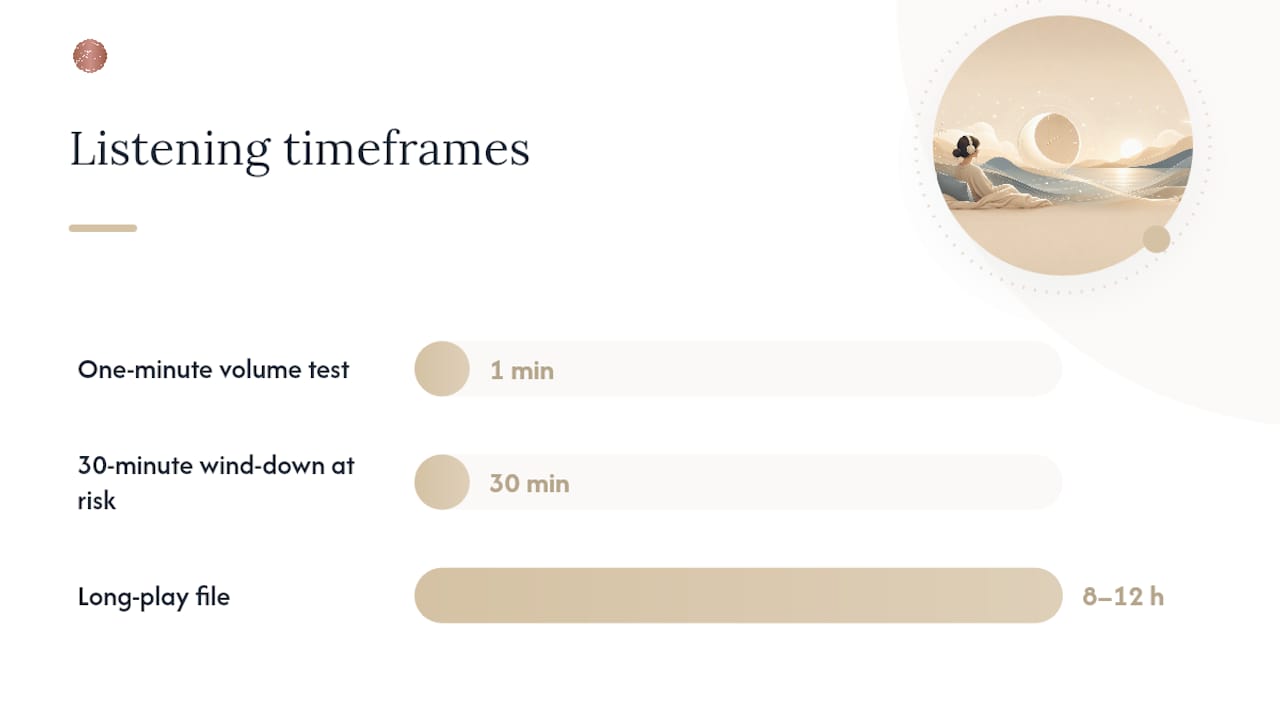
| Start with a long-play track | Choose a six-to-twelve-hour file or continuous playlist to avoid mid-night interruptions. |
| Match type to your need | Nature sounds mask noise; ambient piano soothes; binaural beats require headphones to work. |
| Volume and setup matter | Keep volume barely audible, enable Do Not Disturb, and use ad-free playback. |
| Test for three nights | Try a different category each night and note time-to-drowsiness and awakenings before deciding. |
| Shellabellabeauty’s ritual content | Glow Chronicles pairs evening skincare steps with audio guidance for a complete wind-down practice. |
Table of Contents
- What are the best calming music tracks and playlists for sleep?
- Why does calming music actually help you fall asleep?
- Which types of soothing sounds suit different sleepers?
- How should you listen for the best results?
- How do you choose the right sleep music for your needs?
- Where can you find continuous sleep music and how do you set it up?
- A 20-minute evening ritual that pairs music with your wind-down
- What consistent use of sleep music has taught me
- Shellabellabeauty’s wellness resources for your evening ritual
- Sources
- FAQ
What are the best calming music tracks and playlists for sleep?
Six entries worth bookmarking, each suited to a slightly different need:
-
Peder B. Helland — “Flying” (YouTube/Spotify): A soft, slow piano piece from the Soothing Relaxation channel. Best for falling asleep fast when you want something with gentle melodic shape rather than pure texture. Single-track duration varies by upload; look for the extended loop versions that run one to three hours.
-
Deep Sleep Music Collective (Spotify): A curated album and playlist series built around low-tempo, layered ambient tones. Best for deep sleep continuity rather than the initial drift-off. Available on Spotify with continuous playback when shuffle is turned off.
-
Soothing Oasis — Sleep Music for Deep Sleeping (Spotify playlist): A playlist with a large variety of tracks designed for sequential, non-shuffled listening. Best for readers who want variety across multiple nights without curating their own list. Keep shuffle off so the transitions stay smooth.
-
Narek Mirzaei — Sleep Music [8 Hours]: Soft Piano in Nature (InsightTimer): An eight-hour single file layered with 2Hz delta binaural elements and nature ambience. Best for deep sleep when using headphones; the binaural component requires stereo listening to function as intended.
-
Ryan Robinette — continuous sleep playlists (YouTube): Long-form mixes, often six to ten hours, that combine ambient pads and soft piano without sudden dynamic shifts. Best for background listening through a speaker when you want something unobtrusive and consistent.
-
Relaxing White Noise (Relaxingwhitenoise / YouTube): Twelve-hour rain, ocean, and fan recordings designed specifically to mask environmental noise. Best for light sleepers in urban environments or anyone sharing a space with a snoring partner.
Pro Tip: Before committing to a track overnight, play the first five minutes and the last five minutes of any long file to check for sudden volume shifts, ads, or abrupt endings — these are the most common causes of middle-of-the-night wake-ups.
Why does calming music actually help you fall asleep?
Calming music helps by slowing heart rate, reducing the body’s sympathetic nervous activation, and offering a predictable auditory signal that gently crowds out the intrusive thoughts that tend to surface the moment your head hits the pillow. The mechanism is less about sedation and more about redirection: your attention settles on something steady and non-threatening, which allows the natural sleep drive to take over.
PubMed-indexed research has found music interventions associated with measurable improvements in sleep outcomes across selected clinical and non-clinical samples, though effects vary by study design and population. A second body of indexed work confirms that results are real but heterogeneous — meaning what works for one person may do nothing for another, and the same person may respond differently on different nights.
The practical implication is that the evidence supports trying calming music, not prescribing a single genre. Slow tempo (generally below 60 beats per minute), minimal lyrical content, and consistent volume are the characteristics most commonly associated with positive outcomes in the studies reviewed. Personal preference, however, remains the most reliable filter.
Which types of soothing sounds suit different sleepers?
Not every sleeper responds to the same texture. Matching the audio type to your specific challenge makes the difference between a track that helps and one you turn off after ten minutes.
-
Nature sounds (rain, ocean, forest): Best for masking noise and for sleepers who find pure silence uncomfortable. Rain recordings in particular offer a consistent, non-melodic texture that rarely pulls attention. Soothing Oasis and Relaxing White Noise both publish long-form versions. Avoid recordings with sudden animal calls or thunder bursts that break the texture.
-
Ambient and neo-classical piano: Best for emotional connection and for those who find pure noise too clinical. Peder B. Helland and Narek Mirzaei both work in this space. Watch for tracks with dynamic swells or key changes that lift the energy unexpectedly — those are the ones that pull you back from the edge of sleep.
-
White, pink, and brown noise: Best for noise masking in louder environments. White noise covers the full frequency spectrum evenly; pink noise emphasizes lower frequencies and tends to feel softer; brown noise goes deeper still and suits sleepers who find white noise too sharp. Relaxing White Noise offers all three in extended formats.
-
Binaural beats (delta and theta frequencies): Intended to encourage brainwave entrainment toward slower frequencies associated with deep sleep. The Sleep Foundation’s binaural beats guidance notes that evidence is still developing and that headphones are required for the effect to work at all. Narek Mirzaei’s InsightTimer track uses 2Hz delta beats as a layer beneath the piano. Not recommended for speakers.
-
ASMR and soft-spoken soundscapes: Best for anxious sleepers who respond to gentle, close-proximity vocal textures. The BBC Sounds “Sleeping Forecast” blends classical, ambient, and nature elements in a curated, presenter-guided format that suits this profile. Avoid ASMR tracks with abrupt transitions or unpredictable trigger sequences.
One consistent pitfall across all categories: tracks with lyrics. Even soft, low-volume vocal melodies tend to activate the language-processing centers of the brain, which works against the quieting effect you’re after.
How should you listen for the best results?
Setup matters almost as much as the music itself. A track that would otherwise help can disrupt sleep if the volume is too high, the device buzzes with notifications, or an ad interrupts the silence at 2 AM.
- Set the volume low. The target is a level where the sound is audible but not demanding — you should be able to hear it without straining, but it should not be the loudest thing in the room. Many devices have a “night mode” or volume limiter in accessibility settings; use it.
- Choose your listening device intentionally. For binaural beats, headphones are required. For ambient and nature sounds played through a speaker, a small Bluetooth speaker placed across the room works better than in-ear buds worn overnight, which can cause ear canal discomfort during long sessions. Pillow speakers are a low-cost alternative for side sleepers.
- Enable a sleep timer or use a long-play file. On Spotify, the sleep timer is in the “Now Playing” menu. On YouTube, use a browser extension or simply choose an eight-to-twelve-hour file so the audio runs past your expected sleep window. Avoid short tracks on auto-play, which can introduce algorithmic “discovery” inserts mid-night.
- Set your phone to Do Not Disturb. Notification sounds are the single most reliable way to undo thirty minutes of careful wind-down. Enable Do Not Disturb before you start the track, not after.
- Download offline versions where possible. Streaming dropouts create sudden silence, which can be just as disruptive as a notification. Spotify Premium and InsightTimer both allow offline downloads.
Pro Tip: Run a one-minute volume test before bed: play your chosen track, close your eyes, and count to sixty. If you find yourself adjusting the volume or noticing the sound more than twice, it is still too loud. Lower it one more step.
How do you choose the right sleep music for your needs?
Choose by purpose first, then test for three nights. That is the most reliable path to finding what actually works for your sleep pattern rather than what sounds appealing at 10 PM.
Decision checklist before you press play:
- Tempo below 60 BPM (most ambient and nature tracks qualify; check if the track description mentions BPM)
- No lyrics or spoken words (unless you specifically respond to ASMR-style voices)
- Consistent volume throughout (no crescendos, no sudden dynamic shifts)
- Format suited to your setup (single long file for reliability; playlist for variety, with shuffle off)
- Platform that supports uninterrupted playback (premium or ad-free tier preferred)
The three-night test protocol:
- Night one: Play a nature-sound or white-noise mix for the full sleep window. Note how long it takes to feel drowsy and whether you wake during the night.
- Night two: Switch to an ambient or neo-classical piano track (Peder B. Helland or Narek Mirzaei). Same observation: time to drowsiness, number of awakenings.
- Night three: Try a binaural or delta-frequency track through headphones if you are comfortable sleeping with them. Record the same two metrics.
After three nights, the pattern is usually clear. Most people find one category noticeably more effective than the others, and that preference tends to stay stable once identified.
Where can you find continuous sleep music and how do you set it up?
Platform options and their trade-offs:
-
YouTube: The widest selection of long-play files (six to twelve hours), free, and accessible without an account. The main risk is pre-roll ads on shorter uploads and algorithmic recommendations that can autoplay unrelated content after a long file ends. Use YouTube Premium or choose uploads from channels like Yellow Brick Cinema and Relaxing White Noise that publish single long files rather than playlists.
-
Spotify: Strong for curated playlists (Soothing Oasis, Deep Sleep Music Collective). The free tier inserts ads, which will interrupt sleep. Spotify Premium removes ads and enables offline downloads. The built-in sleep timer stops playback after a set interval rather than looping indefinitely.
-
InsightTimer: Free tier includes a large library of long-duration sleep tracks. The Narek Mirzaei eight-hour piano track is available here. Audio quality is generally high, and the app is designed for overnight listening without algorithmic interruptions.
-
Calm (Calm): Curated playlists organized by frequency theme (delta, theta, 432 Hz). Requires a subscription for full access. Best for readers who want a single, well-maintained app rather than managing multiple platforms.
Pro Tip: Before using any playlist overnight, play it on shuffle for five minutes to check whether the transition between tracks is smooth or jarring. A playlist that sounds cohesive on shuffle is almost always safe for sequential overnight play.
A 20-minute evening ritual that pairs music with your wind-down
Pairing calming music with a brief, consistent pre-sleep ritual builds what sleep researchers call a conditioned cue: over time, the music itself begins to signal to your nervous system that sleep is approaching, which shortens the time it takes to drift off even before the audio has had a chance to work directly.
A practical 20-to-40-minute sequence:
- Dim the lights (20 minutes before bed). Overhead lighting suppresses melatonin; switch to a lamp or candlelight and start your chosen track at low volume.
- Complete a gentle skincare routine (15 minutes). Cleanse, apply a serum, and finish with a nourishing night cream. The tactile ritual of caring for your skin reinforces the signal that the day is complete. Shellabellabeauty’s overnight skin renewal guidance pairs naturally with this step, and the Glow Chronicles piece on building an evening ritual offers a fuller framework if you want to extend the practice.
- Lie down and breathe slowly (5 minutes). Four counts in, six counts out. Let the music carry your attention rather than your thoughts.
- Release the need to fall asleep. Paradoxically, the moment you stop monitoring whether you are asleep yet is often the moment sleep arrives. The music gives your attention somewhere neutral to rest.
The connection between quality sleep and skin health is well documented: overnight is when the skin’s repair processes are most active, which makes the quality of your wind-down a genuine act of care for your complexion, not just your rest.
What consistent use of sleep music has taught me
Most people give up on sleep music after two or three nights because they chose the wrong type for their temperament, or because the setup was imperfect (ads, notifications, a track that ended too soon). The music itself rarely fails; the conditions around it usually do.
What I have found, working through Shellabellabeauty’s Glow Chronicles content on sleep and evening rituals, is that the ritual frame matters as much as the audio. When calming music becomes part of a sequence — low light, skincare, slow breathing, then sound — it stops being something you try and becomes something your body anticipates. That shift, from novelty to cue, is where the real benefit lives. Expect two to three weeks before the conditioned response feels reliable, and resist the temptation to switch tracks every night during that period. Consistency is the mechanism.

Shellabellabeauty’s wellness resources for your evening ritual

Shellabellabeauty’s Glow Chronicles brings together sleep, skincare, and evening ritual guidance in one place, so your wind-down can be as intentional as the rest of your self-care practice. The brand’s wellness content covers everything from mindful beauty rituals that deepen relaxation to the luxury skincare routines that support overnight skin renewal. When calming music becomes part of a nightly ritual anchored by thoughtful skincare, the two practices reinforce each other in a way that neither achieves alone. Visit Shellabellabeauty to read the full Glow Chronicles library and find the evening ritual and skincare guidance that fits your rhythm tonight.
Sources
- Pubmed
- Pubmed
- Sleepfoundation
- Sleep Music 8 Hours: Soft Piano in Nature | Narek Mirzaei | Music Of Wisdom
- The Sleeping Forecast - Drifting off on gentle waves - BBC Sounds
FAQ
What is the most relaxing music to fall asleep to?
Slow-tempo ambient piano or nature sounds (rain, ocean) with no lyrics tend to be the most broadly effective, according to Sleep Foundation guidance. Tracks by Peder B. Helland and Narek Mirzaei are widely used examples, though individual response varies.
What is the best sound for anxiety and sleep?
Pink or brown noise and gentle rain recordings are often well-suited to anxious sleepers because their consistent, non-melodic texture gives the mind something neutral to rest on without triggering language or emotional processing. Binaural delta tracks can also help, but require headphones to function as intended.
Is there a track that reliably makes you fall asleep?
No single track works for everyone, but long-play ambient or nature-sound mixes running six hours or more, played at low volume with no interruptions, produce the most consistent results across the populations studied in PubMed-indexed research. The three-night test protocol described above is the most reliable way to find your specific match.
What is the healthiest noise to sleep to?
The healthiest choice is the one played at a safe, low volume that does not require you to raise it to hear it clearly. Pink noise and nature sounds are gentle on hearing during long sessions; in-ear buds worn overnight at high volume carry more risk than a speaker placed across the room. The Sleep Foundation recommends keeping volume comfortable and consistent rather than loud.
Recommended
- How to Build an Evening Ritual That Feels Like You – Shella Bella Beauty™
- The Role of Sleep in Skin Health and Radiance – Shella Bella Beauty™
- Sensitive Skin Routine Example That Feels Gentle – Shella Bella Beauty™
- What Skincare Suits Combination Skin Best? – Shella Bella Beauty™
- Join Glow Chronicles™ — Continue the Glow™ with editor’s picks, seasonal beauty rituals, exclusive skincare insights, and new editions delivered to your inbox.