

A highly effective morning skincare routine checklist centers on four key steps: cleansing, applying an antioxidant serum, moisturizing, and protecting with SPF. This sequence, backed by dermatology, outperforms complex regimens for most skin goals because each step builds on the last with clear purpose. Shellabellabeauty approaches this daily ritual as an act of intention, not obligation. When you apply the right products in the right order, your skin receives exactly what it needs to look clear, balanced, and radiant by the time you walk out the door.
What is the correct order of morning skincare steps?
The order of your morning skincare steps determines how well each product actually works. Applying products from thinnest to thickest consistency allows each layer to absorb fully before the next one seals it in. The correct sequence is: gentle cleanser, antioxidant serum, moisturizer, and broad-spectrum SPF.
Here is why the sequence matters at each stage:
- Cleanser removes overnight oil, sweat, and impurities so that the products that follow can reach clean skin.
- Antioxidant serum (typically vitamin C) penetrates best on bare, freshly cleansed skin before any occlusive layer is applied.
- Moisturizer seals the serum in and reinforces the skin’s barrier with hydrating ingredients.
- SPF goes on last because sunscreen forms a protective film that nothing else should sit on top of.
Skipping or reversing steps reduces the benefit of every product in your routine. A moisturizer applied before a serum, for example, creates a barrier that blocks the serum’s active ingredients from reaching the skin. The correct layering order is one of the most overlooked factors in routine effectiveness.
Pro Tip: Wait 30 to 60 seconds between applying your serum and your moisturizer. That brief pause prevents formula dilution and lets the active ingredients absorb without interference.
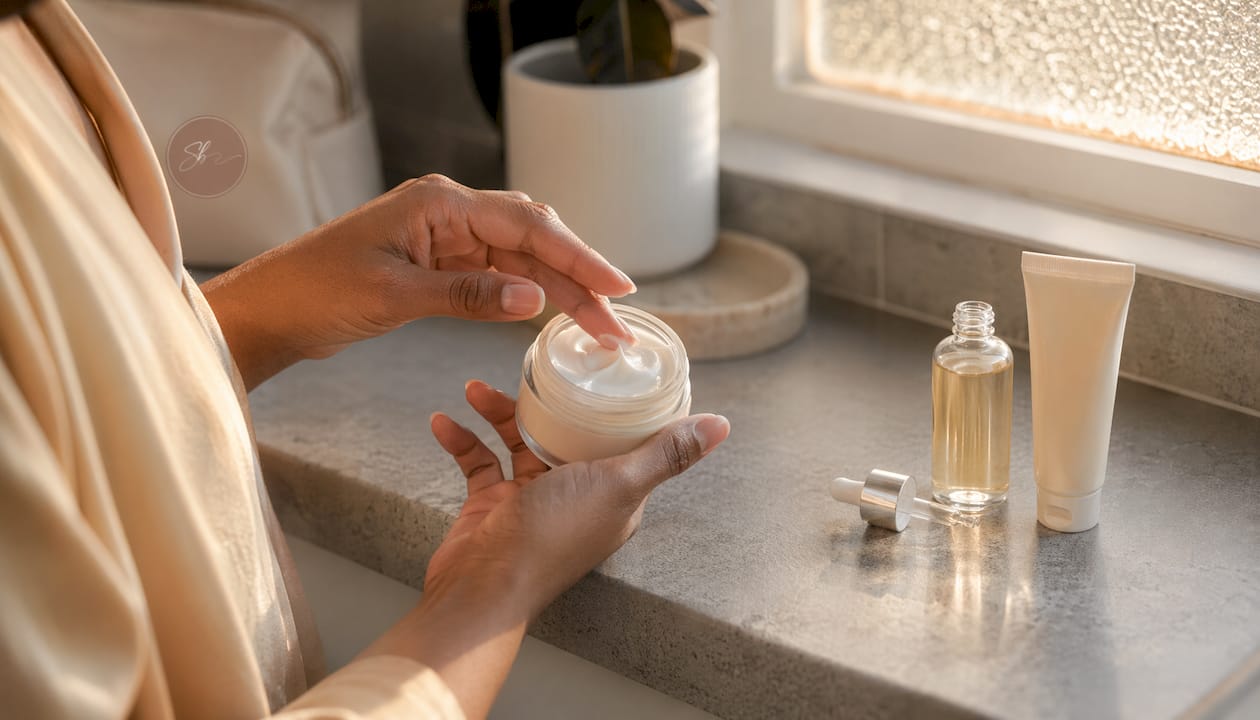
Step-by-step breakdown of the morning skincare routine checklist
Each step in your daily skincare routine serves a distinct purpose. Treating them as a sequence rather than a collection of products makes the whole routine more effective.
Step one: Gentle cleanser
Morning cleansing removes overnight oil and impurities while preserving the skin’s natural barrier. The key word here is gentle. Harsh soaps and high-pH cleansers strip moisture and leave skin reactive before you have even applied a single active ingredient.
- Oily or acne-prone skin: A foaming or gel cleanser with a low pH clears excess sebum without over-drying.
- Dry or sensitive skin: A cream or milk cleanser maintains hydration while still removing impurities.
- Normal or combination skin: A balanced gel or lotion cleanser works well for most mornings.
Rinse with lukewarm water. Hot water disrupts the skin barrier and increases redness.
Step two: Antioxidant serum
Vitamin C is the gold-standard morning antioxidant for environmental defense. Applied directly to clean skin, it neutralizes free radicals from UV exposure and pollution before they cause visible damage. The Shellabellabeauty Glow Chronicles covers the full science of antioxidants in skincare for readers who want to go deeper.
- Apply 3 to 4 drops to your fingertips and press gently into skin.
- Avoid rubbing, which can cause irritation and uneven distribution.
- Let the serum settle for 30 to 60 seconds before moving to the next step.
Pro Tip: Store your vitamin C serum away from direct sunlight. Oxidized vitamin C turns orange and loses its potency. A dark glass bottle in a cool drawer extends its shelf life significantly.
Step three: Moisturizer
A well-chosen moisturizer does three things: it draws water into the skin with humectants like hyaluronic acid, it reinforces the barrier with lipids like ceramides, and it reduces water loss with occlusives. Moisturizer formulation should match your skin type.
- Oily skin: A lightweight gel moisturizer hydrates without adding heaviness.
- Dry skin: A cushioned cream with ceramides and shea butter restores comfort and suppleness.
- Combination skin: A balanced lotion addresses both zones without tipping either toward excess.
- Sensitive skin: Fragrance-free formulas with minimal ingredients reduce the risk of reaction.
Apply with upward strokes and allow the product to absorb before layering SPF.
Step four: Broad-spectrum SPF
Broad-spectrum SPF 30 blocks 97% of UVB rays and is the single most effective anti-aging step in any morning routine. SPF 50 blocks 98%, but the protection gap between SPF 30 and SPF 50 is small. The real issue is applying enough. Most people use far less than the recommended amount, which cuts protection significantly.
Apply sunscreen as the final step, after moisturizer has absorbed. Use a nickel-sized amount for the face and do not forget the neck and ears.
How to customize your morning skincare routine checklist for different skin types
A single routine does not serve every skin type equally. The four steps remain the same, but the textures, formulas, and active ingredients shift based on your skin’s specific needs.
| Skin type | Cleanser | Serum | Moisturizer | Sunscreen |
|---|---|---|---|---|
| Oily | Foaming gel, low pH | Vitamin C or niacinamide | Lightweight gel | Chemical SPF (lighter finish) |
| Dry | Cream or milk cleanser | Vitamin C with hydrating base | Rich cream with ceramides | Mineral SPF with moisturizing base |
| Combination | Balanced gel or lotion | Vitamin C, applied to full face | Lotion, heavier on dry zones | Hybrid SPF formula |
| Sensitive | Fragrance-free milk cleanser | Niacinamide (gentler alternative) | Minimal-ingredient barrier cream | Mineral SPF (zinc oxide) |
Niacinamide is the most practical alternative when vitamin C causes irritation. It calms redness, tightens the appearance of pores, and supports the barrier without the acidity that some skin types find uncomfortable. Mineral sunscreens, which use zinc oxide or titanium dioxide, sit on top of the skin rather than absorbing into it. That makes them the preferred choice for reactive or sensitive skin. For a deeper look at how morning and evening routines differ in product selection, the Shellabellabeauty guide on morning vs. night skincare explains the distinctions clearly.
Additional habits that complement your morning skincare routine for a glowing complexion
Topical products do the heavy lifting, but a few simple habits make your skin look noticeably better before you have even opened a single bottle.
- Drink water first. Room-temperature water upon waking helps flush residual digestion byproducts and supports skin hydration from within. Cold water can cause mild digestive contraction; room temperature is gentler and equally effective.
- Use a facial massage technique. Gentle upward strokes or a cooled gua sha tool reduces morning puffiness and stimulates circulation for a natural glow. Two to three minutes is enough to see a visible difference.
- Prioritize sleep. Skin repairs itself during deep sleep. Consistently poor sleep shows up as dullness, uneven tone, and increased sensitivity. No serum compensates for chronic sleep deprivation.
- Eat for your skin. Foods rich in antioxidants, omega-3 fatty acids, and vitamin C support the same cellular defense that your topical serum provides. Think leafy greens, berries, walnuts, and fatty fish.
Wellness practitioners highlight hydration and light facial massage as key complementary habits that visibly brighten and reduce puffiness faster than topical products alone. These practices cost nothing and take under five minutes, yet they consistently deliver results that even premium products cannot replicate on their own.
The wellness rituals for glowing skin guide from Shellabellabeauty expands on these habits with practical daily frameworks for readers who want to build a fuller self-care practice around their skincare steps.
Key takeaways
A consistent four-step morning routine, applied in the correct order with products matched to your skin type, delivers clearer, more radiant skin over time.
| Point | Details |
|---|---|
| Follow the correct order | Apply cleanser, then serum, then moisturizer, then SPF for maximum product efficacy. |
| Wait between layers | Allow 30 to 60 seconds between serum and moisturizer to prevent dilution and improve absorption. |
| Match products to skin type | Gel formulas suit oily skin; cream formulas suit dry skin; mineral SPF suits sensitive skin. |
| SPF is non-negotiable | Broad-spectrum SPF 30 blocks 97% of UVB rays and prevents premature aging better than any other step. |
| Support skin from within | Hydration, sleep, and antioxidant-rich foods amplify what your topical routine can achieve. |
Why I believe the four-step routine is the most honest advice in skincare
After years of working with skincare products and observing how people actually use them, I have come to one firm conclusion: complexity is the enemy of consistency. The beauty industry has a financial interest in convincing you that more steps mean better results. The evidence does not support that. A focused four-step checklist, done every single morning without exception, outperforms a ten-step routine done three times a week.
What I find most people underestimate is the waiting time between layers. Those 30 to 60 seconds feel inconvenient, so they get skipped. Skipping them means your moisturizer is diluting your serum before it has absorbed. You are paying for a product and then immediately reducing its effectiveness. That small pause is one of the highest-return habits in skincare, and almost no one talks about it.
My other observation is about patience with vitamin C. Many people try it once, experience mild tingling, and abandon it. Tingling on first use is common, especially with higher concentrations. The solution is to start with a lower percentage formula and build up gradually. Vitamin C’s ability to defend against environmental damage and support an even complexion is well established. Giving up on it too early is one of the most common and costly mistakes I see.
Adapt your routine as your skin changes with seasons, stress, and age. A routine that worked perfectly in summer may need a richer moisturizer in winter. Treat your checklist as a living document, not a fixed prescription.
— Marshella
Shellabellabeauty’s morning skincare collection

Shellabellabeauty curates products designed to support each step of your morning ritual with intention and care. The renewal and smoothing skincare rituals collection brings together serums, moisturizers, and targeted treatments formulated for visible results without unnecessary complexity. Each product is chosen to complement the four-step framework, so your routine stays focused and your skin receives exactly what it needs. For those who love a polished finish after their skincare is complete, the Luscious Hues collection offers a refined selection of lip color to complete your morning look with ease.
FAQ
What are the four steps of a morning skincare routine?
The four steps are: gentle cleanser, antioxidant serum (typically vitamin C), moisturizer, and broad-spectrum SPF. Applied in this order, they cleanse, protect, hydrate, and shield the skin from UV damage.
How long should a morning skincare routine take?
A focused four-step routine takes 5 to 10 minutes. Waiting 30 to 60 seconds between serum and moisturizer is the only timing requirement that meaningfully affects results.
Can I skip moisturizer if my skin is oily?
Oily skin still needs hydration. Skipping moisturizer causes the skin to produce more oil to compensate. A lightweight gel moisturizer with hyaluronic acid hydrates without adding heaviness or shine.
What SPF should I use in the morning?
Broad-spectrum SPF 30 is the minimum recommended level. It blocks 97% of UVB rays and prevents premature aging. Sensitive skin types do best with mineral SPF formulas containing zinc oxide.
Is vitamin C safe for sensitive skin?
Vitamin C can cause mild tingling on first use, especially at higher concentrations. Sensitive skin types can start with a lower-percentage formula or substitute niacinamide, which delivers similar brightening and barrier-support benefits with less risk of irritation.