

The role of gut health in skin is defined by the gut-skin axis, a bidirectional communication network where the balance of gut microbiota directly shapes skin inflammation, immunity, and barrier function. When your gut microbiome thrives, your skin reflects that internal harmony. When it falters, the consequences often appear as persistent breakouts, redness, or compromised texture. Recent 2026 research has moved this connection from theory into well-documented biology, giving those who care about their skin a compelling reason to look inward, with the same intention they bring to their topical rituals.
How does gut microbiota influence skin health at the biological level?
Gut microbiota influence skin health through metabolites, immune signaling, and neuroendocrine pathways. The gut houses trillions of microorganisms that produce compounds called short-chain fatty acids (SCFAs), including butyrate and propionate. SCFAs promote skin immune regulation and barrier integrity, which means a fiber-rich diet does more than support digestion. It actively feeds the microbial populations that keep your skin calm and resilient.
The immune system is the primary messenger between gut and skin. Gut microbiota shape T cell differentiation and cytokine production, the chemical signals that either quiet or amplify inflammation throughout the body. When microbial diversity drops, this immune calibration shifts, and systemic inflammation rises. That inflammation does not stay contained to the gut. It travels, and your skin often bears the visible result.
The gut-brain-skin axis adds another layer. Psychological stress triggers neuroendocrine signals that alter gut microbial composition, which then feeds back into immune dysregulation and skin inflammation. This three-way conversation means that what you feel emotionally, what you eat, and what appears on your skin are genuinely connected through shared biological pathways.
- SCFAs (butyrate, propionate, acetate) regulate skin immune cells and reduce inflammatory cytokine production.
- Cytokines released by gut-associated immune cells travel systemically and affect skin barrier proteins.
- T cell differentiation in the gut influences whether your immune system responds with tolerance or inflammation.
- Neuroendocrine signals from stress hormones like cortisol alter gut microbial balance within days.
Pro Tip: Adding a daily serving of fermented foods, such as plain kefir or kimchi, provides live cultures that support SCFA production. Start with small amounts and increase gradually to let your gut adjust without discomfort.
What scientific evidence links gut health to acne, psoriasis, and atopic dermatitis?
The science connecting gut health and skin conditions has grown considerably precise. A systematic review of 62 studies across multiple chronic skin diseases, published through january 2025, found consistent patterns of reduced microbial diversity and depleted beneficial bacteria, including Faecalibacterium prausnitzii and Bifidobacterium species, in people with atopic dermatitis. Reduced diversity is not a minor variation. It signals a gut environment that can no longer regulate immune responses effectively.
Acne research reveals a specific microbial fingerprint. A may 2026 study found that acne patients show gut dysbiosis with increased Bacteroidetes and decreased Firmicutes, a ratio shift that activates the mTOR pathway and elevates sebum gland activity. That means the overproduction of oil that drives breakouts has a gut-level contributor, not just a hormonal or topical one.
“Genetic evidence from a july 2026 Mendelian randomization study confirms that 10 inflammatory cytokines mediate the effect of gut microbiota on inflammatory skin diseases. This is not correlation. It is a genetically validated causal pathway linking gut microbial composition to skin inflammation.”
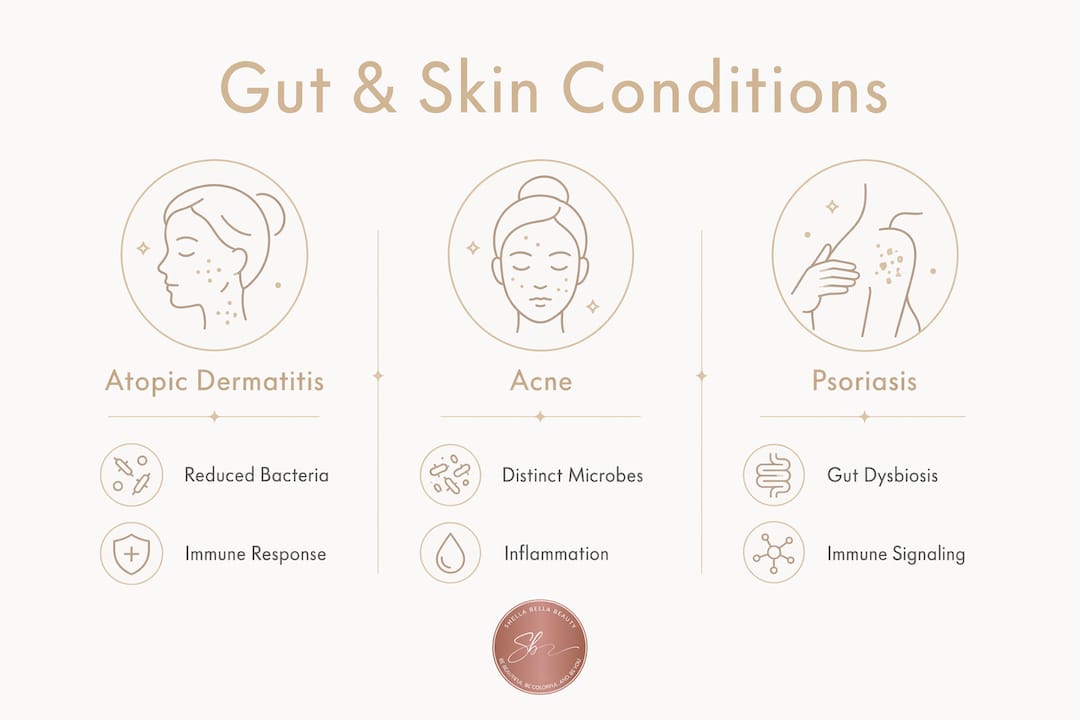
The differences across skin conditions matter for how you approach care. Atopic dermatitis, psoriasis, and acne each show distinct microbial patterns, which suggests that a single probiotic or dietary change will not address all three equally. The table below summarizes the key research findings by condition.
| Skin condition | Key gut microbiome finding | Primary mechanism |
|---|---|---|
| Atopic dermatitis | Reduced Faecalibacterium prausnitzii and Bifidobacterium | Impaired immune tolerance and barrier function |
| Acne vulgaris | Increased Bacteroidetes, decreased Firmicutes | mTOR pathway activation, elevated sebum production |
| Psoriasis | Altered microbial diversity and metabolite production | Systemic cytokine-driven inflammation |
Age also shapes how gut microbiome research applies to you. Much of the atopic dermatitis data comes from pediatric populations, and adult-specific microbiome data for chronic skin conditions remains limited. This gap means that findings from childhood studies cannot always translate directly to adult skin care decisions.
How do lifestyle factors and stress shape gut health and skin?
Psychological stress is one of the fastest ways to disrupt gut microbial balance. The brain-gut-skin axis shows that stress modifies gut microbiota composition and immune response, amplifying skin inflammation through a cascade that begins in the nervous system. Cortisol and other stress hormones alter gut permeability, allowing microbial byproducts to enter the bloodstream and trigger systemic immune activation. Your skin then responds with redness, breakouts, or flares of existing conditions.

Lifestyle choices compound or counteract this effect. Diet, sleep quality, physical activity, and environmental exposures all shape microbial diversity. A diet low in fiber and high in processed foods reduces the bacterial populations that produce SCFAs, weakening the gut’s ability to regulate inflammation. Chronic sleep deprivation follows a similar pattern, disrupting the circadian rhythms that gut bacteria depend on for stability.
Mindfulness and stress reduction are not peripheral wellness suggestions. Managing skin health necessitates psychological approaches like mindfulness to modulate stress-induced gut dysbiosis and immune imbalance. Practices like breathwork, meditation, and intentional rest directly reduce cortisol output, which in turn protects microbial diversity. Shellabellabeauty’s Glow Chronicles explores how mindful beauty rituals support this kind of whole-body balance.
Key lifestyle factors that support gut microbial health and, by extension, skin clarity:
- Dietary fiber from vegetables, legumes, and whole grains feeds beneficial bacteria and boosts SCFA production.
- Polyphenols from berries, green tea, and dark chocolate act as prebiotics, selectively nourishing beneficial microbes.
- Fermented foods like yogurt, miso, and sauerkraut introduce live cultures that restore microbial balance.
- Sleep consistency preserves circadian-linked gut bacterial rhythms that regulate immune function.
- Stress management through mindfulness, movement, or creative practice lowers cortisol and protects microbial diversity.
Pro Tip: A short 10-minute mindfulness practice before bed reduces cortisol levels and supports the overnight gut repair cycle. Pair it with a calming topical ritual to reinforce the mind-body-skin connection.
What practical steps can you take to improve skin through gut health?
Supporting your skin through gut health requires consistency rather than dramatic intervention. The goal is to foster microbial diversity, not to “cleanse” or reset the gut. Gut cleansing products that claim to flush the system often disrupt the very bacterial populations you want to protect. Diversity is the measure of a healthy gut, and diversity comes from sustained, varied nourishment.
Here are practical, research-grounded steps to support the gut-skin connection:
-
Increase dietary fiber gradually. Aim for a wide variety of plant foods each week. Different fiber types feed different bacterial species, so variety matters more than quantity alone. Legumes, oats, flaxseed, and colorful vegetables each contribute distinct prebiotic compounds.
-
Add fermented foods to daily meals. Plain yogurt with live cultures, kefir, kimchi, and tempeh all introduce beneficial bacteria. Dietary polyphenols, fiber, and fermented foods help restore gut microbial equilibrium and reinforce skin barrier integrity.
-
Consider a targeted probiotic with realistic expectations. Probiotics show potential to reduce lesion counts and improve skin barrier function in acne and psoriasis, but results vary by strain, dose, and individual microbiome. Look for strains with clinical evidence, such as Lactobacillus rhamnosus or Bifidobacterium longum, and give any probiotic at least 8 weeks before evaluating results.
-
Protect your skin barrier topically while you work on gut health internally. The two approaches reinforce each other. A well-supported skin barrier reduces the inflammatory load on your immune system, which eases pressure on the gut-skin axis from the outside in.
-
Reduce ultra-processed foods and added sugars. These directly reduce Firmicutes populations and increase gut permeability, the same microbial shift seen in acne patients. Replacing one processed snack daily with whole food alternatives creates a measurable shift in microbial composition over weeks.
-
Prioritize sleep and hydration. Gut bacteria regulate immune signaling during sleep. Chronic dehydration thickens the mucus layer that protects gut bacteria, reducing their effectiveness. Eight hours of sleep and consistent water intake are foundational, not optional.
The most important mindset shift is patience. Microbial communities change slowly and respond to sustained habits, not short-term protocols. Approach gut health with the same measured intention you bring to a multi-step skincare ritual, building layers of care over time.
Key Takeaways
The gut-skin axis is a validated biological pathway where microbial diversity, SCFA production, and immune signaling collectively determine skin inflammation, barrier strength, and clarity.
| Point | Details |
|---|---|
| Gut microbiota shape skin immunity | SCFAs and cytokines produced in the gut regulate skin inflammation and barrier proteins directly. |
| Specific skin conditions show distinct gut patterns | Acne, atopic dermatitis, and psoriasis each have unique microbial signatures that inform targeted care. |
| Stress disrupts gut and skin simultaneously | Cortisol alters gut permeability and microbial balance, amplifying skin inflammation through the brain-gut-skin axis. |
| Diet diversity is the most reliable lever | Fiber, polyphenols, and fermented foods consistently support microbial diversity and skin barrier integrity. |
| Probiotics help but require realistic expectations | Strain, dose, and individual microbiome all determine outcomes; no universal probiotic protocol exists yet. |
Balancing enthusiasm with caution on gut health and skin
I have spent years watching the gut-skin conversation shift from fringe wellness territory into peer-reviewed science, and that progress is genuinely exciting. But I want to be honest about where the enthusiasm sometimes outruns the evidence.
Gut health is a modifier within a complex network, not the sole cause of skin conditions. Genetics, environment, hormones, and topical care all contribute. I have seen people overhaul their diet, invest in expensive probiotic stacks, and feel frustrated when their skin does not clear completely. The reason is usually that they treated gut health as the single answer rather than one important variable among several.
The research gaps are real. No standardized biomarkers currently exist to correlate microbiome status with acne or psoriasis severity for clinical use. Microbiome therapies remain experimental and highly personalized. What works beautifully for one person may do nothing for another. This is not a reason to dismiss gut-focused care. It is a reason to approach it with patience and without expecting a quick resolution.
The most durable results I have observed come from people who combine gut-supportive habits with consistent topical care and genuine attention to stress. None of those elements works as well in isolation. The gut-skin axis is a system, and systems respond to sustained, layered care rather than single interventions.
— Marshella
Skincare that honors your skin’s inner balance
Your skin’s radiance is shaped from within, and the right topical care amplifies what your gut health is already working to restore.

Shellabellabeauty’s renewal and smoothing rituals are formulated to support the skin barrier that your gut microbiome works so hard to maintain. When your internal balance is tended with care, these collections help your skin receive and reflect that work, restoring softness, clarity, and a natural luminosity that no single product alone can create. For those seeking deeper nourishment, the deep hydration ritual collection pairs beautifully with a gut-supportive lifestyle, cushioning and replenishing the skin’s surface while your internal care takes root. Radiance, after all, is something you return to, not something you manufacture.
FAQ
What is the gut-skin axis?
The gut-skin axis is the bidirectional communication network between gut microbiota and skin health, operating through immune signaling, metabolites like SCFAs, and neuroendocrine pathways. Disruptions in gut microbial balance directly influence skin inflammation and barrier function.
Can improving gut health clear acne?
Gut health is one significant contributor to acne, with research showing that acne patients carry distinct gut bacterial patterns that activate sebum-producing pathways. Improving gut health through diet and targeted probiotics can reduce lesion counts, but results depend on individual microbiome composition and should complement, not replace, dermatological care.
How long does it take for gut changes to affect skin?
Microbial communities shift gradually in response to sustained dietary and lifestyle changes. Most clinical studies observe meaningful changes in skin markers over 8–12 weeks of consistent gut-supportive habits.
Do probiotics actually help skin conditions?
Probiotics show clinical potential for reducing inflammation in acne and psoriasis, but efficacy varies by strain and individual. No universal probiotic protocol exists, and results require realistic timelines and consistent use.
Is stress really connected to skin flares through the gut?
Yes. The brain-gut-skin axis is well-documented: psychological stress raises cortisol, which alters gut permeability and microbial composition, which then amplifies systemic inflammation that surfaces as skin flares. Managing stress is a direct skin care strategy, not a secondary one.