

Skin cycling is defined as a structured four-night rotating skincare routine that alternates exfoliation, retinoid treatment, and dedicated recovery nights to maximize results while protecting your skin barrier. Dermatologists have long recommended spacing out potent actives, and skin cycling formalizes that advice into a simple, repeatable framework. The routine gained wide attention through social media, but its foundation is grounded in sound clinical thinking. For anyone who has ever experienced redness, peeling, or frustration from a skincare routine, skin cycling for beginners offers a gentler, more intentional path forward.
What is skin cycling explained: the four-night method
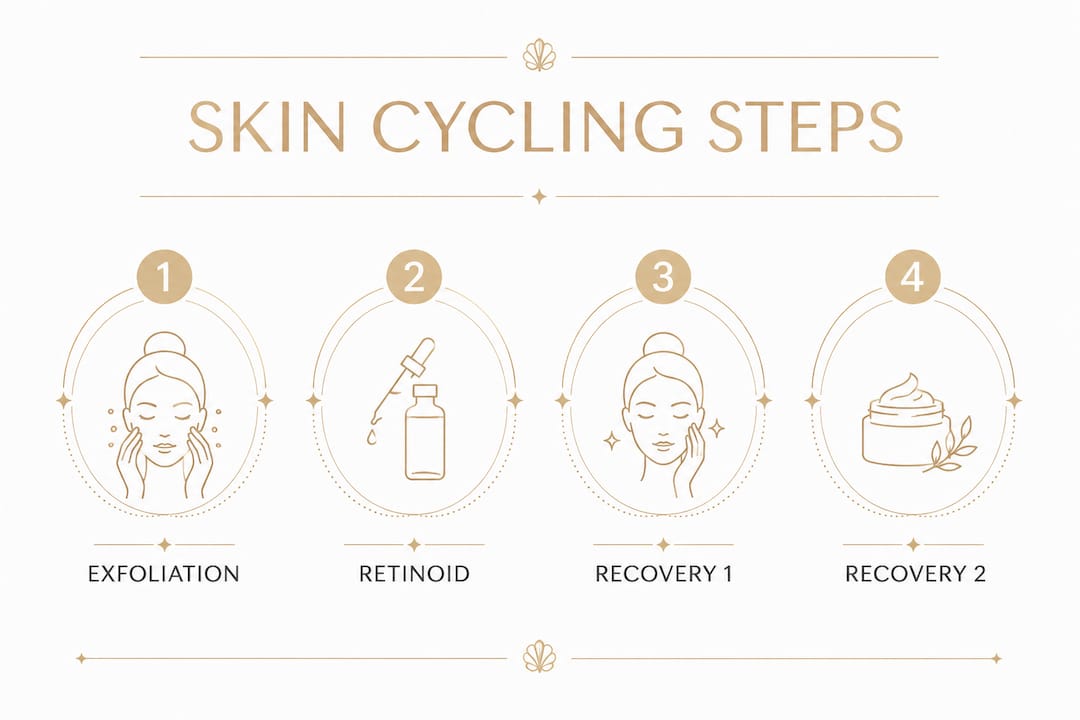
Skin cycling is a structured 4-night routine that moves through exfoliation, retinoid application, and two recovery nights in a repeating cycle. Each night has a distinct purpose, and that structure is what separates this method from the common habit of layering multiple actives every evening. The logic is straightforward: give your skin the stimulus it needs, then give it the time to respond.
Night one: exfoliation
Exfoliation night focuses on clearing away dead skin cells to allow subsequent products to absorb more effectively. Chemical exfoliants, specifically alpha hydroxy acids (AHAs) like glycolic acid and lactic acid, and beta hydroxy acids (BHAs) like salicylic acid, are the standard tools. Begin with a gentle cleanser, apply your chosen acid, and follow with a light moisturizer. Avoid layering additional actives on this night.

Night two: retinoid application
Retinoid night is where renewal happens at a cellular level. Retinoids, which include over-the-counter retinol and prescription-strength tretinoin, signal skin cells to turn over more rapidly and stimulate collagen production. Apply your retinoid to clean, dry skin, then seal with a moisturizer. Retinoids should be introduced at low strength and buffered with moisturizer to reduce the initial dryness and peeling known as the retinization phase.
Nights three and four: recovery
Recovery nights are not passive. They are the phase where your skin consolidates the work done on nights one and two. Focus on hydrating ingredients like hyaluronic acid, ceramides, and peptides, along with barrier-repair creams. A rich, cushioned moisturizer applied to slightly damp skin delivers the most benefit. Your overnight skin renewal routine during these nights should feel like a calm, restorative ritual rather than a treatment.
Pro Tip: Keep your morning routine consistent throughout the entire cycle. Gentle cleansing, a Vitamin C serum, moisturizer, and SPF every single day protects the progress your skin makes at night.
After night four, the cycle repeats. The rhythm is intentional: two nights of stimulation, two nights of repair, then begin again.
What are the benefits of skin cycling and who should try it?
The primary benefit of skin cycling is reduced irritation without sacrificing results. 1 in 5 people stop using active products due to inflammatory side effects from overuse. Skin cycling directly addresses that problem by building in mandatory rest.
The benefits extend well beyond comfort:
- Barrier preservation. Recovery nights allow the skin barrier to repair itself fully before the next round of actives. A compromised barrier leads to sensitivity, dehydration, and breakouts.
- Improved tolerance over time. Spacing out exfoliants and retinoids trains your skin to handle them more effectively, so you can eventually use stronger formulations without distress.
- Texture and tone refinement. Regular exfoliation clears congestion and smooths uneven texture, while retinoids address fine lines and discoloration at a deeper level.
- Collagen support. Retinoids are among the most studied ingredients for collagen stimulation. Used consistently within a cycling framework, their benefits compound over time.
- Adherence. A structured schedule is easier to follow than a vague instruction to “use actives a few times a week.”
A minimum of 12 weeks on the routine is recommended before expecting visible changes in texture, tone, and collagen density. Cellular renewal operates on longer timelines than most people expect.
Skin cycling suits beginners most naturally, because it removes the guesswork from how often to use strong ingredients. People with sensitive skin, rosacea-prone skin, or a history of over-exfoliation also benefit significantly. Experienced skincare users can adapt the cycle to include stronger actives while still honoring the recovery structure.
How to customize skin cycling for your skin type
Skin cycling is a flexible template, not a fixed prescription. The goal is skin comfort, not strict adherence to a four-night calendar. Adjusting the routine to your skin’s actual responses is what makes it sustainable.
Here is how to adapt each phase thoughtfully:
- Sensitive or dry skin. Swap glycolic acid for lactic acid or mandelic acid on exfoliation night. Both are gentler and less likely to disrupt the barrier. Adjusting to gentler acid types and lower-strength retinol is a standard dermatologist recommendation for sensitive skin.
- Oily or acne-prone skin. Salicylic acid (a BHA) penetrates the pore lining and works well on exfoliation night. You may tolerate a slightly higher retinoid strength sooner than other skin types.
- Extending recovery nights. If your skin shows redness, tightness, or flaking after active nights, add a third or fourth recovery night before cycling back. There is no penalty for slowing down.
- Retinoid buffering. Apply a thin layer of moisturizer before your retinoid, then another layer on top. This “sandwich” method reduces the intensity of the retinization phase without blocking efficacy.
- Avoid layering actives. Do not add a Vitamin C serum, niacinamide, or additional acid on active nights. Each active night should feature one potent ingredient only.
Pro Tip: Keep a simple skin journal for the first four weeks. Note any tightness, redness, or unusual dryness after each night. Patterns in your notes will tell you exactly where to slow down or adjust.
Your sensitive skin routine may look different from a standard four-night cycle, and that is entirely correct. The framework bends to serve your skin, not the other way around.
Common mistakes that undermine your skin cycling routine
The most frequent error in skin cycling is skipping recovery nights. Recovery is the active ingredient that makes the entire method sustainable. Omitting those nights leads to cumulative inflammation that cancels out the benefits of exfoliation and retinoids.
Other common mistakes include:
- Neglecting SPF during the day. Retinoids and exfoliants increase photosensitivity. Skipping sunscreen on the mornings after active nights can cause hyperpigmentation and undo the work done overnight.
- Ignoring the morning routine. Failing to maintain a consistent daytime routine can cause unintended irritation even when the nighttime cycle is followed correctly. Keep mornings simple: gentle cleanser, antioxidant serum, moisturizer, SPF.
- Introducing new products mid-cycle. Adding a new serum or mask during an active cycle makes it impossible to identify what is causing a reaction. Introduce new products only during recovery nights, and only one at a time.
- Starting with too-strong a retinoid. The retinization phase, marked by dryness and peeling, discourages many people from continuing. Beginning with a low-strength retinol and buffering it with moisturizer prevents that early dropout.
- Treating the cycle as rigid. Clinical signs like redness or tightness should guide your pace. Practitioners observe that recovery phases vary widely among individuals, and a calendar should never override what your skin is telling you.
“Skin cycling formalizes longstanding dermatological advice into a simple, memorable routine that emphasizes barrier protection over active ingredient overload. The structure is the point. It teaches restraint, and restraint is what most skin needs most.”
Understanding what your skin barrier needs at each phase of the cycle is the single most valuable skill you can develop as you build this practice.
Key Takeaways
Skin cycling works because mandatory recovery nights prevent cumulative irritation and allow the skin barrier to consolidate the benefits of exfoliation and retinoid treatment.
| Point | Details |
|---|---|
| Four-night structure | Alternate exfoliation, retinoid, and two recovery nights in a repeating cycle. |
| Recovery nights are non-negotiable | Skipping rest nights causes cumulative inflammation that cancels active ingredient benefits. |
| Minimum 12-week commitment | Visible improvements in texture, tone, and collagen take at least three months to appear. |
| Customize for your skin type | Extend recovery nights, swap acid types, and buffer retinoids based on your skin’s actual responses. |
| Morning routine matters | Consistent SPF and antioxidant use during the day protects and extends nighttime results. |
Why I think skin cycling is less about products and more about patience
I have worked with enough skincare routines to know that the most common problem is not a missing ingredient. It is too much, too fast. People layer three actives in one night, wonder why their skin is angry, and then abandon the products entirely. Skin cycling solves a behavioral problem as much as a biochemical one.
What I find genuinely useful about this framework is that it gives permission to slow down. The recovery nights are not filler. They are where the skin does its most important work, quietly repairing and renewing without interference. Most people have been conditioned to believe that more product equals more progress. Skin cycling directly challenges that assumption.
I also want to be honest about what skin cycling is not. It is not a cure for every skin concern, and it will not replace a dermatologist’s guidance for conditions like cystic acne or severe rosacea. What it does offer is a sensible, repeatable structure that most people can follow without confusion or overwhelm.
The readers I respect most in this space are the ones who treat their skin with the same patience they would give a garden. You plant, you water, you wait. Skin cycling is that kind of practice. It rewards consistency far more than intensity, and that is a lesson worth carrying into every aspect of your skincare ritual.
— Marshella
Shellabellabeauty’s renewal rituals for your recovery nights
Recovery nights are where your skin does its deepest work, and the products you choose for those evenings deserve the same care and intention as the actives you use on exfoliation and retinoid nights.

Shellabellabeauty’s Renewal and Smoothing Skincare Rituals collection is curated specifically to support this phase. Each formula focuses on hydration, barrier reinforcement, and the kind of gentle nourishment that lets your skin recover fully between active cycles. These are not heavy, occlusive products that sit on the surface. They are thoughtfully layered rituals designed to work with your skin’s natural repair rhythm, so that when exfoliation night arrives again, your skin is calm, balanced, and ready.
FAQ
What is skin cycling in simple terms?
Skin cycling is a four-night skincare routine that alternates exfoliation, retinoid use, and two recovery nights focused on hydration and barrier repair. The cycle then repeats.
How long does it take to see results from skin cycling?
A minimum commitment of 12 weeks is recommended before expecting visible improvements in skin texture, tone, and collagen density, because cellular renewal operates on longer timelines than daily skincare changes.
Can people with sensitive skin follow a skin cycling routine?
Yes. People with sensitive skin should use gentler acids like lactic or mandelic acid on exfoliation night, start with a low-strength retinol, and extend recovery periods to three or four nights as needed.
Do I need to change my morning routine during skin cycling?
Your morning routine should stay simple and consistent throughout the cycle. A gentle cleanser, antioxidant serum, moisturizer, and broad-spectrum SPF each morning protect your skin and support nighttime results.
What happens if I skip recovery nights?
Skipping recovery nights leads to cumulative inflammation that cancels the benefits of your active nights. Recovery is the phase where skin barrier repair consolidates, making it the most critical part of the entire cycle.
Recommended
- Guide to Skin Cycling for Beginners – Shella Bella Beauty™
- The Refined Guide to Skincare Layering for Radiant, Balanced Skin. – Shella Bella Beauty™
- How to Smooth Skin Texture: A Refined Approach to Radiant Skin – Shella Bella Beauty™
- Multi-Step Skincare Ritual Examples for Every Skin Type – Shella Bella Beauty™