

Probiotic skincare is defined as the topical application of beneficial bacteria, their byproducts, or their food sources to the skin to restore microbial balance and support skin health. The World Health Organization defines probiotics as “live microorganisms that, when administered in adequate amounts, confer a health benefit on the host.” Applied to skincare, this principle targets the skin microbiome, the vast ecosystem of bacteria, fungi, and other microbes living on your skin’s surface. Research into this ecosystem has grown considerably, and clinical evidence now supports probiotic skincare as a meaningful tool for conditions ranging from acne to eczema, with inflammatory lesion reductions exceeding 60% in systematic reviews.
What is probiotic skincare, and how does it differ from prebiotics and postbiotics?
Probiotic skincare sits within a broader category called “biotic skincare,” which includes three distinct components: probiotics, prebiotics, and postbiotics. Each plays a different role, and understanding the difference helps you read ingredient labels with real confidence.
Probiotics are live beneficial microorganisms, such as Lactobacillus or Bifidobacterium strains, applied directly to the skin. Prebiotics are the nutrients that feed those beneficial bacteria, such as inulin or beta-glucan, helping them thrive. Postbiotics are the byproducts or fragments left behind after bacteria metabolize, including peptides, enzymes, and organic acids that carry their own skin benefits.

| Component | What it is | Key skin benefit |
|---|---|---|
| Probiotic | Live beneficial bacteria | Restores microbial balance, reduces harmful bacteria |
| Prebiotic | Nutrients that feed bacteria | Supports growth of beneficial microbes |
| Postbiotic | Microbial byproducts or fragments | Antimicrobial, anti-inflammatory, tissue-repairing |
The distinction matters because most commercial products labeled “probiotic” actually contain non-living lysates or postbiotics rather than live bacteria. Preservatives and manufacturing stresses make live bacteria difficult to stabilize in a cream or serum. That is not necessarily a problem. Postbiotics deliver real antimicrobial and tissue-repairing benefits without the cold-chain requirements that live cultures demand.
Pro Tip: Look for ingredient names like “Lactobacillus ferment,” “bifida ferment lysate,” or “saccharomyces ferment filtrate” on product labels. These are postbiotics with documented skin benefits, even though the product may be marketed simply as “probiotic.”
How does probiotic skincare work to benefit your skin?
Your skin hosts trillions of microorganisms that form a protective shield. When this ecosystem falls out of balance, conditions like acne, rosacea, and eczema can take hold. Probiotic skincare works by restoring that balance through several interconnected mechanisms.
The most direct mechanism is competitive exclusion. Beneficial bacteria applied to the skin outcompete harmful strains like Cutibacterium acnes and Staphylococcus aureus for space and nutrients. Studies show reduced C. acnes density and decreased redness in people using probiotic creams compared to controls. This is not a chemical attack on bacteria. It is an ecological restoration.
The second mechanism is immune modulation. Probiotics interact with skin immune cells, signaling them to reduce inflammatory responses. A phase one randomized controlled trial showed that a live Staphylococcus hominis cream reduced S. aureus colonization and inflammation in adults with atopic dermatitis within one week. Participants reported decreased redness and itch compared to placebo. That speed of response suggests the immune pathway is active and responsive.
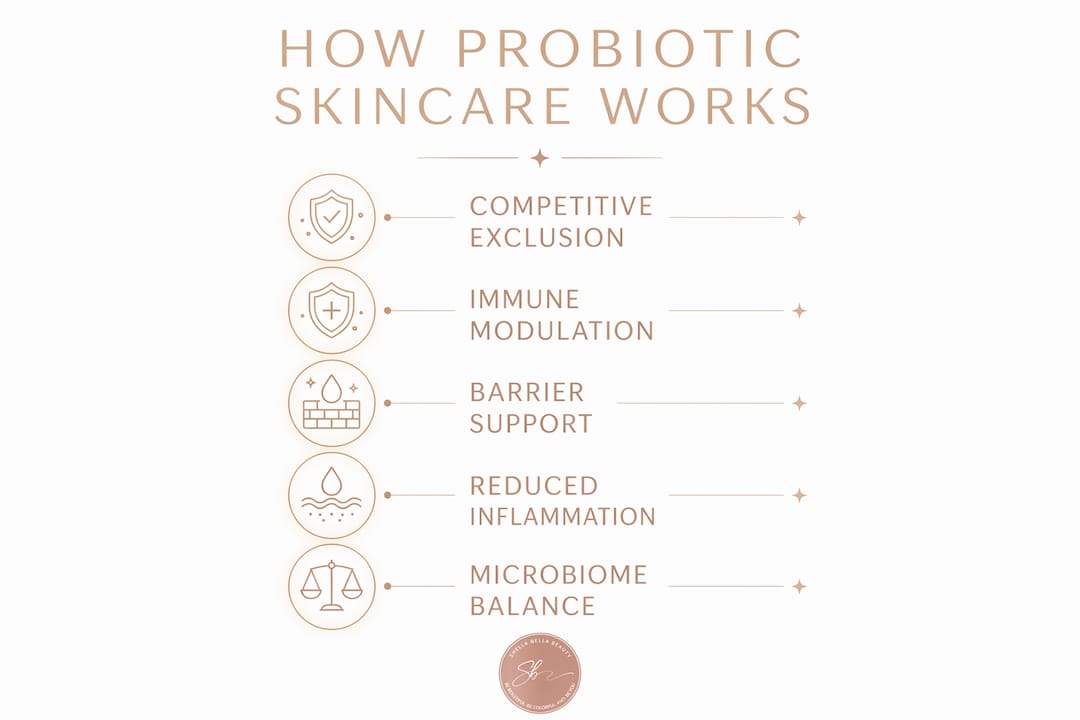
The third mechanism involves barrier support. A healthy microbiome reinforces the skin’s outer barrier, reducing water loss and protecting against environmental irritants. This is why probiotic skincare shows particular promise for sensitive skin conditions like eczema and rosacea, where barrier dysfunction is central to the problem.
| Condition | Observed benefit | Evidence type |
|---|---|---|
| Acne vulgaris | >60% reduction in inflammatory lesions | Systematic review, 33 studies |
| Atopic dermatitis | Reduced S. aureus colonization, less redness | Phase one RCT, 54 adults |
| Skin hydration | 16.6% improvement | Randomized trial, 96 subjects, 8 weeks |
| Skin radiance | 19.1% improvement within one hour | Randomized trial, 96 subjects, 8 weeks |
What are the proven benefits and limitations of probiotic skincare?
The clinical record for probiotic skincare is genuinely encouraging, though it comes with important caveats. The benefits are real, but they are not universal.
On the benefit side, the evidence is strongest for acne. A systematic review of 33 studies found that probiotics reduced inflammatory lesions by more than 60% compared to controls. That is a clinically meaningful result. For aging skin, a randomized double-blind trial on 96 subjects over eight weeks found that oral probiotics combined with topical ectoin and sodium hyaluronate improved skin hydration by 16.6%, reduced wrinkle depth by 9.2%, and boosted radiance by 19.1% within one hour. These are not trivial numbers.
The limitations, however, deserve equal attention:
- Strain specificity matters. Not all probiotic strains produce the same results. A Lactobacillus strain that works for acne may do nothing for eczema. The effectiveness depends heavily on matching the right strain to the right condition.
- Individual microbiomes vary. Your skin’s existing microbial profile shapes how it responds to added probiotics. What works well for one person may produce minimal change for another.
- “Probiotic-washing” is widespread. Many products use the word “probiotic” as a marketing term without containing meaningful concentrations of active biotic ingredients. Regulatory frameworks for topical probiotic claims remain inconsistent.
- Evidence for wrinkle prevention is limited. The anti-aging data is promising but not yet sufficient to support broad claims about wrinkle reversal as a standalone probiotic benefit.
- Probiotics work best alongside standard care. They are most effective as a complement to, not a replacement for, established treatments like retinoids, niacinamide, or prescribed medications.
Pro Tip: Treat probiotic skincare as a long-term microbiome investment rather than a quick fix. Pair it with a microbiome-friendly routine that avoids harsh sulfates and over-exfoliation, which strip the beneficial bacteria you are trying to cultivate.
How to choose and incorporate probiotic skincare products effectively
Choosing a genuinely effective biotic skincare product requires more than reading the front label. The back of the bottle tells the real story.
-
Look for all three biotic pillars. Products that combine prebiotics, probiotics, and postbiotics offer more complete microbiome support than single-component formulas. The three components work in concert: prebiotics feed the bacteria, probiotics restore balance, and postbiotics deliver immediate skin benefits.
-
Check the ingredient list for specific names. Effective postbiotic ingredients include “bifida ferment lysate,” “Lactobacillus ferment,” and “saccharomyces ferment filtrate.” Prebiotic ingredients include inulin, fructooligosaccharides, and beta-glucan. Vague terms like “probiotic complex” with no further detail are a warning sign.
-
Introduce one product at a time. Adding a biotic serum or moisturizer to an existing routine is straightforward, but layering multiple new products simultaneously makes it impossible to identify what is working. Start with one product and observe your skin’s response over four to six weeks.
-
Avoid pairing with harsh actives immediately. High-concentration acids and strong retinoids can disrupt the microbial balance you are trying to restore. Use probiotic products in a separate step, or on alternating evenings, until you understand how your skin responds.
-
Consult a dermatologist for active conditions. If you are managing eczema, rosacea, or persistent acne, a dermatologist can help you identify which strains and formulations are most appropriate for your specific microbiome profile. Probiotic skincare works best adjunctively with standard clinical treatments, not as a standalone replacement.
-
Be patient and consistent. Microbiome shifts take time. Most clinical trials showing meaningful results ran for four to eight weeks. Give your skin the same window before drawing conclusions.
For readers managing gut-skin connection concerns, combining topical probiotic skincare with attention to internal health creates a more complete approach to skin balance.
Key Takeaways
Probiotic skincare works by restoring the skin’s microbial ecosystem through competitive exclusion, immune modulation, and barrier reinforcement, with the strongest clinical evidence supporting its use for acne, atopic dermatitis, and skin hydration.
| Point | Details |
|---|---|
| Probiotics reduce acne lesions | Systematic review of 33 studies showed inflammatory lesion reductions exceeding 60% with probiotic therapies. |
| Most products use postbiotics | Live bacteria are hard to stabilize; look for ferment lysates and filtrates as effective alternatives. |
| All three biotics work best together | Combining prebiotics, probiotics, and postbiotics provides more complete microbiome support than any single component. |
| Strain and microbiome specificity matter | Results vary by bacterial strain and individual skin profile; personalized approaches yield better outcomes. |
| Patience and consistency are required | Clinical trials showing meaningful results ran four to eight weeks; allow the same window before evaluating. |
Why I think probiotic skincare is one of the most misunderstood categories in beauty right now
I have spent years watching ingredient trends arrive with enormous fanfare and then quietly underdeliver. Probiotic skincare is different, but not for the reasons most brands want you to believe.
The science is genuinely compelling. A shift toward proactive microbiome management rather than reactive treatment is the right direction for skin health. The problem is that the marketing has outpaced the formulation reality. Most products on shelves today contain postbiotics at best, and vague “probiotic complex” claims at worst. That is not inherently bad. Postbiotics work. But calling them probiotics without transparency erodes trust.
What I find most exciting is not the current products. It is where the science is heading. Emerging technologies like microencapsulation and electrospun nanofibers may soon allow live bacteria to survive in a serum long enough to actually colonize the skin. That would represent a genuine shift in what topical skincare can do.
For now, my honest advice is this: choose products with transparent ingredient lists, pair them with a gentle routine that does not strip your microbiome, and resist the promise of overnight transformation. The skin’s ecosystem responds to consistency and care, not intensity. That is a principle worth holding onto, regardless of which ingredient category is trending.
— Marshella
Shellabellabeauty’s renewal and smoothing skincare rituals
Shellabellabeauty formulates with the skin’s natural balance in mind, and the Renewal and Smoothing Skincare Rituals collection reflects that intention with care.

Each product in this collection is chosen to support skin renewal and a smoother, more radiant complexion, with ingredients that respect the skin’s microbial harmony rather than disrupt it. For those who have been reading about the importance of microbiome-friendly formulations, this collection offers a considered next step. Shellabellabeauty’s approach combines high-performance ingredients with the kind of thoughtful formulation that your skin’s ecosystem deserves. If you are ready to bring more intention to your routine, this is a meaningful place to begin.
FAQ
What is probiotic skincare in simple terms?
Probiotic skincare is the use of beneficial bacteria or their byproducts on the skin to restore microbial balance and improve skin health. Most products use postbiotics, which are stabilized bacterial byproducts, rather than live bacteria.
Is probiotic skincare effective for acne?
Yes. A systematic review of 33 studies found that probiotics reduced inflammatory acne lesions by more than 60% compared to controls, making them one of the most clinically supported biotic therapies for acne vulgaris.
What is the difference between probiotic and postbiotic skincare?
Probiotic skincare contains live beneficial bacteria, while postbiotic skincare uses the stabilized byproducts of those bacteria. Postbiotics are more common in commercial products because they are easier to formulate and do not require refrigeration.
Can probiotic skincare help with sensitive skin and eczema?
Clinical evidence shows that probiotic formulations can calm redness and reduce S. aureus colonization in atopic dermatitis, making them a supportive option for sensitive and reactive skin alongside standard care.
How long does it take for probiotic skincare to show results?
Most clinical trials showing meaningful improvements in hydration, lesion reduction, and radiance ran for four to eight weeks. Consistent daily use over that period is the most reliable way to evaluate whether a product is working for your skin.