
What truly defines a luxury skincare formulation?
Luxury skincare formulation is the disciplined science of combining high-purity active ingredients, advanced delivery systems, and meticulous quality control to produce products that perform consistently and feel extraordinary on the skin. The defining difference is not a single rare ingredient or an elegant jar. It is the entire process: years of research, batch-level precision, and a formulator’s willingness to reject anything that does not meet the highest standard.
What separates a luxury formulation from a mass-market one comes down to a few non-negotiable commitments. A common ingredient may exist in 5–10 purity grades; luxury brands select only the highest grade, which offers optimal stability and absorption. That choice alone affects how an active behaves on your skin, how long it remains potent, and whether it causes irritation or delivers the clarity it promises.
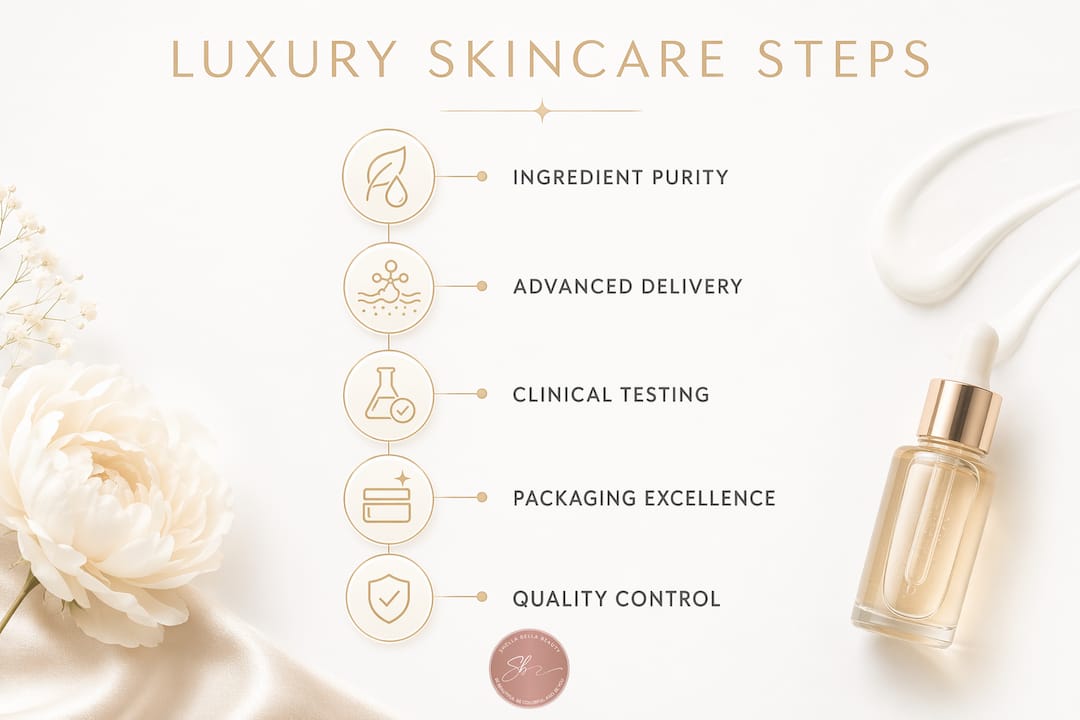
The essential criteria that define a luxury formulation include:
- Highest-grade raw materials selected for purity, bioavailability, and stability
- Advanced delivery systems such as liposomes, microemulsions, and anhydrous bases
- Precisely calibrated active concentrations, not simply the highest possible
- Stability testing across climate conditions and batch-level quality checks
- Packaging designed to protect ingredient integrity, not merely to impress
- Clinical testing that exceeds regulatory minimums
Every one of these elements adds cost. More importantly, every one adds control, and control is what transforms a formula that works sometimes into one that works predictably.
The science behind premium skincare formulations
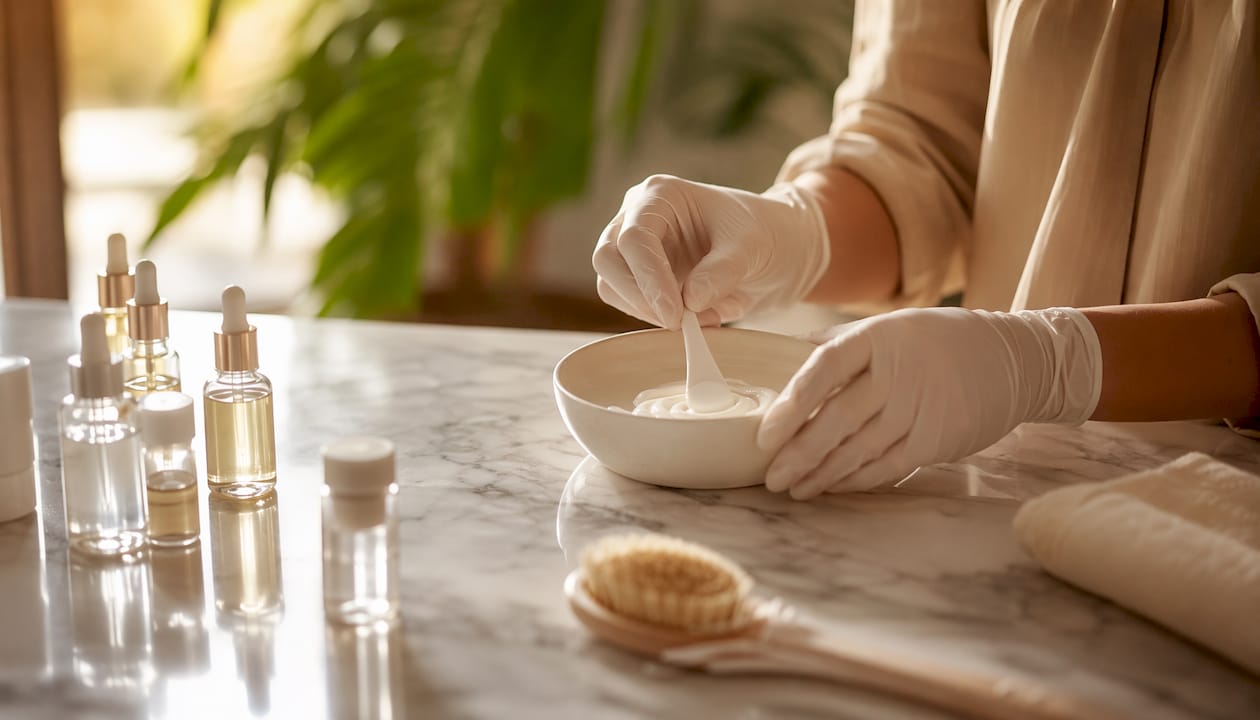
Active ingredients are the heart of any premium formulation, but their performance depends entirely on the system built around them. Retinoids support cell turnover, refine texture, and visibly reduce fine lines; in well-made luxury products, they are buffered with soothing and barrier-supportive ingredients so they remain comfortable enough for daily use. Peptides work through cellular signaling, encouraging collagen and elastin synthesis over time rather than forcing a dramatic short-term reaction.
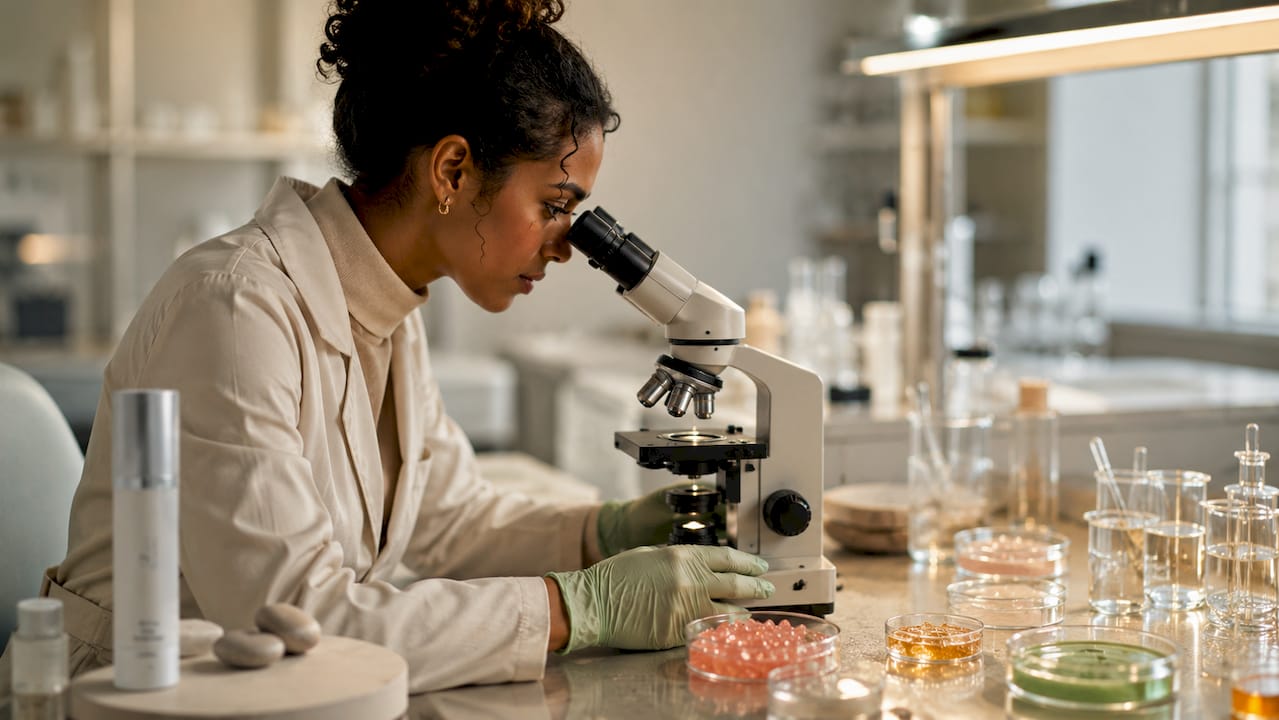
Vitamin C, specifically L-ascorbic acid, is one of skincare’s most compelling antioxidants. Effective luxury formulations require concentrations of 10–20% L-ascorbic acid at a pH below 3.5. Pairing it with Vitamin E and Ferulic acid doubles its photoprotective capacity, a synergy validated in a 2005 study that remains the benchmark for antioxidant formulation. You can explore how these pairings work in practice through Shellabellabeauty’s ingredient pairing guide.
The critical formulation components that give luxury products their edge:
- Emulsifiers: Stabilize oil-and-water phases; HLB values must be matched to the oil phase for long-term physical stability
- Preservatives: Prevent microbial growth without disrupting active performance or skin barrier function
- Humectants and barrier lipids: Ceramides, glycerin, and polyglutamic acid attract and retain moisture in layered, complementary ways
- Delivery vehicles: Liposomes, microemulsions, and anhydrous systems govern how deeply an active penetrates and how long it remains effective
- pH calibration: L-ascorbic acid requires a pH below 3.5; retinoids perform best within specific pH windows; misalignment renders actives ineffective
Pro Tip: The delivery system architecture often matters more than the active percentage itself. A well-encapsulated 0.5% retinol in a liposomal base can outperform a higher-concentration formula in a poorly matched vehicle.
How luxury brands test and control quality
Luxury brands treat stability testing as a baseline, not a finish line. A standard accelerated protocol places product samples at controlled temperatures ranging from 4°C to 45°C for a minimum of 12 weeks, evaluating viscosity, pH, color, odor, and phase separation at regular intervals. Freeze-thaw cycles, microbiological challenge testing, and preservative efficacy assessments follow. This is the floor, not the ceiling.
Clinical testing in luxury skincare often exceeds regulatory requirements, incorporating long-term efficacy studies, dermatological evaluations, and consumer satisfaction research that provides documented validation of product claims. Many brands maintain partnerships with dermatologists and research institutions throughout the development process, not just at the end of it.
The quality dimensions that distinguish premium skincare evaluation:
- Ingredient purity verification at each production batch
- Efficacy studies measuring measurable skin improvements over weeks and months
- Dermatological testing across diverse skin types and sensitivities
- Packaging functionality checks: airless pumps, UV-protective glass, and inert materials
- Sensory evaluation panels assessing texture, absorption, and finish consistency
Understanding the difference between clinical and cosmetic claims is worth your attention when reading product labels, because not every brand uses these terms with the same rigor.
What makes luxury skincare more than its formula
Packaging in luxury skincare is a functional decision before it is an aesthetic one. Airless pumps, UV-protective glass, and inert materials protect formulations from oxidation, preserving ingredient potency and extending shelf life. Poor packaging can undo an excellent formula entirely, which is why thoughtful brands treat the container as part of the formulation itself.
Small-batch production preserves delicate, volatile ingredients that cannot survive large-scale industrial processing. It also allows tighter quality control and faster adjustments when a batch does not meet exact specifications. The artisanal philosophy extends to every stage of development, from ingredient sourcing through final sensory refinement.
The factors that elevate a product beyond its ingredient list:
- Texture engineering: balancing humectants, emollients, and film-formers for a silky, non-occlusive feel
- Scent design: subtle, intentional fragrance that enhances the ritual without irritating sensitive skin
- Ethical sourcing and sustainability commitments, including eco-friendly packaging and support for ingredient-source conservation
- Bespoke and personalized formulation services for those seeking truly individual care
- Brand heritage and accumulated formulation knowledge that cannot be replicated through research alone
How to evaluate whether a formulation genuinely qualifies as luxury
Reading an ingredient list with intention tells you far more than a brand’s marketing language. Look for actives listed at meaningful positions in the formula, not buried near the bottom where concentrations are likely negligible. Purity, synergy, and delivery context matter more than the presence of a prestigious name.
Packaging scrutiny is equally revealing. Airless dispensers, opaque or UV-protective containers, and sealed systems signal that the brand understands oxidation and has designed against it. A beautiful clear glass jar, by contrast, may be exposing a Vitamin C or retinoid formula to the very conditions that degrade it fastest.
A practical checklist for evaluating luxury formulations:
- Active ingredients appear at meaningful concentrations, not as trace additions
- Delivery vehicles (liposomes, encapsulation) are referenced or evident from the formula’s texture and stability
- Clinical or dermatological testing is documented, not merely implied
- Packaging protects against oxidation, light, and contamination
- Small-batch or precision manufacturing is part of the brand’s production philosophy
- Sustainability and ethical sourcing practices are transparent and verifiable
Pro Tip: Prioritize formulation stability and delivery mechanisms over marketing language. A hybrid formulation that blends pharmaceutical-grade efficacy with a sensorially pleasing texture is the 2026 standard for what luxury skincare should feel and perform like.
Defining luxury skincare formulation in precise terms
Luxury skincare formulation, as a discipline, is the practice of designing products where evidence-based actives are combined with skin compatibility, elegant sensorial design, and delivery architecture to produce consistent, long-term skin benefits. It is distinct from premium pricing alone. A product can carry a high price and still rely on commodity ingredients in a basic emulsion base. True luxury formulation is defined by the discipline of the process, not the cost of the jar.
The term “cosmeceutical” often appears in this space, describing products that sit between conventional cosmetics and pharmaceuticals in their level of active efficacy. Luxury formulations increasingly align with this standard, using clinically validated actives at meaningful concentrations within bases engineered for both performance and comfort.
How luxury skincare formulation has evolved over time
Early luxury skincare was built on rarity: cold creams, botanical waters, and precious oils that signaled wealth through their ingredients’ scarcity. The science of formulation as a discipline emerged through the mid-twentieth century, as cosmetic chemists began understanding emulsion stability, pH, and preservative systems in ways that allowed more consistent, longer-lasting products.
The late twentieth century brought retinoids, alpha-hydroxy acids, and the first clinical evidence that topical ingredients could produce measurable skin changes. Brands began funding peer-reviewed research, and the concept of the “cosmeceutical” entered the consumer vocabulary. By the early 2000s, delivery system innovation, including liposomal encapsulation and microemulsion technology, shifted the conversation from “what is in the formula” to “how does it reach the skin.” Today, biotechnology ingredients, engineered peptides, and AI-assisted formulation screening represent the current frontier, with luxury brands leading investment in each area.
Regulatory standards and certifications that matter in luxury skincare
In the United States, cosmetic products are regulated by the FDA under the Federal Food, Drug, and Cosmetic Act, which requires safety substantiation and accurate labeling but does not require pre-market approval for most cosmetics. The Modernization of Cosmetics Regulation Act of 2022 (MoCRA) strengthened these requirements, adding mandatory facility registration, adverse event reporting, and safety substantiation documentation for brands selling in the U.S. market.
Beyond FDA compliance, voluntary certifications carry real weight for discerning consumers. USDA Organic certification governs botanical ingredient sourcing. COSMOS certification (recognized internationally) sets standards for natural and organic cosmetics. Cruelty-free and vegan certifications from organizations such as Leaping Bunny and PETA signal ethical production practices. For luxury brands, these certifications are not marketing additions; they are evidence of the sourcing and testing discipline that defines the category.
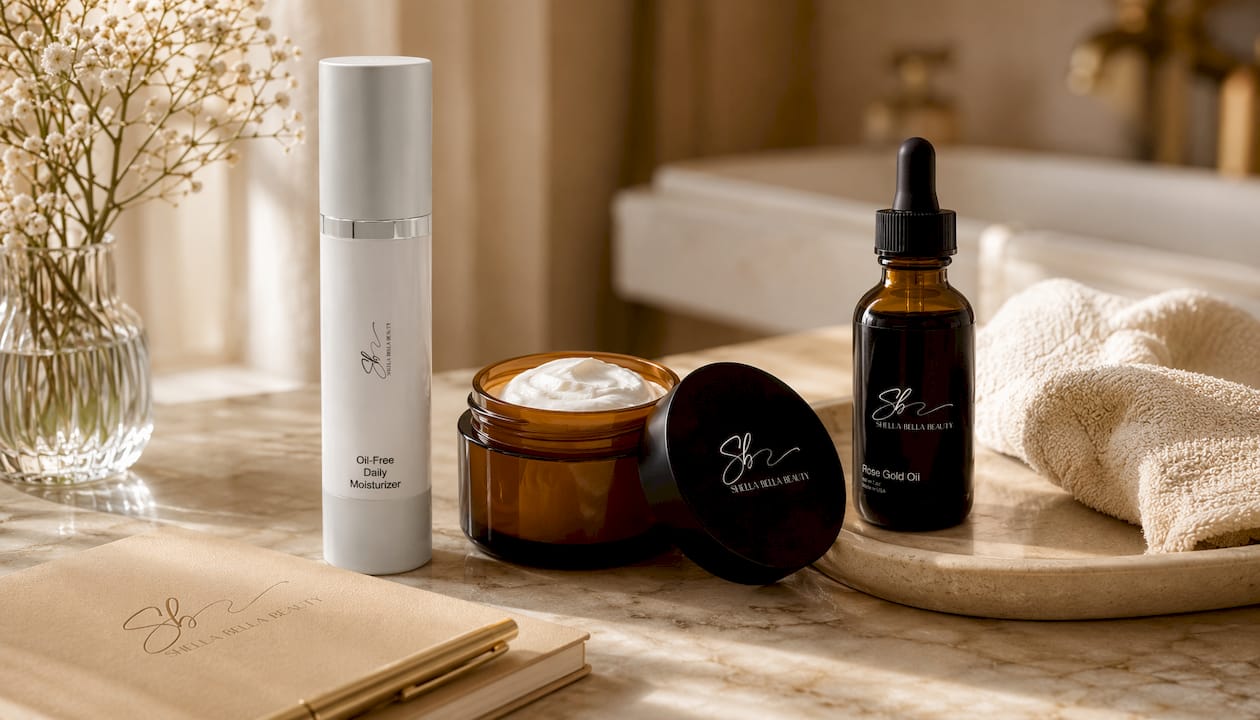
Luxury skincare formulation is built on the principle that every element of a product, from the purity grade of each active to the material of its container, shapes what your skin ultimately receives. Shellabellabeauty’s Opuliss™ Daily Perfection Moisturizer, Urban Detox™ Luxe Hydration Cream, and Aurora Luxe™ Renewal Facial Oil are each formulated with this standard in mind, honoring your skin’s natural radiance through precision, intention, and care.
Key Takeaways
Luxury skincare formulation is defined by ingredient purity, advanced delivery systems, clinical testing, and packaging integrity working together, not by any single premium ingredient or price point.
| Point | Details |
|---|---|
| Ingredient purity grades | Luxury brands select from 5–10 purity grades, choosing only the highest for optimal stability and absorption. |
| Delivery system architecture | Liposomes, microemulsions, and anhydrous bases govern how deeply actives penetrate and how long they remain effective. |
| Vitamin C synergy | L-ascorbic acid paired with Vitamin E and Ferulic acid doubles photoprotective capacity. |
| Clinical testing standard | Luxury brands exceed regulatory minimums with long-term efficacy studies and dermatological evaluations. |
| Packaging as formulation | Airless pumps and UV-protective glass protect ingredient potency; poor packaging can undo an excellent formula. |
FAQ
What makes a skincare brand truly luxury?
A luxury skincare brand invests in highest-purity ingredient grades, advanced delivery systems, clinical testing beyond regulatory minimums, and precision manufacturing, including small-batch production. Price alone does not define luxury; formulation discipline does.
What is the 1% rule in skincare?
The 1% rule refers to the threshold below which ingredients are typically listed in any order on a label, meaning actives appearing near the bottom of an ingredient list may be present at concentrations too low to produce meaningful results. Luxury formulations prioritize meaningful active concentrations, not token inclusions.
What is the 4-2-4 rule in skincare?
The 4-2-4 cleansing method involves applying an oil cleanser, a water-based cleanser, and rinsing to thoroughly remove impurities without stripping the barrier. It is a cleansing technique, not a formulation standard, though it pairs well with barrier-respecting luxury formulas.
What is the most effective luxury skincare ingredient?
No single ingredient defines luxury efficacy. Retinoids, L-ascorbic acid paired with Vitamin E and Ferulic acid, clinically validated peptides, and ceramide-based barrier lipids each address distinct skin concerns. The most effective luxury formulas combine several of these within a delivery system calibrated for stability and skin compatibility.