

Prebiotics in skincare are defined as indigestible substrates that selectively nourish beneficial microorganisms living on your skin’s surface. The most common examples are inulin, fructooligosaccharides (FOS), and galactooligosaccharides (GOS), each composed of 2 to 20 monosaccharide units that beneficial bacteria can metabolize. These ingredients support barrier function, encourage microbial diversity, and reduce inflammatory responses over time. Understanding prebiotics in beauty means recognizing that your skin already hosts a living ecosystem, and these ingredients work with that ecosystem rather than against it. Shellabellabeauty’s Glow Chronicles series covers this science with the care and depth it deserves.
How do prebiotics work in skincare to support skin health?
Prebiotics work by feeding beneficial bacteria on the skin’s surface while leaving pathogens without a food source. This is called selective feeding, and it is the foundation of how prebiotic skincare functions at a biological level.
The selective feeding mechanism
Pathogens like Staphylococcus aureus cannot efficiently digest the specific oligosaccharides that beneficial commensal bacteria thrive on. Beneficial microbes metabolize these substrates and outcompete harmful species for space and nutrients. The result is a more balanced, resilient microbial community on your skin.
Short-chain fatty acids and skin pH
When beneficial bacteria break down prebiotic substrates, they produce short-chain fatty acids (SCFAs). These SCFAs help maintain skin pH between 4.7 and 5.5, which is the acidic range your barrier needs to function properly. A healthy skin pH supports ceramide synthesis, limits enzyme activity that degrades the barrier, and keeps moisture locked in.
Alkaline conditions actively reduce these benefits. High skin pH impairs microbial metabolism and weakens barrier integrity, which is why formulation pH matters as much as the prebiotic ingredient itself.
Anti-inflammatory effects through microbiome balance
A balanced microbiome produces fewer inflammatory signals. When beneficial bacteria dominate, the skin’s immune response stays calm rather than reactive. This indirect anti-inflammatory effect is one reason prebiotic ingredients show promise for conditions like atopic dermatitis and reactive skin.
Key prebiotic substrates and their properties:
- Inulin: Derived from chicory root; well-studied, stable in formulations, and provides mild humectant benefits alongside microbiome support
- FOS (fructooligosaccharides): Short-chain variants of inulin; readily fermented by beneficial skin bacteria
- GOS (galactooligosaccharides): Derived from lactose; supports Lactobacillus and Bifidobacterium species on skin
- Donkey milk oligosaccharides: A less common but emerging substrate with a favorable skin-feel profile
Pro Tip: Always check the pH of any prebiotic product before adding it to your routine. A product with a pH above 6.5 may undermine the very microbiome benefits it claims to deliver.
What are the differences between prebiotics, probiotics, and postbiotics in skincare?
These three terms describe related but distinct approaches to microbiome-supportive skincare. Confusing them leads to unrealistic expectations and poor product choices.
| Ingredient type | What it is | Example | Key benefit | Formulation stability |
|---|---|---|---|---|
| Prebiotic | Indigestible substrate feeding beneficial bacteria | Inulin, FOS, GOS | Selectively nourishes good microbes | High; active throughout normal shelf life |
| Probiotic | Live beneficial bacteria | Lactobacillus ferment | Directly introduces beneficial microbes | Low; requires careful preservation |
| Postbiotic | Metabolites produced by bacteria | Lactic acid, peptides | Delivers bacterial byproducts directly | High; no live organisms to protect |
Probiotics introduce live bacteria to the skin’s surface. The challenge is keeping them viable in a product that sits on a shelf for one to three years. Most topical probiotics are either lysates (broken cell walls) or ferment filtrates rather than truly live cultures, which limits their direct colonization effect.
Postbiotics deliver the end products of bacterial metabolism, such as lactic acid or short-chain fatty acids, without needing live organisms. They are stable and effective but do not actively shift the microbial community the way prebiotics do.
Prebiotic ingredients maintain activity throughout normal shelf life, making them the most practical choice for bar soaps, moisturizers, and serums that spend months in transit and on bathroom shelves. Advanced formulations now combine all three types, called triple-biotics or symbiotics. Studies show triple-biotic products increase beneficial microbial diversity, improve barrier integrity, and support hydration simultaneously. This layered approach represents the direction the field is moving.
What are the benefits of prebiotics in skincare?
The benefits of prebiotics in skincare are real, measurable, and grounded in how the skin microbiome functions. They are also gradual. Expecting overnight results from a prebiotic serum is the most common mistake people make with this ingredient category.
Barrier function and hydration
Inulin provides hydration support alongside its microbiome benefits, acting as a mild humectant that draws moisture to the skin’s surface. The SCFAs produced by prebiotic-fed bacteria further reinforce the lipid barrier, reducing transepidermal water loss over time. Skin feels more supple, and sensitivity to environmental stressors decreases.
Microbial diversity and resilience
A diverse microbiome is a resilient one. Prebiotics encourage a wider range of beneficial species to thrive, which makes the skin less vulnerable to colonization by a single pathogen. Think of it as building a rich, varied garden rather than planting one crop.
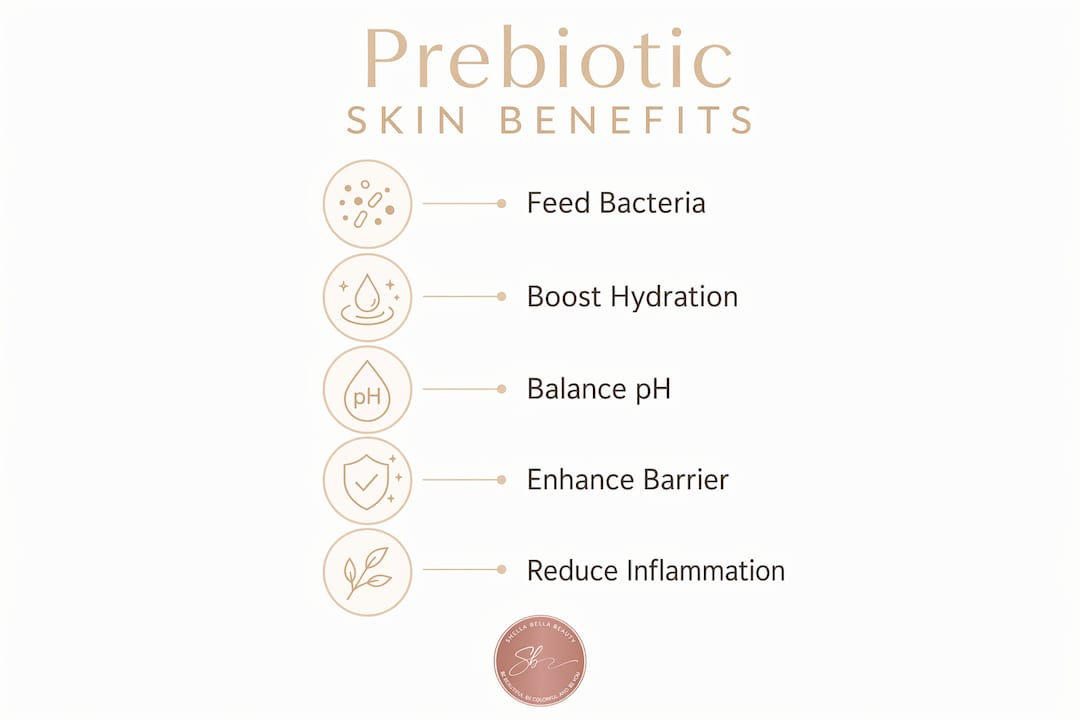
Support for inflammatory skin conditions
Inulin allows beneficial microbes to outcompete pathogens like Staphylococcus aureus, which is a key driver of atopic dermatitis flares. Topical prebiotic use can reduce the frequency and severity of these flares by restoring microbial balance rather than simply suppressing symptoms. For people managing acne, the same competitive exclusion mechanism limits the dominance of Cutibacterium acnes strains associated with inflammation.
Core benefits at a glance:
- Improved skin barrier function and reduced transepidermal water loss
- Greater microbial diversity and competitive exclusion of pathogens
- Reduced inflammatory responses in conditions like atopic dermatitis
- Mild humectant effect supporting surface hydration
- Increased skin tolerance to actives and environmental stressors
Pro Tip: Pair prebiotic ingredients with ceramides and panthenol for compounded barrier support. These ingredients work on different layers of the same system, and their effects reinforce each other.
The field of dermatological prebiotic application is still emerging, and cautious interpretation of claims remains important. The science is promising and growing, but not every prebiotic product delivers equal results. Formulation quality, pH, and ingredient concentration all determine whether a product delivers on its label.
How to incorporate prebiotics into your skincare routine
Integrating prebiotic ingredients thoughtfully produces better results than simply adding a prebiotic product to an otherwise disruptive routine. The following steps reflect both consumer and formulator best practices.
-
Audit your current routine for pH disruptors. High-pH cleansers, alkaline toners, and harsh exfoliants can raise skin pH above the 5.5 threshold where prebiotic benefits diminish. Swap these for microbiome-friendly alternatives before introducing prebiotic actives.
-
Choose a stable prebiotic format. Inulin and FOS perform well in serums, moisturizers, and cleansing bars. Serums allow higher concentrations and faster absorption. Moisturizers pair prebiotic substrates with occlusive and humectant ingredients for compounded barrier support.
-
Layer with ceramides and panthenol. Prebiotics work best alongside barrier-supportive ingredients like ceramides and panthenol. Apply a prebiotic serum first, then follow with a ceramide-rich moisturizer to seal in the benefits.
-
Introduce one new product at a time. Sensitive skin types benefit from a slow introduction. Add a prebiotic product every two weeks and observe how your skin responds before layering additional actives. The sensitive skin routine guide from Shellabellabeauty offers a practical framework for this process.
-
Commit to a consistent timeline. Meaningful improvements typically require 8 to 12 weeks of consistent use. Microbiome shifts are gradual by nature. Mark your calendar and assess results at the 8-week point rather than after a few days.
-
Avoid over-cleansing. Frequent washing with surfactant-heavy products strips the microbiome of the very organisms prebiotics are meant to nourish. Limit cleansing to twice daily and choose gentle, low-pH formulas. Review synergistic ingredient pairings to build a routine that supports rather than undermines your microbiome.
Key Takeaways
Prebiotics in skincare deliver their greatest value when used consistently within a pH-balanced, barrier-supportive routine over a minimum of 8 to 12 weeks.
| Point | Details |
|---|---|
| Prebiotics feed beneficial bacteria | Inulin, FOS, and GOS selectively nourish good microbes while pathogens go without. |
| SCFAs maintain skin pH | Beneficial bacteria metabolize prebiotics and produce acids that keep skin pH in the healthy 4.7–5.5 range. |
| Stability favors prebiotics | Unlike live probiotics, prebiotic ingredients stay active throughout a product’s normal shelf life. |
| Results require patience | Consistent use over 8–12 weeks is needed before meaningful microbiome and barrier improvements appear. |
| Formulation context matters | Prebiotics perform best alongside ceramides, panthenol, and low-pH formulas that support the same barrier system. |
Why I think prebiotic skincare deserves more patience than praise
The skincare world tends to celebrate ingredients the moment they arrive, and prebiotics are no exception. Every few months, a new “microbiome-balancing” product launches with claims that suggest your skin will transform in days. I have seen this cycle repeat with retinol, niacinamide, and now prebiotics. The ingredient is real. The science is sound. The timeline, however, is almost always misrepresented.
What I find genuinely compelling about prebiotics is not any single molecule. It is the formulation mindset they represent. When you approach skincare as an ecosystem to support rather than a problem to fix, your entire routine changes. You choose gentler cleansers. You stop layering aggressive actives every night. You give your skin the conditions it needs to regulate itself. That shift in thinking produces more lasting results than any one ingredient can.
The most common mistake I see is pairing a prebiotic serum with a high-pH cleanser and a strong exfoliant, then wondering why nothing improves. Prebiotics cannot do their work in an alkaline, disrupted environment. The mindful beauty ritual matters as much as the ingredient list.
My honest recommendation is this: treat prebiotic skincare as a long-term commitment, not a quick correction. Build your routine around barrier support first, introduce prebiotic actives second, and measure results at the 8-week mark. The skin that emerges from that process is quieter, more balanced, and more genuinely radiant than anything a fast-acting fix can produce.
— Marshella
Shellabellabeauty’s rituals for barrier-supportive skin
Shellabellabeauty formulates with the understanding that radiance is returned to the skin, not applied over it. The brand’s approach to skincare centers on gentle, intentional products that work with your skin’s natural systems rather than overriding them.

The Renewal and Smoothing Skincare Rituals collection reflects exactly this philosophy. Each product in the range is designed to support barrier integrity, encourage skin resilience, and complement the microbiome-nourishing principles covered throughout this article. Whether you are building a prebiotic-friendly routine from scratch or refining an existing one, this collection offers a thoughtful starting point. Your skin deserves care that compounds over time.
FAQ
What are prebiotics in skincare?
Prebiotics in skincare are indigestible substrates, such as inulin, FOS, and GOS, that selectively feed beneficial bacteria on the skin’s surface. They support barrier function and microbial balance without introducing live organisms.
How do prebiotics differ from probiotics in skincare?
Prebiotics are substrates that nourish existing beneficial bacteria, while probiotics are live or lysed bacterial cultures added directly to a formula. Prebiotics are more stable in shelf-stable products and do not require refrigeration or special preservation.
Do prebiotics help acne?
Prebiotics can reduce acne-related inflammation by encouraging beneficial bacteria to outcompete acne-associated strains like Cutibacterium acnes. Results are gradual and work best as part of a consistent, low-pH routine.
How long does it take to see results from prebiotic skincare?
Meaningful improvements typically require 8 to 12 weeks of consistent use, as microbiome shifts and barrier rebuilding are gradual processes rather than immediate responses.
Can prebiotics be used on sensitive skin?
Yes. Inulin and related prebiotic substrates have a well-established safety profile and are generally well-tolerated, including by sensitive skin types. Introduce one product at a time and pair with gentle, low-pH formulas for best results.