

If you want maximum clinical anti-aging power and your skin can tolerate an adjustment period, retinol is your ingredient. If you need a gentler, photostable option suitable for sensitive skin or pregnancy, bakuchiol is the more considered choice. Both actives have evidence for efficacy, but bakuchiol’s pregnancy safety is based on mechanistic grounds, with no controlled human pregnancy trial data yet available.
Quick verdict:
- Choose retinol if you are targeting deep lines, persistent acne, or significant pigmentation and your skin can handle a 4–12 week adjustment period.
- Choose bakuchiol if you have sensitive, eczema-prone, or reactive skin, or if you are pregnant, nursing, or trying to conceive.
- Choose bakuchiol if you want a morning-friendly active that pairs easily with vitamin C and antioxidants without photosensitivity concerns.
- Consider both together if your skin is tolerant and you want to explore combination protocols that may enhance results without increasing irritation.
- Consult a dermatologist before starting prescription retinoids, if you are pregnant, or if irritation persists beyond the first few weeks of use.
The clinical evidence behind retinol spans decades; bakuchiol’s research base is smaller but genuinely promising, and Harvard Health notes that further study is still needed before the two can be considered fully equivalent.
Key Takeaways
Retinol delivers the most clinically validated anti-aging and acne results, while bakuchiol offers comparable outcomes with significantly lower irritation, making the right choice a function of your skin’s tolerance and your personal goals.
| Point | Details |
|---|---|
| Retinol: strongest evidence | Decades of clinical data support retinol for lines, acne, and pigmentation, with results visible by weeks 8–12. |
| Bakuchiol: gentler, photostable | Bakuchiol produces comparable 12-week outcomes in small trials with significantly less peeling and stinging. |
| Pregnancy: avoid retinoids | Retinoids are contraindicated in pregnancy; bakuchiol is considered mechanistically safer but lacks controlled pregnancy trial data. Always confirm with your OB/GYN or dermatologist before use during pregnancy or breastfeeding. |
| Combination use is possible | Bakuchiol can potentiate retinal activity in formulation studies without increasing irritation in tested formulas. |
| Shellabellabeauty for both paths | Shellabellabeauty’s collection and Glow Chronicles content support both bakuchiol and retinol routines with premium formulations and ingredient education. |
Table of Contents
- How do retinol and bakuchiol compare across every key decision factor?
- What is retinol, and how does it differ from prescription retinoids?
- What are the real benefits of retinol, and how do you manage the side effects?
- What is bakuchiol, and why does it behave like retinol without being one?
- What does bakuchiol actually do for your skin, and is it safe?
- What does the clinical research actually show when these two are compared directly?
- Can you use retinol and bakuchiol together?
- How do you introduce retinol or bakuchiol into your routine?
- Which ingredient is right for your skin type and goals?
- Expert takeaways and practical protocols
- Both ingredients deserve a place in your skincare ritual
- Shellabellabeauty: premium formulations for every skin’s rhythm
- Sources
- FAQ
How do retinol and bakuchiol compare across every key decision factor?
| Factor | Retinol | Bakuchiol |
|---|---|---|
| Efficacy: anti-aging | Decades of evidence for lines, texture, collagen | Clinically comparable in small trials; promising |
| Efficacy: acne | Strong; gold standard for comedonal acne | Limited data; some anti-inflammatory benefit |
| Efficacy: pigmentation | Well-documented improvement | Reported in trials; less studied |
| Speed of visible results | 4–12 weeks for early changes | Similar 12-week window in comparative trials |
| Irritation / tolerability | Moderate to high early irritation (“retinization”) | Significantly lower irritation in reviewed studies |
| Pregnancy / nursing safety | Contraindicated; teratogenic risk | Mechanistically safer; no controlled pregnancy data |
| Mechanism | RAR/RXR nuclear receptor signaling | Retinoid-responsive gene modulation, not via RAR |
| Photostability | Degrades in UV; evening use recommended | Photostable; daytime use is appropriate |
| Layering compatibility | Avoid with AHAs/BHAs on same night | Pairs well with vitamin C, niacinamide, peptides |
| Typical concentrations (OTC) | low to moderate concentrations retinol | low to moderate concentrations bakuchiol |
| Availability / cost | Widely available; $10–$60 OTC | Growing availability; often priced between $20 and $50 or more |
The single clearest practical difference: retinol delivers more potent, faster-validated results but demands a tolerance-building period, while bakuchiol offers a gentler, more flexible daily ritual with a shorter but credible evidence record.
What is retinol, and how does it differ from prescription retinoids?
Retinol is a form of vitamin A that your skin converts, in two enzymatic steps, into retinoic acid, the biologically active compound that binds to retinoic acid receptors (RAR and RXR) in the nucleus. That binding process triggers gene expression changes that accelerate cell turnover, stimulate collagen production, and regulate sebum. The Cleveland Clinic describes retinol as the most common over-the-counter vitamin A derivative, noting that prescription retinoids like tretinoin bypass the conversion steps and act more directly, which is why they work faster but also irritate more readily.
The retinoid spectrum, from mildest to strongest, looks roughly like this:
- Retinyl esters (retinyl palmitate, retinyl acetate): gentlest, slowest, found in many entry-level moisturizers
- Retinol: the OTC workhorse, available in concentrations from 0.025% to 1%
- Retinaldehyde (retinal): one conversion step from retinoic acid; stronger than retinol, still OTC
- Adapalene 0.1% (Differin): an OTC retinoid approved for acne, with a slightly different receptor-binding profile that many find less drying than tretinoin
- Tretinoin: prescription-only, the most studied and most potent topical retinoid
For readers building a first routine, a few widely available OTC options illustrate the range well. Neutrogena Rapid Wrinkle Repair uses an encapsulated retinol formula designed to minimize irritation at a consumer-friendly price. La Roche-Posay Retinol B3 Serum pairs retinol with niacinamide to buffer the barrier. Versed Press Restart Gentle Retinol Serum is formulated at a lower concentration for beginners. And Differin (adapalene 0.1%) sits in a unique position: it is technically a retinoid rather than retinol, approved OTC for acne, and often better tolerated than tretinoin for new users.
What are the real benefits of retinol, and how do you manage the side effects?
Retinol’s benefits are among the most thoroughly documented in dermatology. Regular use reduces the appearance of fine lines and deeper wrinkles, smooths uneven texture, fades post-acne marks and sun-related pigmentation, and keeps pores clearer by regulating cell turnover. A Stanford dermatologist’s perspective confirms that retinoids have been studied since the 1980s, with side effects like redness, dryness, and peeling typically peaking in the first 3–4 weeks before settling as the skin adapts.
“Retinoids have been well-studied since the 1980s; side effects like redness, dryness, and peeling often peak in the first 3–4 weeks and then improve.” — a dermatology expert commentary
That early adjustment phase, sometimes called “retinization,” is not a sign that something is wrong. It is the skin recalibrating. Most people who push through it with a measured approach find the irritation resolves and the results become visible by weeks 8–12.
Managing retinol side effects with intention:
- Start low and slow. Begin with 0.025%–0.05% once a week, then increase frequency over 4–12 weeks as tolerance builds.
- Use the sandwich method. Apply a thin layer of moisturizer, then retinol, then another layer of moisturizer to buffer the active and reduce barrier disruption.
- Always apply sunscreen the next morning. Retinol increases photosensitivity; broad-spectrum SPF 30 or higher is non-negotiable.
- Avoid combining with AHAs, BHAs, or vitamin C on the same night during the adjustment period to prevent compounding irritation.
Safety note: Retinoids are contraindicated during pregnancy and breastfeeding due to teratogenic risk. This applies to both prescription and OTC forms. If you are pregnant, nursing, or planning to conceive, speak with your OB/GYN or dermatologist before using any retinoid product.
Pro Tip: If your skin feels raw or tight after applying retinol, try applying it to slightly damp skin rather than fully dry skin — this dilutes the concentration slightly and can meaningfully reduce the sting for reactive skin types.
What is bakuchiol, and why does it behave like retinol without being one?
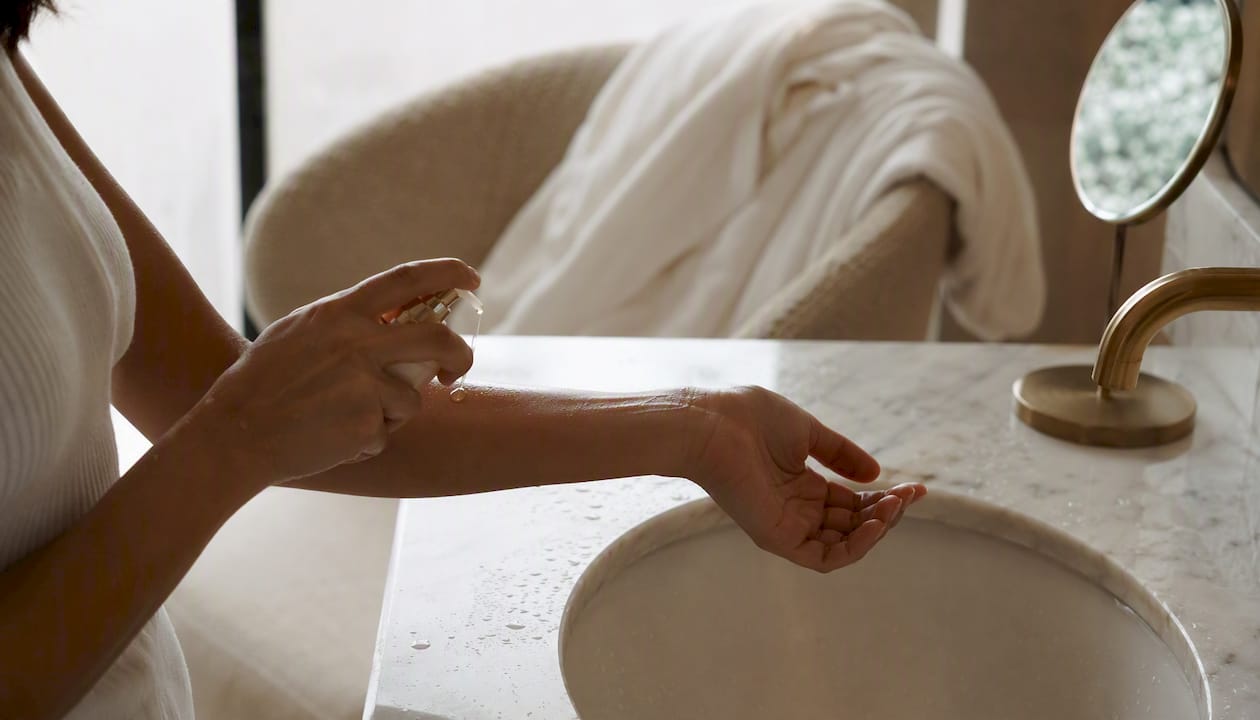
Bakuchiol is a meroterpene derived from the seeds and leaves of Psoralea corylifolia, a plant used in Ayurvedic and traditional Chinese medicine for centuries under the name “babchi.” In modern skincare, it has earned attention not as a marketing substitute for retinol but as a functionally distinct compound that produces many of the same downstream effects through a different biological pathway.
The key mechanistic distinction: a landmark gene expression study published in the British Journal of Dermatology and indexed on PubMed found that bakuchiol modulates many retinoid-responsive genes, producing anti-aging effects comparable to retinol in small clinical trials, but it does not upregulate retinoic acid receptors RAR-β and RAR-γ. That absence of RAR signaling is likely why bakuchiol causes far less of the redness, peeling, and photosensitivity that characterize the retinization period.
Because bakuchiol does not rely on the RAR pathway, it is also photostable, meaning UV exposure does not degrade it the way it degrades retinol. This makes it genuinely suitable for morning application, a flexibility retinol simply does not offer. Typical formulation concentrations in commercial products range from 0.5% to 2%, and it appears in serums, oils, and moisturizers, often alongside antioxidants or peptides that complement its mechanism.
What does bakuchiol actually do for your skin, and is it safe?
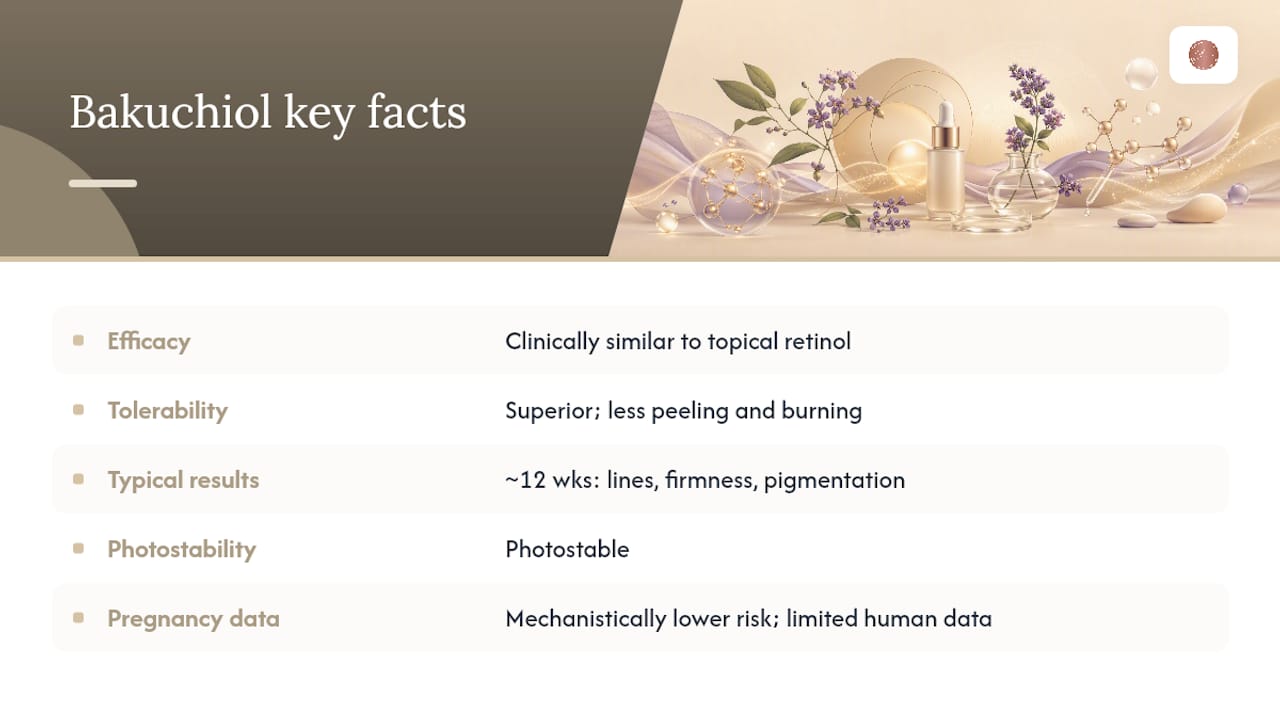
Clinical outcomes reported for bakuchiol are encouraging. The Journal of Integrative Dermatology’s systematic review concludes that bakuchiol demonstrates clinically significant similarity to topical retinol in efficacy, with superior tolerability in reviewed studies, and notes its photostability and a mechanistic rationale for pregnancy safety, while clearly flagging that direct pregnancy trial data remain limited.
In practical terms, people using bakuchiol-containing formulas typically report improvements in fine lines, skin elasticity, firmness, and pigmentation after about 12 weeks, with a much lower incidence of peeling and burning compared to retinol users in the same trials. For readers with sensitive or eczema-prone skin, that tolerability difference is not a minor footnote; it is often the difference between an active that stays in the routine and one that gets abandoned after two weeks.
Pairing bakuchiol with supportive actives amplifies its effect without stressing the barrier. Niacinamide reinforces the skin’s moisture barrier and reduces redness. Peptides support collagen synthesis through a complementary pathway. Vitamin C derivatives pair particularly well in the morning, since bakuchiol’s photostability means the two can work together without degradation concerns. For guidance on pairing these actives thoughtfully, Shellabellabeauty’s skincare ingredient pairing checklist offers a practical reference.
On pregnancy safety: bakuchiol’s mechanism suggests a lower embryotoxicity risk than retinoids, but no large, controlled human pregnancy studies exist. The guidance from clinicians is consistent: discuss all topical actives with your OB/GYN or dermatologist when pregnant or breastfeeding, even those considered mechanistically safer.
What does the clinical research actually show when these two are compared directly?
The most cited head-to-head evidence comes from a controlled study published in the British Journal of Dermatology, which compared 0.5% bakuchiol twice daily to 0.5% retinol once daily over 12 weeks. Both groups showed statistically significant reductions in fine lines and wrinkles, with comparable improvements in pigmentation and elasticity. The bakuchiol group reported significantly less facial skin scaling and stinging.
A separate body of formulation research, summarized in a PMC-indexed study on natural retinol analogs, examined whether combining bakuchiol with retinal (retinaldehyde) could enhance anti-photoaging outcomes. The findings showed that combination formulas increased markers like CRABP-II and produced measurable clinical improvements while maintaining similar irritation profiles in both in vitro and clinical testing. This suggests bakuchiol may potentiate retinal activity, not just mimic it.
Key evidence summary:
- The 12-week comparative trial showed bakuchiol and retinol produced comparable reductions in fine lines and pigmentation, with bakuchiol causing significantly less scaling and stinging.
- Gene expression profiling confirmed bakuchiol modulates many retinoid-responsive genes but does not activate RAR-β or RAR-γ, explaining the tolerability difference.
- Combination formulas (bakuchiol plus retinal) showed enhanced clinical endpoints without worsening irritation in tested formulations.
- Harvard Health’s review cautions that bakuchiol’s clinical literature is smaller and shorter in duration than the multi-decade retinoid evidence base.
Limitations worth knowing: Most bakuchiol trials involve small sample sizes (often fewer than 50 participants), short follow-up periods of 12 weeks or less, and formulations that may be industry-funded. Retinoids, by contrast, have been studied in large, long-term trials since the 1980s. Bakuchiol’s promise is real; its evidence depth is not yet equivalent.
Can you use retinol and bakuchiol together?
You can, and the emerging research suggests the combination may be more than the sum of its parts. The PMC formulation study found that bakuchiol can potentiate retinal activity, enhancing anti-photoaging markers without increasing measured irritation in tested formulas. That is a meaningful finding for anyone who wants to push results further without simply increasing retinol concentration and accepting more irritation.
Practical approaches to combining:
- Alternate nights: Use bakuchiol on nights when you give retinol a rest. This maintains active stimulation of retinoid-responsive pathways on every night of the week without compounding irritation.
- Same-night layering (tolerant skin only): Apply retinol first, allow it to absorb for 20–30 minutes, then layer bakuchiol or a bakuchiol-containing moisturizer on top. This sequence is better suited to skin that has already completed the retinization period.
- Morning bakuchiol, evening retinol: Bakuchiol’s photostability makes it an ideal morning active, while retinol stays in its preferred evening slot. This approach avoids any layering complexity entirely.
Do this: Pair the combination with a ceramide-rich moisturizer to keep the barrier supported, especially in the first few weeks.
Don’t do this: Add AHAs or BHAs on the same night you are using both retinol and bakuchiol. That is too many actives competing for the same barrier, and the irritation risk rises sharply.
Pro Tip: When you first introduce a combination routine, keep a simple weekly skin log — note any redness, tightness, or flaking. If irritation scores above a 3 out of 10 on two consecutive nights, pause retinol for a week and continue with bakuchiol alone before reintroducing.
How do you introduce retinol or bakuchiol into your routine?
Starting either active with patience and structure makes the difference between a routine that lasts and one that gets abandoned after a rough week. Shellabellabeauty’s retinol skincare routine checklist walks through the full process, but the core protocol follows a clear progression.
For retinol:
- Week 1–2: Apply 0.025%–0.05% retinol once per week, on clean, fully dry skin, in the evening.
- Week 3–4: Increase to twice per week if no significant irritation has appeared.
- Week 5–8: Move to every other night, then nightly if tolerated.
- Maintenance: Once nightly at 0.1%–0.3%; consider stepping up to 0.5%–1% after several months of consistent tolerance.
- Always follow with SPF 30+ the next morning, without exception.
For bakuchiol:
- Begin with once-daily application, morning or evening, at 0.5%–1%.
- Increase to twice daily after two weeks if skin responds well.
- Bakuchiol does not require the same gradual titration as retinol, but introducing it alongside other new actives simultaneously is still worth avoiding.
Layering order (both actives):
- Cleanser → toner (if used) → vitamin C (morning only) → serum (retinol or bakuchiol) → moisturizer → SPF (morning)
- Avoid applying retinol directly after AHAs, BHAs, or vitamin C on the same evening.
When to pause and seek guidance: persistent redness lasting more than 48 hours, significant peeling that does not resolve after two weeks, or any signs of allergic contact dermatitis (hives, swelling, intense itch) are all reasons to stop and consult a dermatologist before continuing.
Which ingredient is right for your skin type and goals?
The choice between these two actives becomes straightforward once you map your skin’s needs honestly.
- Sensitive, eczema-prone, or reactive skin: Bakuchiol is the considered starting point. Dermatologists recommend it as the closest plant-based alternative to retinol, with a tolerability profile that allows consistent use without the barrier disruption retinol can cause in reactive skin.
- Pregnant, nursing, or trying to conceive: Retinoids are contraindicated. Bakuchiol’s mechanism suggests lower risk, but always confirm with your OB/GYN or dermatologist before use.
- Acne-prone skin: Retinol (or adapalene/Differin OTC) has the stronger evidence base for comedonal and inflammatory acne. Bakuchiol has some anti-inflammatory properties but is not yet a clinical substitute for retinoids in acne management.
- Photoaged or mature skin seeking maximum results: Retinol, with a careful escalation protocol, delivers the most clinically validated collagen-stimulating and texture-refining outcomes. A Prevention describes retinol as the “power tool” of this category.
- Combination or oily skin: Either active can work well. Retinol’s sebum-regulating effect may offer an additional benefit; bakuchiol is a gentler option if oiliness coexists with sensitivity.
- Cost and access: OTC retinol products start under $20 (Neutrogena Rapid Wrinkle Repair, Versed Press Restart). Prescription tretinoin requires a dermatologist visit. Bakuchiol products like The INKEY List Bakuchiol Serum are widely available at accessible price points.
When to see a dermatologist: severe or cystic acne, persistent irritation after 4 weeks of careful use, interest in prescription tretinoin or tazarotene, or any pregnancy-related skincare questions all warrant a professional consultation rather than self-directed escalation.
Expert takeaways and practical protocols
Two sample protocols illustrate how these principles translate into a real routine.
Sensitive-skin bakuchiol protocol:
- AM: Gentle cleanser → bakuchiol serum (0.5%–1%) → niacinamide moisturizer → SPF 50
- PM: Gentle cleanser → peptide serum → bakuchiol oil or cream (1%–2%)
- Checkpoint at 4 weeks: Look for improvements in texture and tone; no significant irritation expected. If skin feels comfortable, consider adding a low-dose retinol (0.025%) one night per week.
- Checkpoint at 12 weeks: Assess fine line refinement and evenness; adjust frequency based on tolerance.
Retinol escalation protocol for tolerant skin:
- AM: Vitamin C serum → moisturizer → SPF 50
- PM (week 1–2): Cleanser → moisturizer → retinol 0.05% → moisturizer (sandwich method)
- PM (week 3–6): Cleanser → retinol 0.1% → moisturizer, every other night
- PM (month 3+): Nightly retinol 0.3%–0.5%; introduce bakuchiol on alternate nights for potentiation
Clinician-style reminders that apply to both protocols:
- Sunscreen is not optional. It is the single most important step in any active-ingredient routine.
- Niacinamide and ceramides are your barrier’s allies; keep them in the routine throughout.
- “No irritation does not equal no results.” Bakuchiol working quietly is still working.
For deeper guidance on building a routine that fits your skin, Shellabellabeauty’s Glow Chronicles offers ingredient-led education grounded in the same evidence-first approach reflected here.
Both ingredients deserve a place in your skincare ritual
The conversation around retinol and bakuchiol is sometimes framed as a competition, but the more honest reading of the evidence is that they are complementary tools serving different needs. Retinol carries the weight of decades of clinical validation, and for skin that can tolerate it, that depth of evidence is genuinely reassuring. Bakuchiol, for its part, is not a trend or a compromise. It is a research-backed active that offers a gentler, more flexible path to many of the same outcomes, particularly for skin that has historically struggled with retinoids.
What strikes me most about this comparison is how often the “right” choice is simply the one your skin will actually let you use consistently. A bakuchiol routine maintained faithfully over six months will outperform a retinol routine abandoned after two weeks of irritation. Shellabellabeauty’s approach has always centered on thoughtful, sustainable care, combining high-performance formulations with the patience to let your skin find its own rhythm.
Shellabellabeauty: premium formulations for every skin’s rhythm
Radiance is not forced. It is returned to, gently and with intention, through ingredients chosen for your skin’s specific needs and a routine built to last. Shellabellabeauty brings that philosophy to every formulation, from bakuchiol-forward serums designed for sensitive skin to retinol-compatible layering systems for those ready to escalate their anti-aging ritual.

Whether you are beginning with bakuchiol for the first time or refining a retinol protocol you have been building for months, Shellabellabeauty’s luxury skincare collection and Glow Chronicles educational content are designed to meet you exactly where your skin is. Browse the full range, read the ingredient guides, and let your routine become the most intentional part of your day.
This article is for general informational purposes only and does not constitute medical advice. For prescription retinoids, pregnancy-related skincare decisions, or persistent skin concerns, please consult a board-certified dermatologist or your healthcare provider.
Sources
- Retinol Vs. Bakuchiol: Which Is Better?
- Natural Retinol Analogs Potentiate the Effects of Retinal on Aged and Photodamaged Skin: Results from In Vitro to Clinical Studies - PMC
- Bakuchiol: Does it make skin look younger? - Harvard Health
- Retinol - Cleveland Clinic
- 8 Best Retinol Alternatives for Sensitive Skin, According to Dermatologists | Allure
- Topical bakuchiol: review of evidence and safety considerations - J Integrative Derm
- Does retinol deserve the hype? A Stanford dermatologist weighs in
This article is general information, not a substitute for advice from a qualified doctor. Consult a qualified healthcare professional about your own circumstances before acting on anything here.
FAQ
Is bakuchiol as effective as retinol for anti-aging?
In small 12-week controlled trials, bakuchiol produced comparable reductions in fine lines, pigmentation, and elasticity to retinol, but with significantly less irritation. The overall evidence base for retinol is far larger, spanning decades of research, so the two are not yet fully equivalent in clinical depth.
Can I use bakuchiol while pregnant?
Retinoids are contraindicated during pregnancy due to teratogenic risk. Bakuchiol does not activate the same retinoic acid receptors and is considered mechanistically safer, but no large controlled pregnancy trials exist. Always discuss any topical active with your OB/GYN or dermatologist before use during pregnancy or breastfeeding.
How long does it take to see results from bakuchiol?
Most clinical trials report visible improvements in fine lines, elasticity, and pigmentation after approximately 12 weeks of consistent use, which is a similar timeline to OTC retinol at comparable concentrations.
Can sensitive skin use retinol at all?
Yes, with a careful start-low protocol. Beginning at 0.025% once weekly, using the sandwich method with a moisturizer buffer, and avoiding other actives on the same night allows many sensitive skin types to build tolerance over 8–12 weeks. Bakuchiol remains the lower-risk starting point for very reactive or eczema-prone skin.
What is the best way to combine retinol and bakuchiol?
The most practical approach is to use bakuchiol in the morning (it is photostable) and retinol in the evening, keeping them in separate steps. For tolerant skin, alternating nights or layering bakuchiol over retinol after a 20–30 minute wait are both options supported by formulation research showing the combination can enhance anti-aging outcomes without increasing irritation.
Recommended
- Your Retinol Skincare Routine Checklist for Beginners – Shella Bella Beauty™
- Tinted Moisturizer vs BB Cream: Which Fits You Best? – Shella Bella Beauty™
- BB Cream vs Foundation: Which Fits You? – Shella Bella Beauty™
- Resveratrol in Skincare Explained: Benefits and How It Works – Shella Bella Beauty™
- Join Glow Chronicles™ — Continue the Glow™ with editor’s picks, seasonal beauty rituals, exclusive skincare insights, and new editions delivered to your inbox.