

Antioxidants are defined as molecules that neutralize reactive oxygen species (ROS), the unstable compounds that damage skin cells, break down collagen, and accelerate visible aging. The role of antioxidants in skincare goes far beyond surface-level brightening. Vitamins C and E, polyphenols like green tea extract and resveratrol, and enzymatic compounds each work at a molecular level to intercept oxidative damage before it triggers inflammation and structural breakdown. Understanding how these ingredients function, and how formulation determines whether they actually work, is the foundation of any serious approach to skin health.
How do antioxidants neutralize skin-damaging reactive oxygen species?
Antioxidants protect skin by donating electrons to unstable free radicals, stabilizing them before they can damage cell membranes, proteins, or DNA. This electron transfer interrupts the chain reaction of oxidative stress at its source. UV radiation and environmental stressors accelerate skin aging by generating ROS that trigger inflammation, matrix degradation, and barrier weakening.
When oxidative stress goes unchecked, it activates destructive biological pathways. The NF-κB and AP-1 signaling pathways respond to ROS by upregulating matrix metalloproteinases (MMPs), enzymes that break down collagen and elastin. The result is thinner, less resilient skin with deeper lines and uneven tone.
Antioxidants interrupt this cascade most effectively when applied early, before inflammatory and matrix-degrading pathways amplify the damage. This is why consistent, preventive use matters far more than reactive application after visible aging has set in.
Antioxidant skincare works best when it interrupts oxidative stress early, before inflammatory and matrix-degrading pathways amplify damage. Waiting until signs of aging appear means the cascade has already run its course.
Key mechanisms by which antioxidants protect skin:
-
Free radical neutralization: Antioxidants donate electrons to ROS, preventing cell membrane and DNA damage.
-
Collagen preservation: By suppressing MMP activity, antioxidants protect the structural proteins that keep skin firm.
-
Barrier reinforcement: Reduced oxidative stress supports the integrity of the skin’s lipid barrier.
-
Inflammation reduction: Antioxidants modulate NF-κB and AP-1 pathways, lowering the inflammatory response triggered by UV and pollution.
What types of antioxidants are effective in skincare?
Antioxidants used in skincare fall into three broad categories: water-soluble, lipid-soluble, and enzymatic. Each category targets a different environment within the skin, which is why combining antioxidant types offers broader protection than relying on a single ingredient.
| Antioxidant | Solubility | Primary benefit |
|---|---|---|
| Vitamin C (L-ascorbic acid) | Water-soluble | Collagen synthesis, brightening, ROS neutralization |
| Vitamin E (tocopherol) | Lipid-soluble | Membrane protection, synergy with vitamin C |
| Ferulic acid | Lipid-soluble | Stabilizes vitamins C and E, UV damage reduction |
| Green tea polyphenols (EGCG) | Water-soluble | Anti-inflammatory, UV protection support |
| Resveratrol | Both | Sirtuin activation, anti-inflammatory |
| Niacinamide | Water-soluble | Barrier repair, pigmentation reduction |
| Astaxanthin | Lipid-soluble | Potent singlet oxygen quencher, anti-aging |
| Bakuchiol | Lipid-soluble | Retinol-like renewal, gentler on sensitive skin |
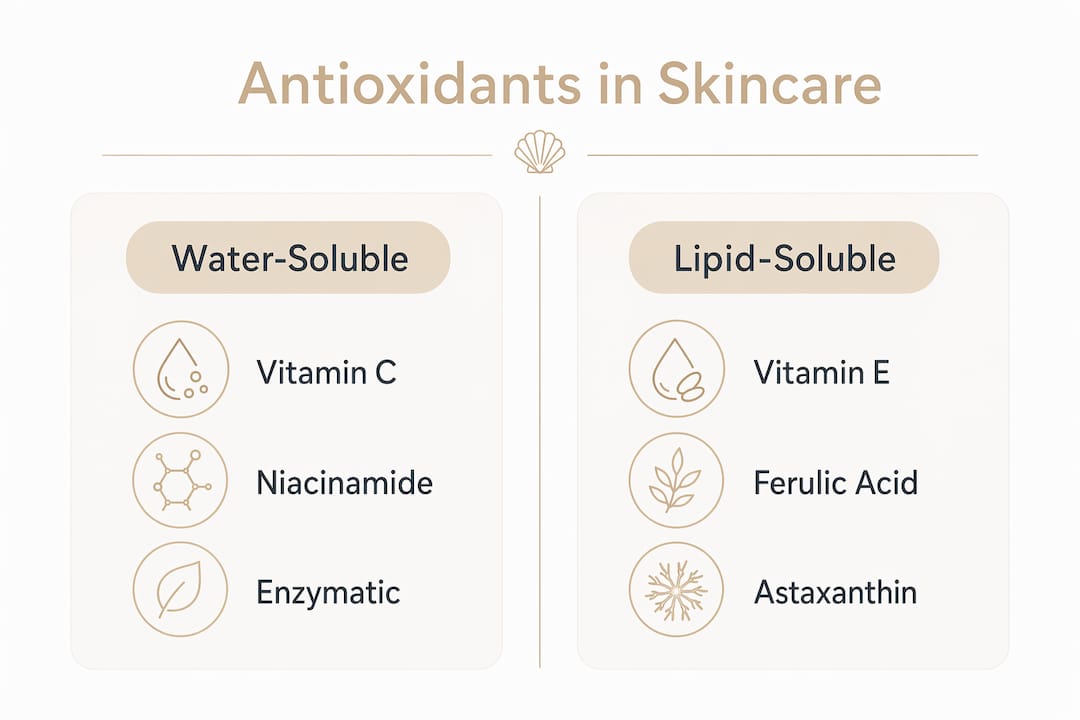
Vitamin C and vitamin E work synergistically. Vitamin E is regenerated by vitamin C after it neutralizes a free radical, extending the protective effect of both. Ferulic acid stabilizes this pairing and enhances UV protection. This trio appears in many well-formulated serums precisely because the combination outperforms any single ingredient.
Enzymatic antioxidants, including superoxide dismutase and catalase, operate differently. They catalyze the breakdown of specific ROS rather than donating electrons directly. These are naturally present in skin but decline with age and UV exposure, making their inclusion in topical formulations a meaningful addition.
Pro Tip: When selecting an antioxidant serum, look for a formula that combines at least one water-soluble and one lipid-soluble antioxidant. This pairing covers both the aqueous and fatty environments within your skin cells, giving you broader coverage from a single product.
How do formulation factors affect antioxidant skincare products?
A product listing vitamin C on its label does not guarantee skin benefit. Vitamin C’s efficacy depends on maintaining its active chemical form, L-ascorbic acid, at the skin surface. Oxidized vitamin C is inactive and delivers no antioxidant protection. This is the single most important formulation reality in antioxidant skincare.
pH is the first critical variable. L-ascorbic acid requires a pH below 3.5 to penetrate the skin effectively. At higher pH levels, it remains on the surface and degrades rapidly. Packaging matters equally. Vitamin C oxidizes on contact with air and light, which is why opaque, airless pump dispensers preserve potency far longer than open jars or clear bottles.
Encapsulation technology addresses these stability challenges directly. Encapsulated vitamin C derivatives release the active form gradually after skin contact, protecting the molecule during storage and improving delivery. Multi-antioxidant formulations with encapsulation showed significant reduction in UV-induced erythema and oxidative damage markers compared to standard vitamin C alone.
Pro Tip: Check your vitamin C serum’s color before each use. A fresh, active formula is clear to pale yellow. An orange or brown tint signals oxidation. That product has lost most of its antioxidant activity and should be replaced.
The delivery vehicle also shapes how deeply an antioxidant penetrates. Lightweight serums with low molecular weight carriers reach deeper skin layers than heavy creams. For ingredients like resveratrol and astaxanthin, lipid-based vehicles improve absorption because these molecules are naturally lipid-soluble.
What are the benefits of oral antioxidant supplementation for skin?
Topical application addresses the skin’s surface environment, but antioxidant protection also works from within. A meta-analysis of 94 studies found that antioxidant-rich whole foods and supplements produced significant improvements in skin hydration, barrier function, and inflammation reduction. These benefits extended to skin conditions including atopic dermatitis and psoriasis.
Dietary antioxidants that show measurable skin benefits include:
-
Astaxanthin: A carotenoid found in salmon and microalgae, astaxanthin reduces UV-induced skin damage and improves elasticity with consistent supplementation.
-
Curcumin: The active compound in turmeric, curcumin modulates inflammatory pathways that contribute to skin aging and conditions like rosacea.
-
Vitamin C from food sources: Citrus fruits, bell peppers, and kiwi provide L-ascorbic acid that supports collagen synthesis systemically.
-
Vitamin E from nuts and seeds: Dietary tocopherols protect cell membranes from lipid peroxidation throughout the body, including skin tissue.
-
Green tea polyphenols: Consumed as a beverage or supplement, EGCG reduces UV-induced oxidative stress and supports skin barrier integrity.
Consistency and duration determine whether dietary antioxidants produce visible skin changes. Short-term supplementation rarely delivers measurable results. The importance of antioxidants for skin health through diet becomes apparent only with sustained intake over weeks to months. Topical and oral approaches are complementary, not interchangeable. Topical antioxidants act locally and immediately at the skin surface, while dietary sources support systemic cellular health over time.
How to integrate antioxidants into your daily skincare routine
A well-structured routine places antioxidants where they deliver the most protection. Morning application makes the most sense because daytime is when your skin faces UV radiation, pollution, and environmental oxidative stress. Applying an antioxidant serum before sunscreen creates a layered defense that addresses both the UV photons sunscreen blocks and the ROS that UV generates after exposure.
Topical antioxidants complement sunscreen rather than replace it. Sunscreen blocks UV radiation at the surface. Antioxidants neutralize the free radicals that form in skin tissue despite sunscreen coverage, replenish antioxidants depleted by UV exposure, and extend the window of photoprotection.
Practical steps for building antioxidant protection into your routine:
-
Step one, cleanse: Use a gentle, antioxidant-infused cleanser to remove oxidative debris and prepare skin for absorption. The Lumine Brightening Cleansing Veil from Shellabellabeauty supports this first step with antioxidant-infused cleansing that primes skin for the layers that follow.
-
Step two, serum: Apply your antioxidant serum to clean, slightly damp skin. Vitamin C serums absorb best at this stage. Pair with a hydrating serum to support barrier function alongside antioxidant protection.
-
Step three, moisturize: Lock in the serum with a moisturizer that contains additional antioxidants such as vitamin E, niacinamide, or green tea extract.
-
Step four, protect: Finish with a broad-spectrum SPF 30 or higher. This is non-negotiable in any antioxidant-forward routine.
Post-procedure skin benefits significantly from antioxidant support. Vitamins C and E reduce oxidative stress generated during aesthetic treatments, supporting recovery and enhancing results. A split-face clinical trial combining antioxidant serums with microneedling showed significant improvements in skin elasticity, pigmentation, and aging signs within 12 weeks.
Key Takeaways
Antioxidants protect skin by neutralizing ROS, but their real-world benefit depends entirely on formulation quality, consistent use, and pairing with sunscreen for comprehensive photoprotection.
| Point | Details |
|---|---|
| Antioxidants neutralize ROS | They donate electrons to free radicals, stopping oxidative damage before it breaks down collagen and triggers inflammation. |
| Formulation determines efficacy | Vitamin C must remain in its active form at the correct pH; oxidized or poorly formulated products deliver no benefit. |
| Multi-antioxidant coverage is broader | Combining water-soluble, lipid-soluble, and enzymatic antioxidants targets different skin environments for stronger protection. |
| Sunscreen and antioxidants work together | Sunscreen blocks UV; antioxidants neutralize the ROS that UV generates despite sunscreen coverage. |
| Dietary antioxidants support skin from within | Consistent intake of astaxanthin, curcumin, and vitamins C and E improves hydration, barrier function, and inflammation over time. |
What I’ve learned about antioxidants after years of studying skincare ingredients
The most common mistake I see is treating “contains vitamin C” as a quality signal on its own. A vitamin C serum stored in a clear glass jar, exposed to light and air at every use, has likely oxidized before it reaches your skin. The label is accurate. The product is not. This gap between ingredient listing and actual skin benefit is where most people lose faith in antioxidant skincare entirely.
What actually works is a multi-layer approach. A stable vitamin C serum in the morning, paired with a formula that includes vitamin E and ferulic acid, covers the water-soluble and lipid-soluble environments simultaneously. Adding a resveratrol or astaxanthin product in the evening extends antioxidant coverage into the night, when skin repair is most active. This is not about using more products. It is about using the right combination with intention.
The other reality worth naming: antioxidants are not a substitute for sunscreen, and they are not a quick fix. Their value is cumulative and preventive. Skin that receives consistent antioxidant support over months looks measurably different from skin that does not, but you will not see that difference after two weeks. Patience and consistency are the actual active ingredients here.
— Marshella
Antioxidant-rich skincare from Shellabellabeauty
Shellabellabeauty formulates with the understanding that radiance is not created. It is returned to skin that has been consistently protected and nourished.

The Opuliss Nocturnal Renewal Creme delivers antioxidant-rich overnight renewal, working with your skin’s natural repair cycle to restore clarity and resilience while you sleep. For daytime protection, the RadiantRevive Hyaluronic Serum pairs deep hydration with antioxidant support, preparing your skin to face environmental stressors with a calm, balanced surface. Both formulations reflect Shellabellabeauty’s commitment to high-performance ingredients delivered in stable, thoughtfully designed products that honor your skin’s natural state.
FAQ
What is the role of antioxidants in skincare?
Antioxidants neutralize reactive oxygen species (ROS) that damage skin cells, break down collagen, and accelerate aging. They protect the skin barrier, reduce inflammation, and support collagen preservation with consistent use.
How do antioxidants help with skin aging?
Antioxidants suppress the MMP enzymes that degrade collagen and elastin by interrupting the oxidative stress pathways that activate them. This slows the structural breakdown responsible for fine lines, loss of firmness, and uneven tone.
What are the best antioxidants for skincare?
Vitamin C, vitamin E, ferulic acid, resveratrol, niacinamide, and astaxanthin are among the most well-studied topical antioxidants. Combining water-soluble and lipid-soluble types provides broader protection than any single ingredient.
Do antioxidants replace sunscreen?
Antioxidants do not replace sunscreen. Sunscreen blocks UV radiation, while antioxidants neutralize the ROS that UV generates in skin tissue despite sunscreen coverage. Both are needed for complete photoprotection.
How long does it take to see results from antioxidant skincare?
Measurable improvements in skin hydration, barrier function, and inflammation typically require consistent use over several weeks to months. Short-term application rarely produces visible changes, making daily routine integration the key factor.