
Toner in skincare is defined as a water-based liquid applied directly after cleansing to restore skin’s pH balance, remove residual impurities, and prepare the skin to absorb serums and moisturizers more effectively. The industry term for this category is facial toner, though it also appears as skin toner or clarifying water depending on the formula. Healthy skin maintains a slightly acidic pH of 5.5 to 5.9, and cleansing can temporarily disrupt that balance. Toner steps in to correct it before the rest of your routine begins. Understanding what toner skincare actually does separates a thoughtful ritual from a collection of products that work against each other.
What are the main benefits of using toner?
Toner delivers several distinct benefits, and each one addresses a specific gap that cleansing alone leaves behind.
-
pH restoration. Cleansers, even gentle ones, can shift skin toward a more alkaline state. Restoring a slightly acidic pH between 5.5 and 5.9 helps the skin’s barrier function properly and resist environmental stressors.
-
Residual impurity removal. Even after a thorough cleanse, traces of makeup, sunscreen, and excess oil can remain. Toner sweeps away what your cleanser missed, leaving the skin truly clear.
-
Immediate hydration. Toners hydrate the outer skin layer with ingredients like hyaluronic acid and glycerin, countering the mild dryness that cleansing can cause.
-
Improved product absorption. Using toner right after cleansing primes the skin so that serums and moisturizers applied afterward penetrate more deeply and work more efficiently.
-
Gentle exfoliation. Toners formulated with alpha hydroxy acids (AHAs) like glycolic or lactic acid, or beta hydroxy acids (BHAs) like salicylic acid, dissolve dead skin cells and refine texture without physical scrubbing.
-
Pore appearance. Toners can make pores appear less clogged by removing excess oil and debris. Pore size is largely genetic and cannot be physically reduced by any topical product, but a clean, clear pore looks visibly smaller.
-
Targeted skin support. Modern formulas also include antioxidants, ceramides, and soothing botanicals to address concerns ranging from dullness to sensitivity.
The benefits of toner compound over time. Consistent use keeps the skin’s environment stable, which means every other product in your routine performs better.
Pro Tip: If you use a vitamin C serum or a retinol, apply your toner first. A balanced pH makes those active ingredients more stable and more effective on the skin.
How do modern toners differ from traditional formulas?
The toner category has changed more than almost any other step in skincare over the past two decades. Understanding that shift helps you choose a formula that genuinely supports your skin rather than stressing it.
Traditional toners, popular through the 1980s and 1990s, were built around high concentrations of alcohol. Their purpose was aggressive: strip oil, tighten the appearance of pores, and leave skin feeling “squeaky clean.” That sensation was actually a sign of over-stripping. Alcohol-heavy astringents disrupted the skin barrier, triggered rebound oil production in oily skin types, and caused chronic dryness and irritation in others.
Modern toners are water-based with soothing, hydrating, or gently exfoliating ingredients. They are designed to work with the skin’s natural chemistry rather than against it. The shift reflects a broader understanding in cosmetic science: a compromised skin barrier causes more problems than it solves.
| Feature | Traditional toner | Modern toner |
|---|---|---|
| Primary ingredient | Alcohol or witch hazel | Water, hydrosols, or botanical extracts |
| Main purpose | Strip oil, “tighten” pores | Restore pH, hydrate, prep skin |
| Skin feel after use | Tight, dry, sometimes stinging | Soft, refreshed, comfortable |
| Suitable skin types | Marketed broadly, suited to few | Formulated for specific skin types |
| Key actives | Alcohol, astringents | Hyaluronic acid, AHAs, BHAs, ceramides, antioxidants |
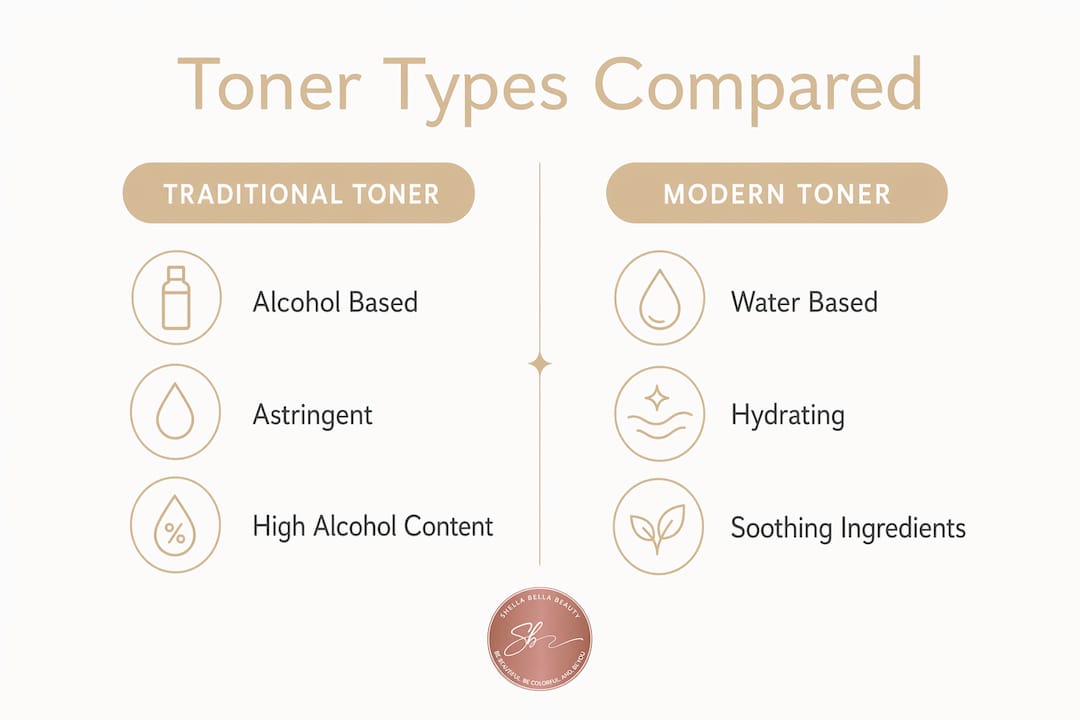
Modern toners often include antioxidants, AHAs, BHAs, and ceramides) to address concerns well beyond pH balance. That multifunctionality is what makes the contemporary toner worth including in a refined routine.
Pro Tip: Check the first five ingredients on any toner label. If alcohol (listed as “alcohol denat.” or “SD alcohol”) appears in the top three, the formula leans astringent. Look for water, glycerin, or a botanical hydrosol as the lead ingredients instead.
How to use toner effectively in your skincare routine
Correct application matters as much as choosing the right formula. A well-chosen toner applied incorrectly delivers only a fraction of its potential.
-
Cleanse first, always. Toner is not a substitute for cleansing. Apply it immediately after washing your face, while your skin is still slightly damp. Applying toner on damp skin improves absorption and helps lock in moisture more effectively than applying it to completely dry skin.
-
Choose your application method. Three methods work well, and each suits different formula types.
-
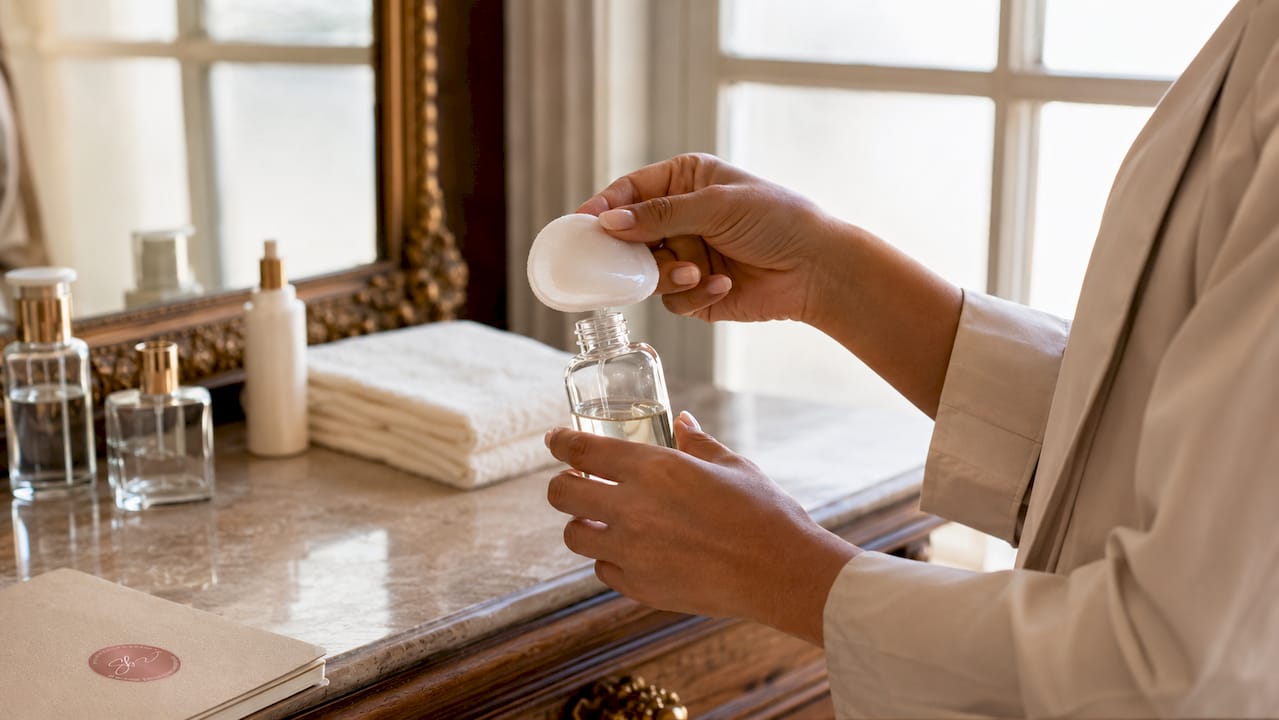
Cotton pad: Ideal for exfoliating or clarifying toners. The pad provides light physical contact that helps distribute AHAs and BHAs evenly.
-
Palms: Best for hydrating or essence-style toners. Press the toner gently into the skin with clean hands to minimize product waste and maximize contact.
-
Spray mist: Works well for refreshing toners used mid-day or for sensitive skin that benefits from a no-touch application.
-
-
Sequence it correctly. Toner belongs after cleansing and before any serum, treatment, or moisturizer. Think of it as the first layer of care, not a finishing step.
-
Use it morning and evening. Applying toner twice daily keeps your skin’s pH consistently balanced and reinforces the hydration your routine builds throughout the day.
-
Patch test new active formulas. A 24–48 hour patch test is recommended before applying any new exfoliating or active toner to your full face. Apply a small amount to the inner arm or behind the ear and observe for redness or irritation before committing to full use.
-
Do not rinse it off. Toner is a leave-on product. Rinsing it away removes the very ingredients your skin needs to absorb.
For toner for oily skin, a BHA formula with salicylic acid applied morning and night works well to manage excess sebum and keep pores clear. For dry or sensitive skin, a hydrating toner with hyaluronic acid or ceramides applied with the palms provides moisture without friction. Combination skin benefits from a pH-balancing formula used consistently, with an exfoliating toner reserved for the oilier zones two to three times per week.
Pro Tip: Layer your hydrating toner two or three times in quick succession before applying your serum. This technique, common in Korean skincare routines, floods the skin with moisture and creates a plump, receptive base for everything that follows.
Who benefits most from toner, and when is it optional?
Toner is genuinely useful for most skin types, but it is not a universal requirement. Knowing where you fall on that spectrum helps you build a routine that serves your skin rather than overcomplicating it.
Skin types that benefit most:
-
Oily and combination skin. Toner removes excess sebum between cleansing and moisturizing, keeping the skin balanced without stripping. A BHA toner adds the benefit of keeping pores clear throughout the day.
-
Dry and dehydrated skin. A hydrating toner with hyaluronic acid or glycerin adds an immediate layer of moisture that cushions the skin before richer products are applied. Shellabellabeauty’s RadiantRevive™ Hyaluronic Serum pairs naturally with a hydrating toner as the next step in a moisture-focused routine.
-
Environmentally stressed skin. Urban environments expose skin to pollution and oxidative stress daily. An antioxidant-rich toner provides a protective layer before sunscreen or makeup.
-
Uneven skin texture. An AHA toner used consistently refines the skin’s surface over weeks, reducing rough patches and improving the way light reflects off the skin.
When toner may be optional:
Many dermatologists note that toner is not essential if you already use a gentle, pH-balanced cleanser and targeted serums or moisturizers that address your specific concerns. Many modern cleansers are pH-balanced and gentle, which reduces the traditional need for a corrective toner step. Sensitive or reactive skin types may also benefit from keeping their routine minimal. Adding an active toner to an already irritated skin barrier can worsen inflammation rather than calm it. For those individuals, a simple cleanser, a calming moisturizer, and a broad-spectrum SPF may be the most supportive approach. Toner is a valuable tool. It is not a mandatory one.
Key Takeaways
Toner is most effective when chosen for your specific skin type and applied to slightly damp skin immediately after cleansing, before serums and moisturizers.
| Point | Details |
|---|---|
| pH restoration is the core function | Toner restores skin to its ideal slightly acidic range of 5.5 to 5.9 after cleansing. |
| Modern formulas are gentle and multifunctional | Contemporary toners hydrate, exfoliate, or soothe rather than strip skin with alcohol. |
| Application timing and method matter | Apply to damp skin using palms or a cotton pad before serums for best absorption. |
| Toner is beneficial but not universal | Those using pH-balanced cleansers and targeted serums may not need an additional toner step. |
| Match the formula to your skin type | BHA toners suit oily skin; hydrating toners with hyaluronic acid suit dry or sensitive skin. |
Marshella’s take on toner and the minimalism debate
The conversation around minimalist skincare has made some people feel that toner is an unnecessary extra step. I understand the appeal of simplicity. But I think the minimalism argument misses something important about how toner actually functions.
Toner is not about adding more products for the sake of it. It is about creating the right conditions for everything else to work. When I see someone frustrated that their serum is not delivering results, the first question I ask is whether they are applying it to properly balanced, prepped skin. More often than not, they are not.
The mistake I see most often is letting the skin dry completely before applying toner. That window of slight dampness after cleansing is genuinely valuable. Skipping it means the toner sits on the surface rather than being drawn in. The second common error is using an exfoliating toner every single day when the skin is not ready for that frequency. Start with two or three times per week and let your skin’s response guide you from there.
Toner’s real value is not dramatic. It is quiet and cumulative. Skin that is consistently balanced and well-prepped simply looks clearer, feels softer, and responds better to every other product you use. That is worth one extra step.
— Marshella
How Shellabellabeauty supports your toner routine
Toner works best when the products surrounding it are formulated with the same care and intention. Shellabellabeauty builds its skincare collections around that principle, pairing high-performance ingredients with formulations that respect the skin’s natural balance.

Whether your skin calls for deep renewal, gentle hydration, or sensitivity-focused care, Shellabellabeauty’s renewal and smoothing skincare rituals offer curated routines designed to complement every step, including toner. For skin that needs a gentler touch, the sensitive skincare collection brings together calming, barrier-supporting formulas that pair beautifully with a hydrating toner. Each product is chosen to work in harmony with the layers around it, so your routine builds toward radiance rather than working against itself.
FAQ
What does toner do for your skin?
Toner restores the skin’s natural pH balance after cleansing, removes residual impurities, and prepares the skin to absorb serums and moisturizers more effectively. Modern formulas also hydrate, gently exfoliate, or deliver antioxidant protection depending on their ingredients.
Is toner necessary for a skincare routine?
Toner is not strictly necessary for everyone. Dermatologists note it adds the most value for those using cleansers that disrupt pH or for skin types that benefit from added hydration, exfoliation, or oil control.
How do you apply toner correctly?
Apply toner immediately after cleansing while skin is still slightly damp, using clean palms or a cotton pad. Do not rinse it off. Follow with your serum and moisturizer.
What type of toner is best for oily skin?
A BHA toner containing salicylic acid is the most effective choice for oily skin. Salicylic acid is oil-soluble, meaning it penetrates into pores to dissolve excess sebum and reduce congestion.
Can toner shrink your pores?
Toner cannot physically shrink pore size, which is largely determined by genetics. It can make pores appear smaller by removing the oil and debris that cause them to look enlarged and clogged.